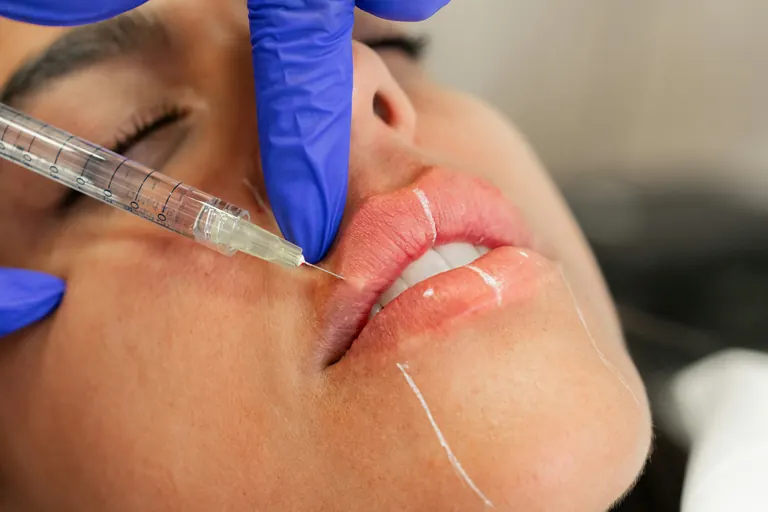
Temple Filler: The Two Approved Products, and Why the FDA Regulates This Region Hardest
Reviewed for medical accuracy against our Medical Review Board · Last updated 31 August 2026
Part of Dermal Fillers
Two fillers hold an FDA approval for the temple: Juvéderm Voluma XC since October 2023 and Restylane Contour since March 2026. That is the short answer. The longer answer is what the FDA did after approving them, and it says more about this treatment than any before-and-after photograph.
The temple is the most tightly regulated filler site on the face. After approving Voluma XC for the temple, the FDA separately approved a device-specific training programme for injectors, then approved an update to the training video, and then required a post-approval study specifically on the safety of treating the same temple again. No other facial region we have researched carries that sequence. The regulator is controlling who is allowed to do this.
The five approvals, and why the order matters
| Date | Approval | What it was for |
|---|---|---|
| 6 October 2023 | P110033/S070 | Juvéderm Voluma XC approved for the temple region. Panel Track, the most demanding supplement class |
| 2 May 2024 | P110033/S079 | A device-specific use training programme for injecting the temple |
| 8 May 2025 | P110033/S098 | Updates to the training video for temple injection |
| 20 March 2026 | P140029/S054 | Restylane Contour approved for temple hollowing. Panel Track |
| 15 May 2026 | P140029/S057 | A post-approval study protocol to evaluate the safety of re-treatment of the temple |
Read that as a sequence rather than a list. A regulator that approves a product, then approves a training programme for using it, then updates the training video, then commissions a study into what happens on the second treatment, is telling you it considers the site consequential.
The anatomical reason is not a secret. The temple is thin, it sits over bone, and it contains vessels that communicate with the circulation supplying the eye. Both products' documents carry the same warning every filler carries about intravascular injection, and in this region the documented consequences of getting it wrong include vision loss. That is why training was made part of the approval rather than left to the market.
What to do with this. Ask whether your injector has completed the manufacturer's temple-specific training. For Voluma XC that programme is an FDA-approved part of the product's labelling, so it is a real, checkable thing and not a courtesy question. Our guide to verifying an injector's licence covers how to check credentials generally.
One is limited to moderate to severe hollowing, one is not
The exact approved wording differs, and it matters for the same reason it does on the chin.
Voluma XC is approved for "supraperiosteal injection to augment the temple region to improve moderate to severe temple hollowing in adults over the age of 21". Restylane Contour is approved for "correction of temple hollowing in patients over the age of 21", with no severity qualifier.
So for mild hollowing, Voluma XC is being used outside the population its trial tested. That is legal and may be reasonable, but it is worth knowing which side of the line you are on, and "supraperiosteal" is itself informative: this product was approved for injection down on the bone, not just under the skin.
What the two trials found, and why you cannot rank them
For the third region running, each manufacturer measured with a scale it built itself. Voluma used the Allergan Temple Hollowing Scale. Restylane Contour used the Galderma Temple Volume Deficit Scale. So the two headline numbers below are not on the same axis.
| Juvéderm Voluma XC | Restylane Contour | |
|---|---|---|
| Scale | ATHS (Allergan) | GTVDS (Galderma) |
| Success at Month 3 | 80.4% | 91.9% |
| Untreated control | 13.5% | about 9% |
| Longest reported | "more than 1 year" | 86.1% at Month 18 |
Voluma's trial reported 80.4% of treated subjects as responders at three months against 13.5% of the untreated control group, a difference of 66.9% and highly statistically significant. Its durability held: 81.7% at one month and 73.3% at the later visit, with the document stating the improvement "lasted for more than 1 year".
Restylane Contour's numbers run higher and further: 91.9% at Month 3, 94.6% at Month 6, and 86.1% still responding at Month 18. Eighteen months is the longest durability figure we have seen in any filler approval document for any facial region. But it is measured on Galderma's scale against Galderma's control, so it is evidence that Contour works and lasts, not evidence that it beats Voluma.
Needle or cannula: the answer is different here than under the eye
This is worth reading carefully, because we published a finding on the opposite side of this question earlier and it does not transfer.
In Restylane Contour's temple trial the results split by instrument like this: cannula 96.7%, needle 88.0%. In the under-eye trial for Belotero, the split ran the other way: needle 87.4%, cannula 73.7%.
So instrument choice is region-specific, not a rule. Anyone who read our under-eye page and concluded that needles are simply better would be wrong about the temple. Different anatomy, different vessels, different depth, different answer. What holds across both is narrower and more useful: a practitioner who can give you a reason for their choice is telling you something, and one who presents either instrument as universally superior is not.
By Month 18 Contour's needle and cannula groups had converged, at around 84% and similar to each other, so the instrument difference appears to be about the early result rather than how long it lasts.
How long before you can be seen in public
Restylane Contour's trial measured something almost no approval document bothers with, and it is probably the question you actually have. Investigators phoned patients 72 hours after treatment and asked how long it had taken before they felt comfortable returning to social engagements.
The median answer was 5.4 hours after the initial treatment and 3.6 hours after a touch up.
Treat that as a median from a trial population, not a promise. Half of them took longer. But it is a real measured figure from the manufacturer's own study rather than a clinic's marketing claim about lunchtime procedures, and it is the only number of its kind we have found. Our guide to what filler recovery actually looks like covers the bruising and swelling timeline in more detail.
What temple filler costs
Neither manufacturer publishes a patient price, and we do not publish figures we cannot source. What the trial documents do tell you is the volume, which is the part that drives the bill, and this is where temple filler surprises people.
Voluma XC's trial used 3.0 mL for the initial treatment and 1.5 mL for the touch up. A standard syringe is 1 mL. So the trial protocol used roughly three syringes to treat both temples, plus another one and a half if a touch up was needed. Priced per syringe, that is a materially larger treatment than a tear trough, which often needs less than one.
Ask for the expected total volume in millilitres and the price per millilitre or syringe, then multiply. A per-syringe price on its own tells you very little about what temple treatment will cost. The pricing patterns we document on our city pages apply here too: who injects changes the rate, first-visit prices expire, and some clinics apply a minimum.
What to ask before you book
- Have you completed the manufacturer's temple-specific training? For Voluma XC that programme is an FDA-approved part of the labelling. This is the one region where that question has a formal answer.
- How many millilitres do you expect to use across both temples, including a touch up? The trial used 3.0 mL plus 1.5 mL. If a quote assumes one syringe, ask what happens if you need three.
- Which product, and is my hollowing mild, moderate or severe? Voluma XC's approval covers moderate to severe. Contour's has no severity limit.
- Needle or cannula here, and why? In the temple the trial data favours the cannula. A reasoned answer either way is fine; a universal claim is not.
- Do you keep hyaluronidase on site? Both products are hyaluronic acid and can be dissolved. In a region the FDA has singled out for training, confirm the reversal agent is in the building.
If what bothers you is hollowing across the whole midface rather than the temples specifically, the approvals and the products differ, and chin filler and under-eye filler cover the neighbouring regions we have researched to the same standard.
Frequently asked questions
Which fillers are FDA-approved for the temple?
Is temple filler dangerous?
How long does temple filler last?
How much filler does the temple need?
Needle or cannula for temple filler?
How much downtime is there?
Sources
Every figure on this page was read from the documents below rather than from a clinic or a manufacturer's marketing. They open in a new tab so you can check any claim here against its source.
- Summary of Safety and Effectiveness Data, P110033/S070, Juvéderm Voluma XC temple, US Food and Drug Administration
- Summary of Safety and Effectiveness Data, P140029/S054, Restylane Contour temple, US Food and Drug Administration
- Premarket Approval (PMA) database, US Food and Drug Administration
- Dermal fillers (soft tissue fillers), US Food and Drug Administration
- Dermal fillers, American Society of Plastic Surgeons

Know the count before the quote. The unit count is half the bill, and a low per-unit rate recovered by a high unit count is the commonest way a deal is not one. How to tell.
Deciding which area, not how many units? Botox by facial area covers what each zone actually achieves, which four are FDA approved, and the things Botox cannot fix at all.