
Dermal Fillers: What They Are, and What the FDA Data Shows
Reviewed for medical accuracy against our Medical Review Board · Last updated 23 August 2026
Part of Botox vs Fillers and Injectables
The most important thing about fillers is not which brand you choose. It is that hyaluronic acid fillers can be dissolved and the others cannot. Juvederm, Restylane, Belotero, RHA and Versa can be broken down with an enzyme if something goes wrong or you simply dislike the result. Radiesse, Sculptra and Bellafill cannot. That is the difference between a reversible decision and a permanent one, and it is rarely the first thing anyone tells you.

The second thing worth knowing: fillers are regulated as medical devices, not as drugs. There is no prescribing information to read, which is why so much filler advice online is assertion rather than sourced fact. What does exist publicly is the FDA's device approval record and its adverse event database, and we have used both here.
1. What a dermal filler actually is
A dermal filler is a gel injected under the skin to add volume, support a structure that has lost it, or smooth a crease from underneath. That is a fundamentally different job from a botulinum toxin, which does not add anything: it relaxes a muscle so it stops folding the skin.
The practical version of that distinction: fillers treat lines that are there when your face is completely still. Toxins treat lines that appear when you move. If you are not sure which you have, look in a mirror with a relaxed face. What you can still see is a filler question. What only shows when you frown or smile is a toxin question. Our Botox against fillers comparison works through the overlap.
2. Device, not drug, and why that matters
Botox, Dysport and Xeomin are drugs, approved through a New Drug or Biologics application, and each comes with prescribing information: a public document stating exact doses, trial results, contraindications and adverse reaction rates. That is why our pages on those products can quote numbers.
Fillers are Class III medical devices, approved through a Premarket Approval, and their generic FDA classification is "implant, dermal, for aesthetic use". There is no prescribing information. There is an Instructions For Use document, which is written for the injector rather than the patient and is not published in a central database.
Three consequences that affect you directly:
- There is no labelled dose. Toxins are measured in units with reviewed doses per area. Fillers are sold by the syringe, usually 1 millilitre, and how much goes where is entirely your injector's judgement.
- Duration claims are softer. No filler carries an FDA-stated duration in the way Xeomin's label states 12 to 16 weeks. The figures you read are trial observations and clinical experience.
- Public safety data comes from a different place. For devices it is MAUDE, the FDA's adverse event reporting database, which is what section 6 below uses.
3. The dissolvability split
This is the section to read if you read only one.
| Product | Material | Dissolvable? |
|---|---|---|
| Juvederm range | Hyaluronic acid | Yes, with hyaluronidase |
| Restylane range | Hyaluronic acid | Yes |
| Belotero | Hyaluronic acid | Yes |
| RHA range | Hyaluronic acid | Yes |
| Versa, Revanesse | Hyaluronic acid | Yes |
| Radiesse | Calcium hydroxylapatite | No |
| Sculptra | Poly-L-lactic acid | No |
| Bellafill | PMMA microspheres in collagen | No |
Hyaluronidase is an enzyme that breaks down hyaluronic acid. It works within hours to days, it is what an injector reaches for if a filler blocks a blood vessel, and it is the reason HA fillers are the sensible default for a first treatment.
The non-HA products are not dissolvable in any comparable way. If a Radiesse or Sculptra result is badly placed, the options are waiting, surgery, or living with it. That does not make them bad products, and each has genuine advantages, but it does mean they are a considerably bigger commitment. For a first filler, in a visible area, choosing something reversible is the conservative decision and there is no good argument against it.
4. The material types, and what each is for
Hyaluronic acid. A sugar molecule your body already makes, so it holds water and integrates predictably. Immediate result, reversible, and by far the largest category. Different products in a range differ mainly in how stiff the gel is: a firmer gel supports a cheekbone, a softer one suits lips. This is why "which Juvederm" matters as much as "Juvederm or Restylane".
Calcium hydroxylapatite (Radiesse). Adds volume immediately and also stimulates collagen over months. Firmer than HA, so it suits jawline and hands rather than lips.
Poly-L-lactic acid (Sculptra). Not really a filler in the immediate sense: it stimulates your own collagen over a series of sessions, so the result builds over months rather than appearing at the appointment. Good for generalised volume loss, wrong for anyone wanting a result that day.
PMMA in collagen (Bellafill). The longest lasting and the least forgiving, since the microspheres remain permanently.
5. The FDA-approved brands
Reading the FDA's device approval records for the classification "implant, dermal, for aesthetic use", the products with US approval include the Juvederm range, the Restylane range, Radiesse, Sculptra, Bellafill, Belotero, the RHA range, Versa and Revanesse, alongside a number of older collagen-based products such as Zyderm and Zyplast which are no longer in general use.
Two things follow. Anything injected as a "filler" that is not on that list is not an approved dermal filler in the United States, which matters given how much unapproved product circulates. And ranges matter more than brands: Juvederm Voluma, Volbella and Ultra are different gels for different jobs, and so are Restylane Kysse, Lyft, Refyne and Defyne.
6. What actually gets reported to the FDA
Because fillers are devices, adverse events are reported to MAUDE, a public FDA database. We pulled the current counts. Read the caveat below the table before the table.
| Brand | Reports | Most reported problems |
|---|---|---|
| Juvederm | 9,792 | Oedema 1,729, skin irritation 1,725, inflammation 1,450, infection 1,199, nodule 1,099 |
| Versa | 2,461 | No known impact 657, pain 270 |
| Sculptra | 2,009 | Swelling 1,195, granuloma 258, pain 203 |
| Radiesse | 1,641 | Swelling 351, obstruction or occlusion 267, erythema 235 |
| Restylane | 1,217 | Swelling 313, pain 260, erythema 255 |
| RHA | 588 | Foreign body embolism 183, granuloma 80 |
| Belotero | 321 | Obstruction or occlusion 56, necrosis 37 |
| Revanesse | 209 | Swelling 71, nodule 32 |
| Bellafill | 148 | Pain 22, swelling 22 |
What these numbers are not. MAUDE is passive, voluntary surveillance. These are report counts, not rates. There is no denominator, so a product used in millions of syringes will generate more reports than a niche one regardless of how safe it is. Juvederm almost certainly leads this table because it is the most used filler in the country, not because it is the most dangerous. Reporting is known to be incomplete, and a report does not establish that the product caused the event. Anyone publishing this table as a safety ranking is misusing it.
What they are useful for. The pattern within each brand, which tracks what each material is. Sculptra, which works by provoking a collagen response, has granuloma as its second most reported problem. Radiesse, a firm particulate gel, shows vascular obstruction prominently. RHA's single largest reported problem is foreign body embolism, at 183 of 588 reports. Belotero shows necrosis in 37 of 321. Those are coherent with the materials rather than random, and they are worth discussing with your injector when choosing between products for a given area.
7. The complications that matter
Most filler problems are swelling, bruising and lumps that settle. Two are genuinely serious, and both appear repeatedly in the FDA data above.
Vascular occlusion. Filler entering or compressing a blood vessel, cutting off blood supply to the skin. Across the Juvederm reports alone, obstruction or occlusion is coded 695 times, impaired vascular circulation 322 times and necrosis 261 times. It is a genuine emergency: the tissue can die, and in the worst case filler reaching a retinal artery can cause permanent blindness. The warning signs are severe or disproportionate pain, blanching or white patches, mottled or dusky skin, or any vision change, and they can begin during the injection or hours later. Hyaluronidase is the treatment, which is one more reason to prefer a dissolvable product and a clinic that keeps it on site.
Delayed nodules and granulomas. Firm lumps appearing weeks to months later, sometimes triggered by an illness or a vaccination. Nodule appears 1,099 times in the Juvederm reports plus 306 coded as subcutaneous, and granuloma 272. They are usually treatable, and they are the reason a lump at month four is worth a call rather than a wait.
Ask any clinic two questions before treatment: do you keep hyaluronidase on site, and what would you do if you suspected an occlusion. A good injector answers both immediately.
8. How long each type lasts
No filler has an FDA-stated duration in the way a toxin label states one, so these are clinical ranges rather than labelled figures:
| Type | Typical duration |
|---|---|
| HA in lips | 6 to 12 months |
| HA in cheeks and jawline | 12 to 24 months |
| Radiesse | 12 to 18 months |
| Sculptra | Up to 2 years, built over a series |
| Bellafill | 5 years or more |
Lips are consistently the shortest, because the area moves constantly and the gel used is soft. Anyone promising two years in lips is selling rather than informing.
9. Where fillers are used
Lips are the largest single use by a wide margin, and they behave differently from everywhere else: shortest duration, highest visibility, and the area where migration is most discussed. Beyond lips, the common areas are cheeks and midface, jawline and chin, nasolabial folds, tear troughs under the eye, and temples. Hands are approved for some products.
Two areas deserve extra caution regardless of product. Under the eye has thin skin, a high rate of visible lumps and prolonged swelling, and is close to vessels connected to the eye. The nose, in a non-surgical rhinoplasty, sits in one of the highest-risk vascular territories on the face. Neither is a reason never to treat them; both are reasons to choose experience over price. Our page on facial areas covers what each region responds to.
10. Filler or Botox?
They do different jobs and the mirror test settles it. Lines visible at complete rest are volume and skin, which is filler territory. Lines that appear only on movement are muscle, which is toxin territory. Many people need both, and the sequencing usually runs toxin first, since relaxing the muscle changes how the crease sits and can reduce how much filler is needed.
One specific comparison worth knowing: for a subtly fuller upper lip, a lip flip uses a few units of toxin to roll the lip edge outward and adds no volume, lasting six to eight weeks. Lip filler adds volume and lasts six to twelve months. They are different treatments that look superficially similar in before-and-after photographs. Our fillers and injectables category covers the rest of the comparisons.
11. How to choose, and what to ask
- Choose a dissolvable product for a first treatment. Hyaluronic acid, in any brand. The reversibility is worth more than any difference between HA brands.
- Ask whether they keep hyaluronidase on site, and what their protocol is for a suspected vascular occlusion.
- Ask which product and which member of the range, not just the brand. Voluma and Volbella are both Juvederm and are not interchangeable.
- Ask how much, in millilitres, and the total price. Fillers are sold by the syringe and half-syringe treatments are common, so a per-syringe price is not the whole bill.
- Check the injector's licence. Free, public, two minutes, and it matters more here than with toxins because the serious complications are vascular. Our guide to verifying an injector's licence walks through it.
- Be careful with bargains. Unapproved and counterfeit filler is a real problem, and an unusually low price is the commonest signal.
For clinics and published pricing in your area, our city guides cover the practices we have researched, and the price guide explains what drives injectable pricing generally. We are extending both to fillers.
What the first month actually looks like. The FDA approval trial for one filler had 265 patients keep daily diaries: 98.1% had a reaction and 81.1% got lumps. Filler recovery, from the trial diaries has the full timeline.
How long lips actually last. An FDA trial followed 220 people past a year and measured lip fullness on a validated scale: the peak is week 8, and 48.7% still had a measurable result at week 48. The full curve, week by week.
The complications, read rather than counted. Filler complications goes through the FDA reports in detail, including why the eight death-coded reports do not support the number they imply, and the published case where vision loss recovered after prompt hyaluronidase.
The biggest brand, product by product. Juvederm is seven products and they are not interchangeable. The Juvederm guide covers which does what, what the FDA record verifies, and the trial data behind Voluma.
Frequently asked questions
Can dermal fillers be dissolved?
Are fillers approved by the FDA?
Which filler is the safest?
What is the most serious risk with fillers?
How long do fillers last?
What is the difference between fillers and Botox?
Is a lip flip the same as lip filler?
Which filler is best for lips?
What should I ask before getting filler?
Are filler lumps normal?
Can filler migrate?
Is cheap filler a bad sign?

Sources
Every figure on this page was read from the documents below rather than from a clinic or a manufacturer's marketing. They open in a new tab so you can check any claim here against its source.
- Dermal fillers (soft tissue fillers), US Food and Drug Administration
- Dermal fillers, American Society of Plastic Surgeons
- Premarket Approval (PMA) database, US Food and Drug Administration
Know the count before the quote. The unit count is half the bill, and a low per-unit rate recovered by a high unit count is the commonest way a deal is not one. How to tell.
Deciding which area, not how many units? Botox by facial area covers what each zone actually achieves, which four are FDA approved, and the things Botox cannot fix at all.
Keep reading
 Dermal FillersCheek Filler
 Dermal FillersChin Filler
 Fillers and InjectablesFiller Complications
 Fillers and InjectablesWhat Actually Happens After Filler
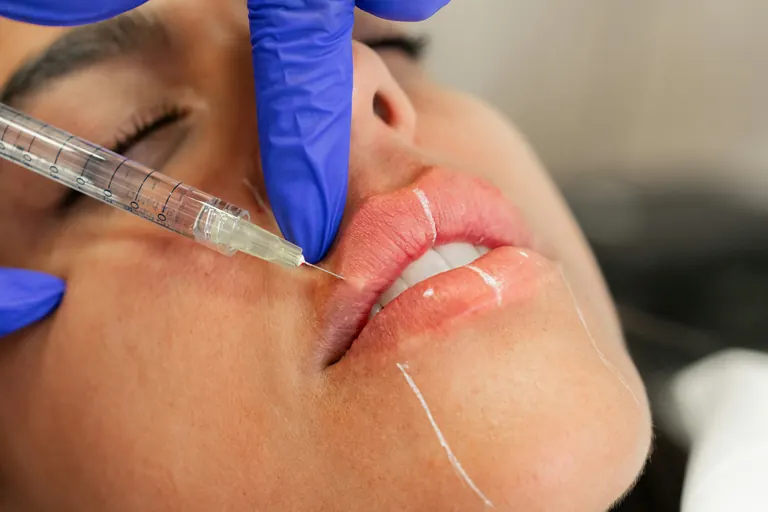 Fillers and InjectablesHow Long Does Lip Filler Last?
Dermal FillersJawline Filler
Fillers and InjectablesHow Long Does Lip Filler Last?
Dermal FillersJawline Filler
 Dermal FillersRestylane
 Kysse
Dermal FillersRestylane
Dermal FillersRestylane Kysse
 Dermal FillersRestylane Lyft
 Dermal FillersRestylane Refyne and Defyne