Under-Eye and Tear Trough Filler: What the Four FDA Approvals Actually Show
Reviewed for medical accuracy against our Medical Review Board · Last updated 31 August 2026
Part of Dermal Fillers
Four hyaluronic acid fillers hold an FDA approval for the infraorbital hollow, the shadowed groove under the eye that is also called the tear trough. Query the FDA's own approval database for the word infraorbital and you get exactly four results, which is why this page says four rather than "several".
All four approvals were granted for patients over the age of 21. All four trials compared the filler against no treatment at all. None of them compared one filler against another, and that single fact turns out to govern everything you can and cannot conclude from their published success rates.
The short version. Every one of the four works, in the sense that each beat doing nothing by a wide and statistically significant margin. But the four success rates published by the four manufacturers are measured on four different rulers, so ranking them by those numbers is meaningless, and depending on which number you pick the ranking reverses. The detail below is read from the FDA approval documents, which run to 157 pages between them.
The four approved options, and the exact wording of each approval
An approval is specific. It names the product, the region and the population, and the wording is what the manufacturer is permitted to claim. Here is each one as the FDA states it.
| Product | FDA approval | Approved | Manufacturer |
|---|---|---|---|
| Juvéderm Volbella XC | P110033/S053 | 28 May 2021 | Allergan |
| Restylane Eyelight | P040024/S135 | 8 May 2023 | Galderma |
| Belotero Balance (+) | P090016/S050 | 27 September 2023 | Merz |
| RHA Redensity Eye | P170002/S050 | 12 May 2026 | Teoxane |
The newest of them is worth noting on its own. RHA Redensity Eye was approved in May 2026, and its indication is written in unusually specific anatomical terms: injection into the sub-dermis and supraperiosteum, which is to say both just under the skin and down on the bone. Most consumer articles about under-eye filler predate it entirely.
Why you cannot rank these four by their success rates
Each manufacturer measured improvement with a scale it developed itself.
| Product | Scale used in the pivotal trial |
|---|---|
| Volbella XC | AIHS, the Allergan Infraorbital Hollows Scale |
| Belotero Balance (+) | MIHAS, the Merz Infraorbital Hollowing Assessment Scale |
| RHA Redensity Eye | TIOHS, the Teoxane Infra-orbital Hollows Scale |
| Restylane Eyelight | Galderma's own hollowing scale, with GAIS alongside it |
A "responder" means a patient who improved by at least one grade on that particular scale. Since the four scales are different instruments, a responder is a different achievement in each trial. That is not a theoretical objection, and the trials themselves prove it. Look at what happened in the arms that received nothing at all.
| Product | Treated | No treatment | Difference | Measured at |
|---|---|---|---|---|
| Restylane Eyelight | 87.4% | 17.7% | 69.7% | Month 3 |
| Volbella XC | 83.1% | 15.6% | 67.5% | Month 3 |
| Belotero Balance (+) | 80.6% | 1.9% | 78.7% | Week 8 |
| RHA Redensity Eye | 79.0% | 9.8% | 69.3% | Week 12 |
The untreated groups scored 1.9%, 9.8%, 15.6% and 17.7%. Nobody in those groups received any filler, so their hollows did not improve. What differed was how readily each scale recorded an improvement. On Merz's scale, one untreated patient in fifty-three was scored as improved. On Galderma's, closer to one in six.
Which is why the ranking inverts. By raw success rate the order is Restylane 87.4, Volbella 83.1, Belotero 80.6, RHA 79.0. By how far each beat its own control, the order is Belotero 78.7, Restylane 69.7, RHA 69.3, Volbella 67.5. Belotero is last on the first measure and first on the second. Both sets of numbers come from the same four FDA documents. Any article that ranks these products by the headline percentage has picked one arbitrary ruler and called it a verdict.
The honest conclusion from all four trials together is narrower than a ranking, and more useful: each of the four produced a large, statistically significant improvement over doing nothing, and no published evidence exists that any one of them outperforms another in this area, because the study that would show it has never been run.
Needle or cannula, and what two trials found
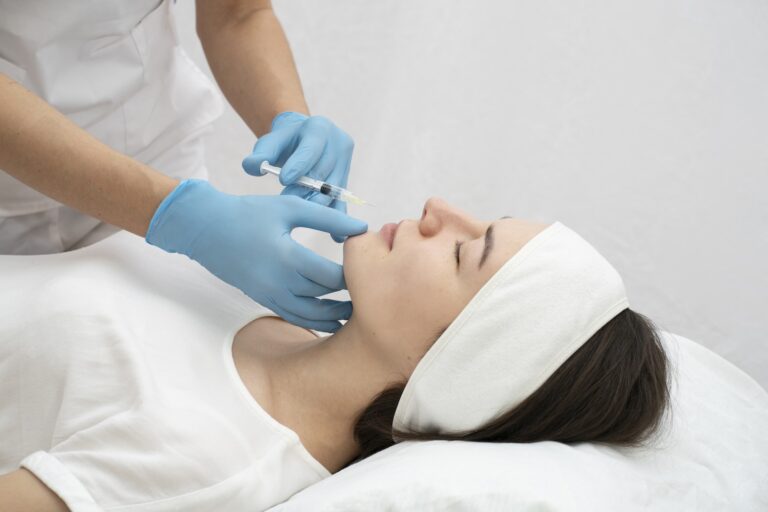
Clinics often present a blunt cannula as the better choice under the eye, on the reasoning that it pushes past vessels rather than piercing them. Two of these four trials recorded results by instrument, and neither supports the idea that a cannula gives a better cosmetic result.
Belotero's trial reported the Week 8 responder rate separately for each. Injections given with a needle scored 87.4% against 73.7% for a cannula. Separately, Volbella's approval document states that injections with a needle had a lower rate of injection site reactions than injections with a cannula.
Read that carefully, because the limit matters. The two Belotero confidence intervals overlap a long way, 75.0 to 94.1 for the needle against 59.4 to 84.3 for the cannula, on roughly fifty patients each. That means the trial does not demonstrate that needles work better. What it does do is remove the evidence base from the opposite claim. If a clinic tells you a cannula will give you a better result here, the approval documents do not support that, and you are entitled to ask what does.
Choice of instrument is a clinical judgement about your anatomy, and a practitioner who has a considered reason for either is telling you something useful. One who presents a cannula as categorically superior for the tear trough is repeating marketing.
How long it lasts
Only one of the four published a twelve-month figure this precisely. In the Volbella trial, 73.4% of patients, 69 out of 94, were still counted as responders at the twelve-month visit, against 83.1% at three months. Patient-reported scores moved in the same direction: the FACE-Q lower eyelid score rose from 54.4 at baseline to 72.6 at Month 3.
That is a real durability signal and also a realistic one. Roughly nine in ten of the improvement present at three months was still being recorded at twelve, but not all of it, and a twelve-month figure is not a promise of twelve months for you. Under-eye skin is thin and mobile, and this is the area where filler is most often reported as visible or lumpy later on. Our guide to what filler recovery actually looks like covers the first two weeks in detail.
What under-eye and tear trough filler costs
No manufacturer publishes a patient price for any of the four, and we do not publish figures we cannot source. What can be said accurately is how the area is priced and what changes the number.
Under-eye filler is sold by the syringe, not by the unit, which is the first thing to get straight if you are coming from Botox pricing. A syringe is typically 1 ml and the infraorbital hollow rarely takes a full one per side, so the practical question at a consultation is not the price per syringe but how much of a syringe your hollows need and whether you are charged for what is used or for the whole thing. Ask which, because both models are common and they produce very different bills for the same treatment.
Three things move the price more than the brand does:
- Who injects. On our city pages the same clinic frequently charges more for a physician than for a nurse injector. In Denver one practice publishes $13 a unit with a cosmetic injector and $16 with the physician, a 23 per cent difference for the same product.
- Whether the quote is a first-visit rate. Introductory pricing is common and it expires. In Chicago the lowest published Botox rate we found is a first-treatment price that rises by 44 per cent on the second visit.
- Whether a minimum applies. Some clinics set a floor on the bill regardless of how little product your treatment needs, which matters here precisely because this area uses so little.
Those patterns come from the verified prices on our city pages, where we publish what each clinic actually states, including when it states nothing.
The risk that makes this area different
This is the part that belongs above any discussion of price. All four approval documents carry the same warning, in near-identical language: injection into a blood vessel can cause vascular occlusion, and the documented consequences include vision impairment and blindness, as well as skin necrosis and, in reported cases, stroke.
The infraorbital region is close to vessels that connect to the ocular circulation, which is why this warning appears on every one of the four and why it is not boilerplate. These are rare events. They are also the reason the question of who is holding the syringe matters more here than almost anywhere on the face, and the reason we publish a state-by-state guide to checking an injector's licence.
The ordinary side effects are far more common and much less alarming. Belotero's trial recorded injection site swelling as the most frequent treatment-related event, in 9 of 144 patients. Tenderness, bruising, visible lumps and redness were the most commonly reported in the others. Our filler complications guide covers what is routine, what is not, and what warrants an urgent call.
What to ask before you book
- Which of the four are you using, and why that one? All four are approved for this area. A specific reason is a good sign; "it's the best one" is not, because no trial has compared them.
- Is it approved for under the eye, or are you using something off-label here? Many fillers are used in this area without an infraorbital approval. That is legal and sometimes appropriate, but you should know which situation you are in.
- How much product do you expect to use, and am I charged for that or for the full syringe?
- Needle or cannula, and what is your reason? Either answer can be right. The reason is the informative part.
- What is your plan if this migrates or stays lumpy? All four are hyaluronic acid, which means hyaluronidase can dissolve them. That is a genuine advantage of this whole category and worth confirming they carry it.
If your concern under the eye is a dark shadow rather than a hollow, or crinkling rather than volume loss, filler may not be the right tool at all, and Botox under the eyes covers why most injectors decline that request.
Frequently asked questions
Is tear trough filler the same as under-eye filler?
Which under-eye filler is best?
How long does under-eye filler last?
Is a cannula safer than a needle under the eye?
Can under-eye filler be dissolved?
What is the most serious risk?
Sources
Every figure on this page was read from the documents below rather than from a clinic or a manufacturer's marketing. They open in a new tab so you can check any claim here against its source.
- Summary of Safety and Effectiveness Data, P110033/S053, Juvéderm Volbella XC infraorbital, US Food and Drug Administration
- Summary of Safety and Effectiveness Data, P040024/S135, Restylane Eyelight, US Food and Drug Administration
- Summary of Safety and Effectiveness Data, P090016/S050, Belotero Balance (+), US Food and Drug Administration
- Summary of Safety and Effectiveness Data, P170002/S050, RHA Redensity Eye, US Food and Drug Administration
- Dermal fillers (soft tissue fillers), US Food and Drug Administration
- Dermal fillers, American Society of Plastic Surgeons

Know the count before the quote. The unit count is half the bill, and a low per-unit rate recovered by a high unit count is the commonest way a deal is not one. How to tell.
Deciding which area, not how many units? Botox by facial area covers what each zone actually achieves, which four are FDA approved, and the things Botox cannot fix at all.