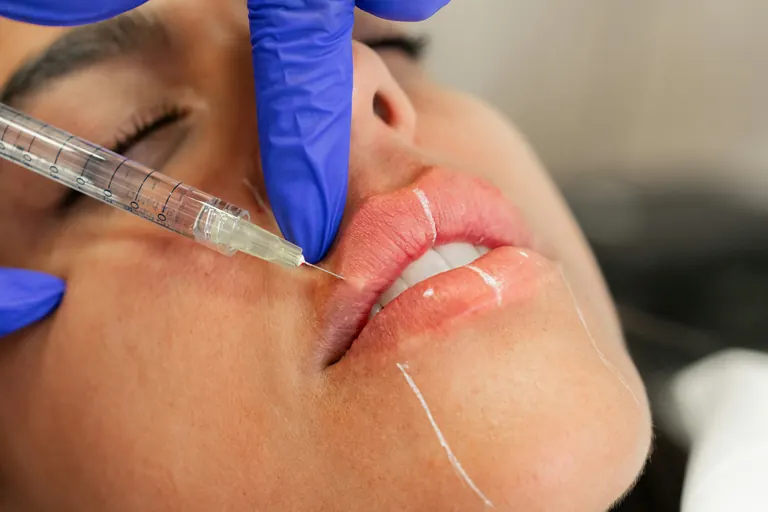
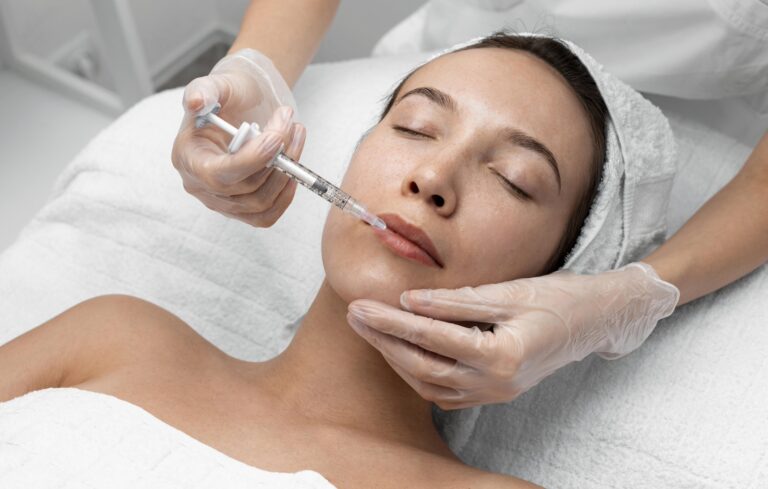
Juvederm: Which Product, and What the FDA Data Shows
Reviewed for medical accuracy against our Medical Review Board · Last updated 23 August 2026
Part of Dermal Fillers
Asking whether Juvederm is right for you is the wrong question. Juvederm is not one product, it is a range of at least seven, and the gap between them matters far more than the gap between Juvederm and its competitors. Volbella and Voluma are both Juvederm and are not interchangeable: one is a soft gel for lips and fine lines, the other is firm enough to rebuild a cheekbone. Getting the range member wrong is a bigger mistake than getting the brand wrong.
This page separates what the FDA record actually establishes about Juvederm from what is product positioning, because on brand pages that line is usually invisible.
1. What Juvederm is
Juvederm is a family of hyaluronic acid dermal fillers made by Allergan, now part of AbbVie. Their FDA classification is "implant, dermal, for aesthetic use", meaning they are regulated as medical devices rather than drugs. That single fact explains a lot of the confusion around fillers, and we cover what it changes on our dermal filler guide.
The XC in most product names means the gel contains lidocaine, a local anaesthetic, so the injection itself is more comfortable. It is not a different filler.
Because all of it is hyaluronic acid, all of it can be dissolved. That is the most consequential thing about the brand and section 8 explains why.
2. The range, and which does what
Read this table with section 3 in mind: the products and their approvals are FDA-verifiable, but only Voluma's specific indication could be confirmed from the public record. The "designed for" column is product positioning.
| Product | Gel character | Designed for |
|---|---|---|
| Volbella XC | Softest | Lips and fine lines around the mouth |
| Ultra XC | Soft to medium | Lips and general facial lines |
| Ultra Plus XC | Medium | Deeper folds, more volume than Ultra |
| Vollure XC | Medium | Nasolabial folds, softer than Voluma |
| Voluma XC | Firm | Cheeks and midface. Also chin |
| Volux XC | Firmest | Jawline definition |
| SKINVIVE | Not a volumiser | Skin smoothness in the cheeks |
The practical rule: firmness should match what the area needs to do. A firm gel that supports a cheekbone will feel wrong in a lip, and a soft lip gel will not hold up a midface. This is why "which Juvederm" is a better question than "Juvederm or Restylane", and why a clinic that answers only with the brand has not answered you.
3. What the FDA record actually confirms
Being explicit about the boundary, because brand pages usually are not.
Verifiable from the FDA device database: that these products hold US premarket approval, under PMA numbers P050047 and P110033; their approval and supplement dates; the full text of Voluma XC's indication; Voluma's complete approval trial including patient diary data; and adverse event report counts for each product.
Not publicly available: the specific approved indication for Volbella, Vollure, Volux, Ultra and Ultra Plus. Each was approved as a supplement to an existing PMA, and supplement Summary of Safety and Effectiveness documents are not posted in the FDA's public library. We tried; they are not there.
So treat the "designed for" column above as what the manufacturer positions each product for, which is useful and widely followed in practice, rather than as a quoted regulatory indication. If the exact approved use of a specific product matters to you, ask your injector to show you the Instructions For Use for the syringe they are opening.
4. Voluma, the one with published trial data
Voluma XC is the exception, because its approval was a full PMA rather than a supplement, so the FDA published its Summary of Safety and Effectiveness Data. Its indication reads, in full:
"JUVEDERM VOLUMA XC is indicated for deep (subcutaneous and/or supraperiosteal) injection for cheek augmentation to correct age-related volume deficit in the mid-face in adults over the age of 21."
Three details worth noticing. Deep injection, not superficial, and specifically including onto the bone. Cheek augmentation for age-related volume loss, which is a narrower claim than "midface filler". And over 21 rather than 18.
Separately, a later supplement is titled "Juvederm Voluma XC for Chin Augmentation", so the chin is covered by its own approval rather than being off-label use of the cheek indication.
5. What happens afterwards, from the trial diaries
The Voluma trial had 265 participants complete daily diaries for 30 days, which makes it the most detailed public account of filler recovery that exists. The headline numbers:
| Reaction | Patients |
|---|---|
| Any reaction | 98.1% |
| Tenderness | 92.1% |
| Swelling | 85.7% |
| Lumps or bumps | 81.1% |
| Bruising | 77.7% |
| Rated severe | 19.2% |
| Still present past 30 days | 20.0% |
Nearly everyone reacts, four in five get lumps, and one in five still has something after a month. The median time to complete resolution was six days, and the document notes that repeat treatment produced reduced incidence and duration compared with the first. Our page on what actually happens after filler works through all of it including the duration bands.
6. Adverse event reports by product
Fillers are devices, so adverse events go to MAUDE, the FDA's public device database. Juvederm has 9,792 reports in total, the most of any filler brand. Split by product:
| Product | Reports |
|---|---|
| Voluma | 3,825 |
| Ultra XC | 1,191 |
| Ultra Plus | 1,101 |
| Volux | 848 |
| Vollure | 441 |
| SKINVIVE | 355 |
| Volbella | 265 |
These are report counts, not rates, and there is no denominator anywhere in this data. Voluma leads because it is the most used product in the range, and Juvederm leads the whole market for the same reason. Nothing here ranks safety, and reporting does not establish causation.
What the reports do show is which kinds of problem occur. Across the brand: oedema 1,729, skin irritation 1,725, inflammation 1,450, infection 1,199, nodule 1,099. And the serious minority: obstruction or occlusion 695, impaired circulation 322, necrosis 261, loss of vision 34. Our page on filler complications goes through those properly, including why the eight death-coded reports do not support the number they imply.
7. SKINVIVE, which is not a filler in the usual sense
Worth its own section because people find it and assume it is another volumiser. It is not. SKINVIVE is injected as microdroplets into the skin of the cheeks to improve smoothness rather than to add shape or volume. If you want a fuller cheek it is the wrong product.
It is also the newest part of the range, and still moving: its first approval came as a supplement in August 2023, and a further supplement was approved on 11 June 2026. It has 355 adverse event reports, which is modest and consistent with a recent launch.
Because it is hyaluronic acid it is dissolvable like the rest of the range.
8. All of it can be dissolved
Every product in the Juvederm range is hyaluronic acid, which means every one of them can be broken down with hyaluronidase, an enzyme that works within hours to days.
This matters twice. If you dislike a result, it is reversible rather than a wait of a year or more. And if filler blocks a blood vessel, which is the complication that can cause tissue death or vision loss, hyaluronidase is the treatment. Radiesse, Sculptra and Bellafill are not hyaluronic acid and cannot be dissolved, which is a strong argument for an HA filler on a first treatment.
So the question to ask any clinic is not whether they can obtain hyaluronidase, but whether they keep it on site.
9. How long it lasts
No filler carries an FDA-stated duration the way a drug label states one, so the honest position is ranges from clinical experience, modified by one piece of real trial data.
For lips, we do have measured data, though from a different manufacturer's trial: a lip filler approval study found 89.6% of patients still showing a measurable improvement at four months, 78.8% at five and a half, and 48.7% at eleven. Two different hyaluronic acid lip fillers in that trial tracked within one point of each other at week 48, which suggests the curve is a property of the material rather than the brand. That is the closest thing to an evidence-based answer for Volbella or Ultra in lips, and it is on our page about how long lip filler lasts.
For the firmer products in structural areas, cheeks and jawline, the working expectation is longer, generally twelve to twenty-four months. Lips are always shortest because the area never stops moving.
10. Choosing between Juvederm and the alternatives
Honestly, the brand is one of the less important decisions. What matters more, roughly in order:
- Who is injecting. Of Juvederm's 9,792 reports, 952 are coded as improper or incorrect procedure or method and 304 as off-label use. Technique, not product.
- Whether it can be dissolved. All Juvederm can. Radiesse, Sculptra and Bellafill cannot.
- Which member of the range. Firmness matched to the area.
- Then the brand. Juvederm against Restylane is a real choice with real differences in gel technology, and it is also the point at which the marginal difference to your result becomes small.
If you are weighing filler against a toxin instead, the mirror test settles it: lines visible when your face is completely still are a filler question, lines that appear only on movement are a toxin question. Our Botox against Juvederm comparison covers that, and a lip flip is worth understanding before choosing lip filler, since the two look similar in photographs and are not the same treatment.
11. What to ask
- "Which product in the range, and why that one for this area?" The single best question on this page. Volbella and Voluma are not interchangeable.
- "How many millilitres, and what is the total price?" Fillers are sold by the syringe and half-syringe treatments are common.
- "Do you keep hyaluronidase on site?" Not whether they can get it.
- "Can I see the syringe and the box?" Reasonable, and it lets you confirm the product matches what you agreed.
- "What is your protocol for a suspected vascular occlusion?" A good injector answers immediately.
- Check the licence. Free, public, two minutes, via our verification guide.
For clinics and published pricing in your area, our city guides cover the practices we have researched so far.
Frequently asked questions
What is the difference between Juvederm products?
Which Juvederm is best for lips?
Is Juvederm FDA approved?
What is Juvederm Voluma approved for?
Can Juvederm be dissolved?
How long does Juvederm last?
Is Juvederm safe?
What are the side effects of Juvederm?
What is SKINVIVE by Juvederm?
Which has the most adverse event reports, Juvederm or Restylane?
Does the XC in Juvederm mean anything?
Should I choose Juvederm or Restylane?

Sources
Every figure on this page was read from the documents below rather than from a clinic or a manufacturer's marketing. They open in a new tab so you can check any claim here against its source.
- Dermal fillers (soft tissue fillers), US Food and Drug Administration
- Dermal fillers, American Society of Plastic Surgeons
- Premarket Approval (PMA) database, US Food and Drug Administration
Know the count before the quote. The unit count is half the bill, and a low per-unit rate recovered by a high unit count is the commonest way a deal is not one. How to tell.
Deciding which area, not how many units? Botox by facial area covers what each zone actually achieves, which four are FDA approved, and the things Botox cannot fix at all.