
Botox Deals and Discounts: What Is Real and What Is Not
Reviewed for medical accuracy against our Medical Review Board · Last updated 22 August 2026
Part of Botox Guides: Basics, Dosing and Safety
There are real ways to pay less for Botox: manufacturer rewards, membership pricing, new-patient rates, treating more areas at once, and buying at the annual promotions. There are also offers that are cheap because you are not getting what you think. The difference is almost always visible in one question: how many units of which drug, for how many dollars.
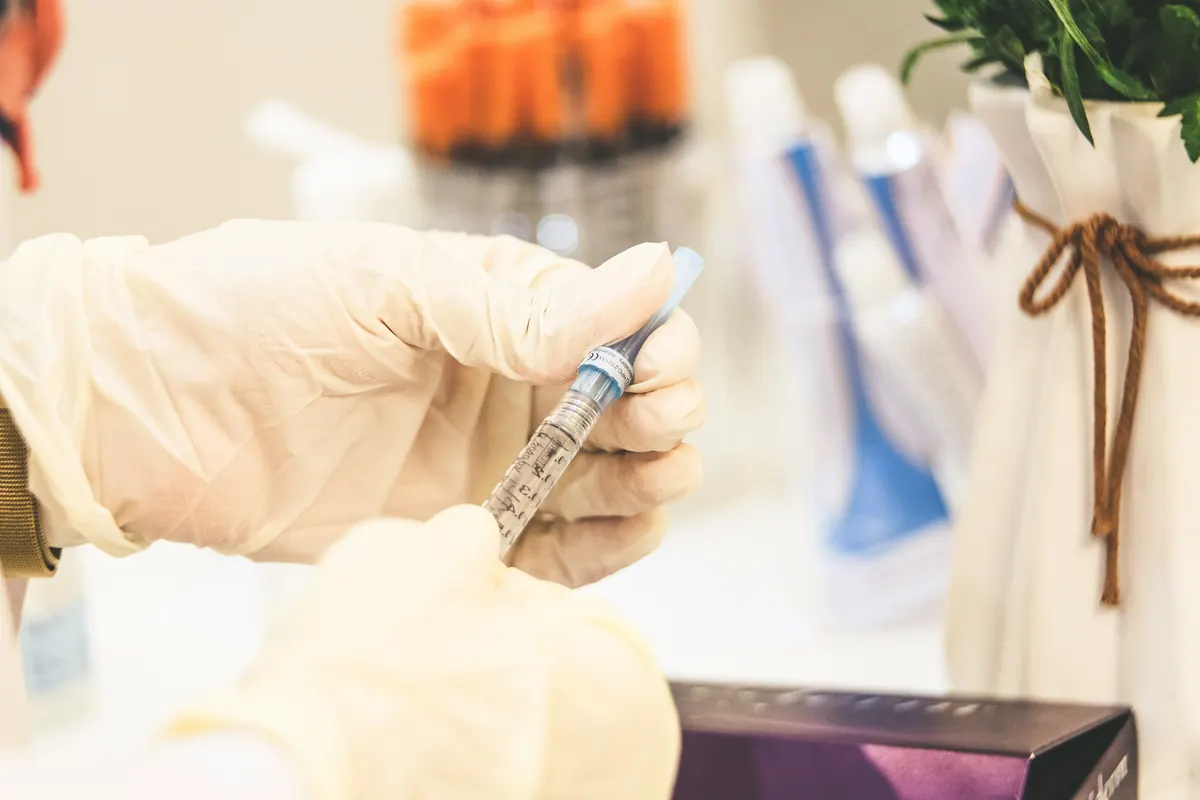
Botox is a prescription medicine, and the word "sale" sits oddly on it. That does not mean every discount is suspect. It means the mechanism behind a discount is worth understanding, because some mechanisms cost the clinic money and some cost you something else.
1. The discounts that are genuinely real
These lower your cost without lowering what you receive. They exist because the manufacturer or the clinic is spending money to acquire or keep you.
- Manufacturer loyalty programmes. Allergan, which makes Botox, runs a rewards programme called Allē that accrues points on treatments and redeems them against future ones. Rival manufacturers run their own equivalents. These are free to join and are the single most reliable saving available, because the money comes from the manufacturer rather than from your clinic's margin. Ask whether your clinic is enrolled, because the benefit only exists if they submit your treatment.
- Annual promotional events. Manufacturers run periodic promotions, and clinics schedule around them. Buying in that window is a real saving on an unchanged product.
- Membership and treatment plans. Many clinics offer a lower per-unit rate to members or to patients on a standing schedule. This is genuine, and it is worth doing the arithmetic on whether the membership fee is recovered by your actual treatment frequency rather than your intended one.
- New-patient pricing. A first-visit rate is a customer acquisition cost. It is real, and the question to ask is what the standing price becomes afterwards.
- Volume tiers. A lower rate above a unit threshold is common and legitimate. The catch is that it only saves you money if you needed that many units anyway. Buying 40 units to reach a tier when you needed 25 is not a saving.
- Treating several areas in one visit. Injector time is a real cost, so combining areas usually beats separate appointments. This one is almost always worth taking.
Notice what they have in common: none of them changes the drug, the dose or who injects you.
2. The manufacturer loyalty programmes, by name
Section 1 says rival manufacturers run their own equivalents of Allē. Here they are, because the saving is one of the few genuinely reliable ones and most people only ever hear about whichever one their own clinic happens to use. Terms below were read from each manufacturer's own site in September 2026. Programme values change, so check the current terms rather than relying on a number here.
- Allē, from Allergan, covers Botox Cosmetic. Points accrue on treatments and redeem against later ones, and it spans the company's other aesthetic products, so points earned on one treatment can come off a different one.
- ASPIRE Galderma Rewards covers Dysport, and also Restylane and Sculptra. Galderma states that 100 points equals $10 of savings, and advertises a $20 welcome reward on joining.
- Xperience+, from Merz, covers Xeomin. Merz advertises $50 instant savings on a treatment, limited to once every 90 days per patient, and up to $240 a year in total. Read the qualifier on that: Merz states the instant saving is issued at the discretion of a participating provider, so whether you get it depends on your clinic rather than on the programme.
- Club Evolus covers Jeuveau, advertised as $40 off every 90 days.
- Daxxify has no named loyalty programme on Revance's own site, only a sign-up for offers and updates. Letybo has none either; Hugel's US site is aimed at providers rather than patients.
Two things decide whether any of this reaches you. The first is whether your clinic is enrolled and actually submits your treatment, because the benefit does not exist otherwise, and nobody will tell you if they skipped it. The second is the arithmetic. At the three treatments a year that most people have, a $40 to $50 per-treatment saving is $120 to $200 across the year. That is larger and far more certain than most of the offers on the rest of this page, and it does not require you to buy more units than you need.
The one trap: a programme is tied to a product, not to you. If you switch brands because your clinic switched suppliers, your accrued points do not follow. That is worth knowing before you agree to a change of toxin on the day.
3. What a normal price actually is
You cannot judge a deal without a baseline, and most articles on this subject give you a national average, which is close to useless because the spread between cities is wider than the spread between clinics.
So here is the real thing: per-unit rates read off clinics' own published pricing in every city we verify, and what a typical treatment costs at those rates.
| Published rate | Per unit | 20 to 40 units |
|---|---|---|
| Lowest we found | $9 | $180 to $360 |
| Middle of the range | $12 | $240 to $480 |
| Highest we found | $18 | $360 to $720 |
These are rates clinics actually publish, read off their own price pages rather than estimated: the floor is $9 a unit in Atlanta, GA and the ceiling $18 in Tampa, FL. Your own city may sit outside that range entirely. We check published pricing city by city, and the locations index lists every city covered so far, with the named clinics and their rates.
Use it as a floor. An offer meaningfully below the bottom of your city's range is not necessarily fraudulent, but it needs an explanation, and sections 3 to 7 are the explanations. Our Botox price guide covers what moves the number nationally, and every city we cover has its own verified band.
4. The cheap per-unit price that is a different drug
This is the most common way a Botox price looks like a bargain and is not, and it is entirely legal and openly advertised.
Botulinum toxin brands are all measured in units, but a unit is a measure of biological activity specific to each manufacturer's own assay. Units do not convert between brands. Every label says so: Letybo's states that its units cannot be compared to nor converted into units of any other botulinum toxin product.
Dysport is the one this matters most for, because it takes roughly two and a half to three Dysport units to do the work of one Botox unit. So a clinic can advertise a rate that looks like a quarter of its Botox price and be charging you about the same.
We found three clinics doing precisely this in one city while researching Houston:
| Clinic | Botox | Dysport | Dysport in Botox terms |
|---|---|---|---|
| BotoxRN, Houston | $12 per unit | $3.50 per unit | Roughly $9 to $10.50 |
| River Oaks MedSpa, Houston | One published range, "$5 to $14.50", covering either drug | Unclear by design | |
| A Houston plastic surgery med spa | $10.50 promotional | $4 promotional | Roughly $10 to $12 |
None of that is dishonest. Dysport is a good product with its own guide, and some people prefer it. But the $3.50 is not a discount on the $12, and a range that covers two drugs without saying which sits where is not a price you can compare. The fix is one question: is this rate for Botox or for Dysport, and what is my total either way? Our guide to the other brands and the Letybo guide cover the rest of them.
5. Cheap per unit, more units needed
The per-unit rate is half the bill. The other half is how many units, and that is set by the injector.
A clinic with a low rate has an obvious incentive, and a clinic with a high rate has the opposite one. Neither is proof of anything, but it means the honest comparison is total cost for a defined result, not the rate.
Know roughly what your area should take before you go. The approved doses are public: 20 units for frown lines, 24 for crow's feet, 20 plus 20 for forehead lines treated with the glabella. Our units guide and calculator has the ranges for every area including the off-label ones. If a quote is built on double the usual count, the low rate has been recovered.
6. Dilution, the variable you cannot see
Here is the one nobody advertises, and it is the reason a very low per-unit price can be delivered without changing the drug or the unit count on your invoice.
Botulinum toxin arrives as a freeze-dried powder and is reconstituted with saline. The labels specify dilutions. A clinic that adds more saline than the label specifies gets more injectable volume from the same vial. Injected volume goes up, biological activity per millilitre goes down.
You cannot detect this in the chair. What you may notice is a weaker result, a shorter duration, or more spread than expected, because a larger volume of more dilute solution diffuses further, which is also how a neighbouring muscle gets caught.
You cannot audit it, so the questions are indirect and still useful: what dilution do you use, was this vial reconstituted for me, and when? A clinic that answers those precisely is telling you something. A clinic that finds the question strange is telling you something too.
7. Minimums, packages and the price that is not the price
Three structures turn an advertised rate into a different real cost:
- Minimum spend. Very common, and it makes small treatments cost far more than the rate implies. A four unit lip flip at $13 a unit is $52 of product and can easily cost several times that against a minimum.
- Per-area pricing. A flat price per area rather than per unit. Not worse, but it only helps if your area needs more units than average, and it hides the unit count entirely. Always ask how many units the flat fee covers and what happens if you need more.
- Prepaid packages. Buying several treatments up front at a lower rate. The saving is real; the risk is that you are now tied to one clinic before you know whether you like their work. Never prepay a package on a first visit.
8. Third-party coupons and voucher sites
Sections 1 and 2 cover discounts that come from the manufacturer or the clinic. This is the other kind: a coupon bought from a site that is not the clinic, most often a daily-deal or voucher platform.
The coupon itself is usually real. That is not the question worth asking. The question is what the clinic has to do to make the economics work, because the platform takes a cut of an already discounted price, and something has to absorb it.
The four things that absorb it, in rough order of how often you will meet them:
- Units. The voucher says "20 units" or, worse, "one area". An area is not a dose. Section 4 covers why a cheap per-unit price with more units needed is not a saving; a voucher that does not state a unit count is that problem with the number hidden.
- Dilution. Section 5 covers the variable you cannot see, and a fixed-price voucher is exactly the setting where it moves.
- Who injects. Voucher volume is often handled by the newest injector in the practice. That is not automatically bad, and it is something to establish rather than discover.
- The product. Section 7 covers what happens when cheap means not FDA approved. A voucher redeemed in a non-clinical setting deserves more scepticism than one redeemed in a medical practice.
So the checks before buying one, none of which require you to be suspicious of the clinic:
- Does the voucher state a product by brand name and a number of units? If it says "per area" or "per treatment", you cannot price compare it against anything.
- What is the standing price at that clinic, and is the voucher actually below it?
- Does redeeming it make you ineligible for the manufacturer programme covered in section 2? Losing a $40 to $50 per-treatment reward to save $30 is a bad trade, and nobody will point it out.
- Is there a minimum spend or an upsell attached at redemption?
A voucher from a real clinic, stating a real product and a real unit count, at a price below their standing rate, is simply a discount and worth taking. It is the ones that specify none of those things that are selling you an unknown quantity at a known price.
9. Botox Day, and why we do not print this year's offer
Botox Day is an annual Allergan promotion, run through the Alle programme covered in section 2. It typically involves a limited release of discounted treatment credit, sold on a single day, in a fixed quantity, redeemable later at a participating clinic.
We do not publish this year's date, price or terms. They change every year, and a stale figure on a page about saving money is worse than no figure. As of September 2026 there was no live Botox Day page on the manufacturer's own site to check against. The current terms live in the Alle programme, and that is where to look.
What does not change year to year, and is worth knowing before the day arrives:
- It is credit, not a treatment. You are buying money to spend later, so the saving only exists if you would have had the treatment anyway and if you redeem before it expires.
- Check the expiry before you buy. This is where the value usually leaks. Credit with a short window can push you into treating earlier than you need, which is the opposite of the labelled advice on the longest feasible interval covered in section 7.
- Participating clinics only. Your usual injector may not be enrolled. Confirm before buying, not after.
- It sells out. The quantity is limited by design, which creates the urgency. Urgency is a poor reason to commit to a prescription treatment, and the underlying saving is rarely larger than what the loyalty programme returns across a year anyway.
- It is Botox only. Dysport, Xeomin, Jeuveau, Daxxify and Letybo are not part of it, and if you have been happy on another brand, switching to use credit means changing product and dose. Our comparison of the six covers why the units do not carry across.
The arithmetic worth doing: compare the Botox Day saving against what you would earn from the loyalty programme over the same year, and against what you would lose by switching brands to use it. For a lot of people those cancel out.
10. When cheap means not FDA approved
At the far end, the reason a price is impossible is that the product is not the product.
There are botulinum toxins in wide use internationally that hold no FDA approval, and several of them are made in Korea. Letybo went through the FDA and was approved in February 2024. Others have not, including products sold as Neuronox, Coretox, Liztox, Innotox and Rentox. They may be perfectly respectable where they are licensed, and they have no business being injected into you in the United States.
Alongside that sits outright counterfeit product, which is the reason the very cheapest offers exist at all. Neither is something you can identify by looking at a syringe.
What you can do is check. Ask which product, by brand name, and ask to see the vial. Then check the injector's license, which takes about two minutes with our 50 state verification guide. A treatment being administered by someone whose license you can confirm, in a clinic with a named delegating physician, is the practical protection here.
11. Eight red flags in a Botox offer
- A per-unit price far below your city's published range, with no explanation.
- A price that does not name the brand, or a range covering "Botox or Dysport" without saying which is which.
- Pressure to buy today, or a countdown on the offer.
- Prepayment for multiple sessions before you have been treated once.
- No named injector, or a refusal to say what license they hold.
- Treatment in a non-clinical setting: a home, a hotel room, a party, a pop-up.
- No consultation, no medical history, no record. In many states a prescriber has to assess you first.
- Unwillingness to tell you the unit count, or to show you the vial.
Any one of those is a question. Two or more is a reason to leave, and the deposit is cheaper than the alternative.
12. How to actually pay less, in order
- Join the manufacturer's rewards programme and confirm your clinic submits to it. Free, and it compounds.
- Know your unit count before you get a quote, so you are comparing totals.
- Combine areas in one visit rather than spreading them across appointments.
- Ask about new-patient pricing, then ask what the standing rate becomes.
- Buy at the annual promotions if your timing is flexible.
- Consider a different approved brand on a total-cost basis, not a per-unit basis. Dysport and Letybo are both real options.
- Do the membership arithmetic honestly, on how often you actually go.
- Travel within your metro. Our city guides show suburban clinics frequently publishing materially lower rates than downtown ones.
- Do not chase the bottom. Correcting a bad result costs more than the difference, and some outcomes cannot be corrected, only waited out.
13. What to ask before you hand over a card
- Which product, by brand name, and may I see the vial?
- How many units, and what is the total in dollars?
- Is this rate for Botox or for another toxin?
- What dilution do you use, and was this vial reconstituted for me?
- Is there a minimum spend, and does my treatment reach it?
- Who is injecting me, what license do they hold, and who is the delegating physician?
- Is this a promotional price, and what is the standing price?
- What happens, and what does it cost, if the result is uneven at two weeks?
A clinic that answers all eight without friction is a clinic worth paying full price at, which is the slightly awkward conclusion of an article about discounts.
One more name to know. Relfydess is widely used abroad and has no FDA approval, so being offered it here belongs in the same category as the unapproved toxins above.
Frequently asked questions
Are Botox deals safe?
Why is Dysport advertised so much cheaper than Botox?
What is a normal price for Botox per unit?
How can I get cheap Botox without the risk?
What is Allē and is it worth joining?
Can Botox be diluted to make it cheaper?
Is it bad if a clinic runs Botox specials?
What are the signs of fake or unapproved Botox?
Should I prepay for a Botox package to save money?
Is Botox cheaper in the suburbs?
What is the Botox rewards programme called?
Are there Dysport rewards?
Is there a Xeomin coupon?
Are Botox coupons legitimate?
Is Groupon Botox safe?
What is Botox Day?
Is Botox Day worth it?
When is Botox Day this year?

Sources
Every figure on this page was read from the documents below rather than from a clinic or a manufacturer's marketing. They open in a new tab so you can check any claim here against its source.
- BOTOX Cosmetic prescribing information, FDA via DailyMed
- Botulinum toxin, American Society of Plastic Surgeons
Keep reading
 Botox Education14 Botox Myths and Misconceptions
 Botox Comparison GuidesBaby Botox vs. Regular Botox
 Botox Treatment AreasBotox by Facial Area
 Botox Comparison GuidesBotox Cosmetic vs. Medical Botox
 GuideBotox Units Per Area
 Other NeurotoxinsLetybo Price and Cost Per Unit
 Other NeurotoxinsBotox Alternatives, Compared