
Botox by Facial Area: Every Treatment Zone Explained
Reviewed for medical accuracy against our Medical Review Board · Last updated 22 August 2026
Part of Botox Guides: Basics, Dosing and Safety
Botox is not one treatment, it is about eight, and the dose ranges thirty-fold between the smallest and the largest. Four of those areas are on the FDA label and the rest are off-label. Just as importantly, several of the things people most want fixed are not muscle problems at all, so no dose of any neurotoxin will touch them.
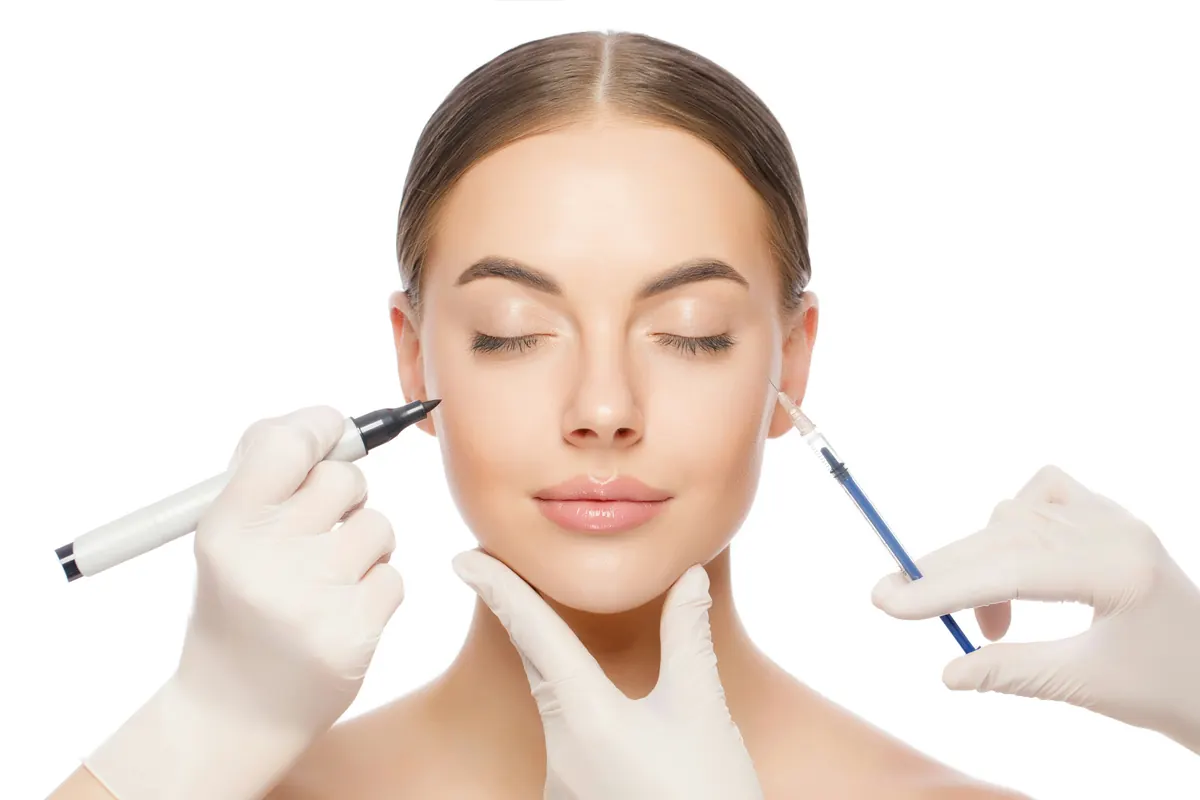
This page is the map: what each area actually achieves, which ones are forgiving and which are not, what to treat first, and the list of things Botox genuinely cannot do. For how many units each area takes, the units guide and calculator goes deeper than this page will.
1. Every area, and what it actually does
Ignore the units for a moment. The useful question about an area is what treating it changes about your face.
| Area | What treating it actually does | FDA status |
|---|---|---|
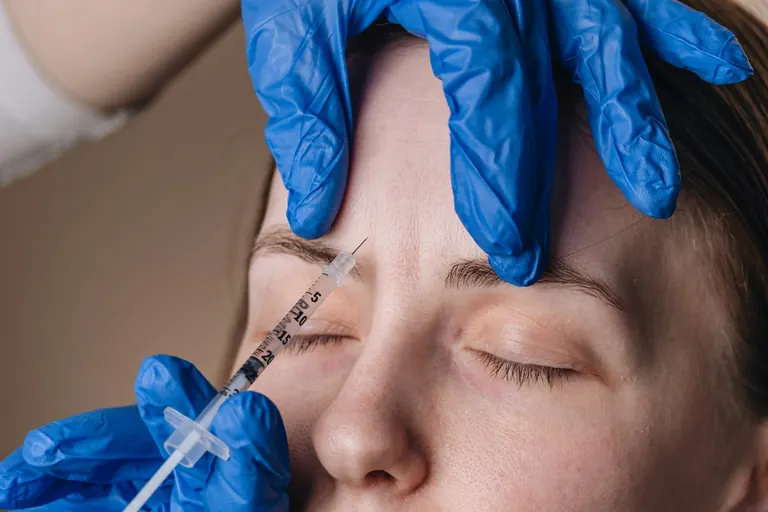
| Frown lines (glabella) | Softens the vertical lines between the brows that read as stern or angry. The most treated area in the world | Approved |
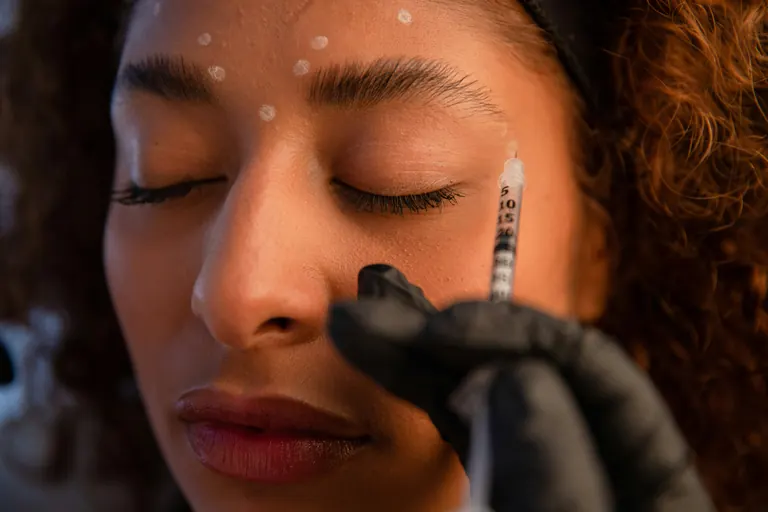
| Forehead lines | Smooths the horizontal creases. Also lowers the brow, which is why it is treated with the glabella rather than alone | Approved |
| Crow's feet | Softens the fan of lines at the outer eye when you smile. Does not change the eye itself | Approved |
| Platysmal bands (neck) | Relaxes the vertical cords that stand out when you tense. Does nothing for horizontal neck creases | Approved since October 2024 |
| Brow lift | Raises the outer brow a millimetre or two by relaxing what pulls it down. Opens the eye slightly | Off-label |
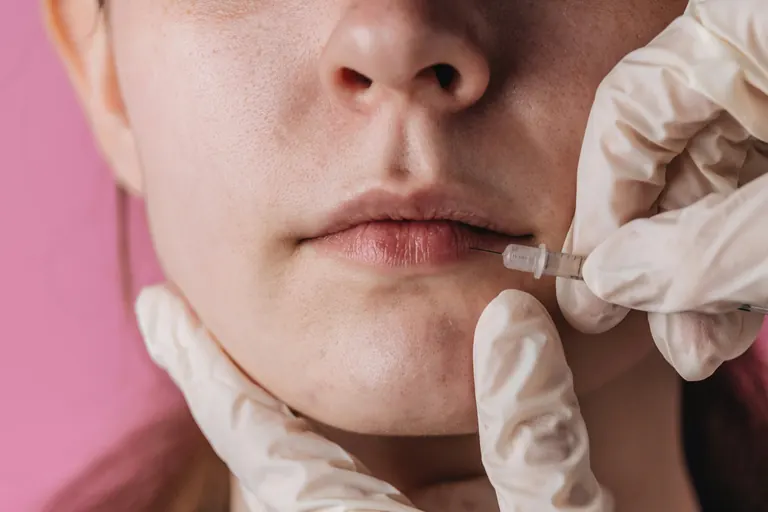
| Lip flip | Rolls the upper lip edge outward so more pink shows. Adds no volume whatsoever | Off-label |
| Masseter (jaw) | Slims the lower face over months by shrinking a chewing muscle. Also reduces clenching | Off-label |
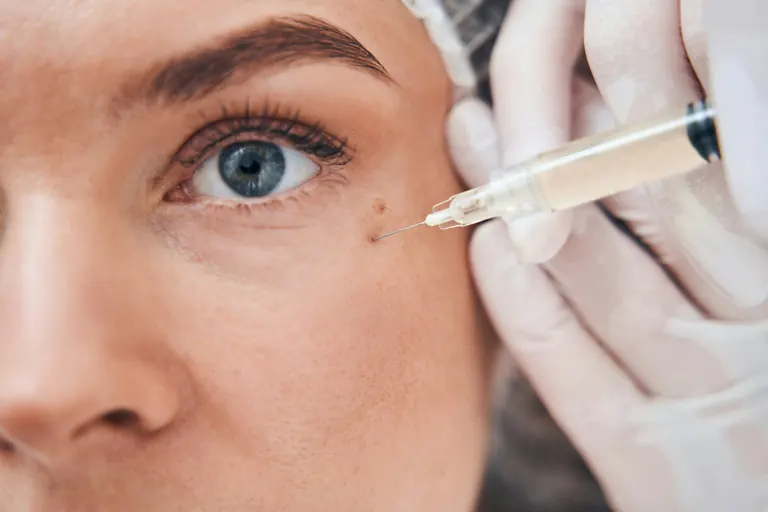
| Under the eyes | Softens fine crinkling in a very small dose. The area where most injectors say no | Off-label |
| Bunny lines (nose) | Softens the diagonal creases across the nose when you scrunch it. A 2025 cadaveric study found the usual injection point is not muscle | Off-label |
| Gummy smile | Limits how far the upper lip rises so less gum shows. Only works if the cause is muscular rather than skeletal or dental | Off-label |
| Marionette lines | Lets the mouth corner sit higher by relaxing the muscle pulling it down. Does nothing for the volume half of the fold | Off-label |
Notice how different those outcomes are. Four of them soften lines, one changes brow position, one changes lip shape, one changes face shape over months. Treating "Botox" as a single decision is the first mistake.
2. The injection maps the label actually specifies
Four cosmetic areas have an FDA-approved injection pattern, with a stated number of sites and a stated dose per site. Everything else is technique rather than protocol. Here is what the label specifies.
| Area | Sites | Dose | Total |
|---|---|---|---|
| Frown lines (glabellar) | 5 | 4 Units each | 20 Units |
| Crow's feet (lateral canthal) | 3 per side, 6 points | 4 Units each | 24 Units |
| Forehead lines | 5 forehead, plus 5 glabellar | 4 Units each | 40 Units |
| Neck bands (platysma) | 18, 23 or 28 depending on bands | 2 Units and 1 Unit | 26, 31 or 36 Units |
Look at the forehead row, because it is the one nobody explains. The approved forehead treatment is not five injections in your forehead. It is five in the forehead and five in the glabella, for 40 Units total. The frown lines are treated at the same time by design.
The reason is mechanical. The frontalis muscle lifts your brow; the glabellar muscles pull it down. Weaken the lifter alone and the depressors win, which is how a brow ends up sitting lower than it started. So if you are quoted a forehead treatment at 10 or 12 units with nothing in the glabella, you are not getting a cheaper version of the approved treatment. You are getting a different one, with a predictable failure mode.
Two further things the maps make clear:
- The glabellar pattern is two injections into each corrugator and one into the procerus. Five sites, not a row across the brow.
- The label sets a floor for the crow's feet injections, placed with the needle oriented away from the eye, and warns against injecting closer than 1 cm above the central eyebrow for glabellar work. Those distances exist to keep product away from the muscle that holds your eyelid up.
For every other area on this page there is no approved map at all. That does not make treatment wrong, and our units by area guide covers what is conventionally used. It does mean that when an injector describes a site pattern for the chin, the nose or the jaw, they are describing their practice rather than a protocol anyone reviewed.
3. What Botox cannot fix, and what does
This is the section that saves people money, and it is the one almost no clinic page leads with.
Botox relaxes muscle. If your concern is not caused by a muscle contracting, it will not respond, regardless of dose or injector.
| What people ask for | Why Botox does not do it | What does |
|---|---|---|
| Nasolabial folds (smile lines) | Mostly volume loss and gravity, not muscle. Injecting the muscles here can weaken your smile | Filler, usually |
| Lines etched in at rest | The crease is in the skin itself, not held by contraction | Resurfacing, microneedling, filler |
| Under-eye hollows and tear troughs | Lost volume beneath the skin | Filler, or fat repositioning |
| Skin texture, pores, redness | Nothing to do with muscle | Resurfacing, lasers, skincare |
| Jowls and sagging skin | Skin laxity and descent, a mechanical problem | Energy devices, or surgery |
| Thin lips | Volume. A lip flip changes shape, not size | Filler |
| Hooded eyelids from excess skin | The skin is the problem, and no injectable removes skin | Blepharoplasty |
Our Botox against fillers guide covers the volume question across the whole face, the microneedling comparison covers texture, and the facelift comparison covers laxity. If a clinic offers Botox for anything in the left column, ask them to explain the mechanism.
4. Three small areas the guides usually skip
None of these is approved for any product, none has a labelled dose, and all three come up often enough to be worth stating plainly.
Chin dimpling and the orange-peel chin
The mentalis is a small muscle at the point of the chin. When it is overactive it puckers the skin above it into a dimpled, pitted texture, most visible when you push your lower lip up or purse your mouth.
This is one of the better off-label uses, because it passes the test in section 3: there is a named muscle doing something visible on movement. Small doses relax it and the surface smooths. What it will not fix is a crease under the lower lip caused by the chin projecting or by volume loss, which is a structural matter rather than a muscular one.
The risk to understand is that the mentalis contributes to lower lip position. Too much, or placed too high, and the lower lip can feel or look weaker for a few weeks. That is why doses here are small and why an injector's experience with this specific area matters more than usual.
Smoker's lines and lip barcode lines
The vertical lines above the upper lip, which most people who have them never smoked. They are made by the orbicularis oris, the ring of muscle around the mouth, over years of pursing.
Toxin here is genuinely delicate. That same muscle closes your lips, holds liquid in and shapes speech, so weakening it too much produces difficulty with straws, with certain consonants, and with a controlled smile. Doses are correspondingly tiny, often a couple of units per side, and the result is a softening rather than an erasure.
Two honest points. If the lines are visible when your face is completely still, this will disappoint you, and the treatments that address them are filler or resurfacing. And if what you want is more visible lip rather than fewer lines, the lip flip is a different treatment with a different mechanism.
Temples and the temporalis
Two entirely separate requests get called temple Botox and they have opposite answers.
- Hollow temples. A volume problem. A toxin adds no volume and will not help. Temple filler is the treatment that matches.
- A bulky temporalis, the chewing muscle that runs up the side of the head above the ear. In people who clench heavily it can be prominent enough to widen the upper face. Relaxing it is the same logic as masseter treatment, and it is usually done alongside the masseter rather than instead of it. Our TMJ guide covers that pairing.
Establishing which of the two you mean is the entire consultation. Feel the side of your head while you clench: if it bulges under your fingers, that is temporalis. If the area looks sunken at rest, that is volume.
5. The test that predicts whether it will work on you
There is a fifteen-second version of this whole page, and you can do it in a mirror.
- Look at the line that bothers you with your face completely relaxed.
- Now make the expression that creates it: frown, raise your brows, smile hard.
If the line only appears when you move, it is a dynamic line held by muscle. That is exactly what Botox treats, and you are a good candidate.
If the line is clearly there when you are relaxed, it is a static line etched into the skin. Botox will soften how deep it gets when you move, but it will not remove what is already there. Expecting otherwise is the most common disappointment in aesthetics.
Most people are somewhere in between, and that is fine: relaxing the muscle stops a dynamic line becoming a static one, which is the real argument for treating earlier rather than later. It is also why the registration trials for these products enrolled people with lines at maximum frown and excluded people whose lines could not be lessened even by physically stretching the skin apart.
6. Upper face and lower face are different risks
Every clinic price list presents areas as interchangeable line items. They are not, and the distinction is about what happens if the dose or the placement is wrong.
The upper face is forgiving. Frown lines, forehead, crow's feet, brow. The muscles here move skin. If something goes wrong you get a cosmetic problem: an uneven brow, a heavy forehead, or a drooping eyelid, which happens in about 3% of glabellar treatments. All of it wears off, and the drooping-eyelid version has drops that help within about half an hour.
The lower face and neck are not. The muscles here do jobs. The platysma sits over the muscles you swallow with, so neck treatment carries a genuine risk of difficulty swallowing if it goes too deep. The lip flip weakens the seal you use for straws, whistling and the letters P and B. The muscles around the mouth control your smile.
So the practical rule when choosing an injector: for the upper face, competence is enough. For the neck, the mouth and the jaw, ask specifically how many of that area they have done.
7. What to treat first
If it is your first time, treat your frown lines. Four reasons, in order:
- It is the best-evidenced area anywhere. Approved since 2002, with more trial data behind it than any other cosmetic use.
- It is where the effect is most obvious to you. The glabellar complex is strong, and relaxing it changes how your resting face reads more than any other single area.
- It is forgiving. Upper face, wears off, nothing functional at stake.
- It teaches you how you respond. Everyone metabolises this differently, and learning your own onset and duration on the safest area is worth more than a package deal.
What not to do first: the neck, the masseter, or anything around the mouth. The masseter in particular takes weeks to show and months to fully develop, which makes it a poor first experiment.
8. The areas that have to be treated together
One combination is not optional, and it comes from the label rather than from us.
Botox Cosmetic's prescribing information instructs that forehead lines be treated in conjunction with glabellar lines, and says why: to minimise the potential for brow ptosis. The approved regimen is 20 units into the forehead together with 20 units into the glabellar complex.
The reason is a tug-of-war. One muscle raises your brow and several pull it down. Smooth the forehead alone and you have switched off the only lifter while leaving every depressor at full strength, so the brow falls. That is the mechanism behind both the brow lift and the heavy brow, read in opposite directions.
So if you ask for "just a little in the forehead" and your injector explains why they would rather add the glabella, they are working from the label. That is a good sign, not an upsell.
9. Approved against off-label, and why it matters
Botox Cosmetic holds four approved cosmetic indications: frown lines, crow's feet, forehead lines, and platysma bands in the neck, which joined the label in the revision dated October 2024. Everything else on this page is off-label.
Off-label prescribing is legal, extremely common, and often the right clinical choice. What it changes for you is what exists behind the number you are quoted:
- On-label areas have a labelled dose, an injection map from registration trials, and published adverse event rates.
- Off-label areas have clinical convention. The doses everyone quotes for the masseter or the lip flip come from practice, not from a document a regulator reviewed.
That is not a reason to avoid off-label areas. It is a reason to weight the individual injector far more heavily there, because on those areas their judgement is the protocol.
10. The complication rates that exist, and the areas with none
The section above says on-label areas have published adverse event rates. Here they are. These are the reactions reported by at least 1% of treated subjects and more often than in the placebo group, which is the bar the label uses. Anything below that threshold is not listed, so read a short list as a floor rather than as an absence.
| Area (trial size) | Reaction | On Botox Cosmetic | On placebo |
|---|---|---|---|
| Glabellar lines N=405 vs 130 placebo |
Eyelid ptosis | 13 (3%) | 0 (0%) |
| Facial pain | 6 (1%) | 0 (0%) | |
| Facial paresis | 5 (1%) | 0 (0%) | |
| Muscular weakness | 6 (1%) | 0 (0%) | |
| Lateral canthal lines N=526 vs 530 placebo |
Eyelid edema | 5 (1%) | 0 (0%) |
| Forehead lines, treated with glabellar lines N=665 vs 315 placebo |
Headache | 58 (9%) | 17 (5%) |
| Eyelid ptosis | 12 (2%) | 1 (0%) | |
| Brow ptosis | 13 (2%) | 0 (0%) | |
| Skin tightness | 10 (2%) | 0 (0%) |
The placebo column is the part worth reading twice. Headache after forehead treatment sounds like the injection's fault at 9%, until you see that 5% of the people who were injected with placebo reported it too. The difference between the columns is the part the treatment is responsible for, not the headline figure.
Eyelid ptosis is the other one to notice, because it appears twice at two different rates: 3% when the glabellar area was treated on its own, 2% when the forehead and glabellar areas were treated together. Same complication, different exposure, and neither number is the one you will be quoted in a consultation.
Platysma bands are approved but have no itemised table. The label reports two placebo-controlled trials with 407 treated subjects against 425 on placebo, and says the safety profile is consistent with the other approved uses. It does not break the reactions out by name or rate. Approval and a published rate are not the same thing.
The areas with no published rate at all
Masseter, lip flip, chin, bunny lines, gummy smile, brow lift, nose, marionette lines, depressor anguli oris, trapezius, under-eye: every one of these is off-label, and none of them has a trial-derived complication rate anywhere in the label. When a clinic or a website quotes you a risk percentage for masseter slimming, that figure is drawn from practice experience or from published case series, not from a dossier a regulator reviewed. It may well be a good estimate. It is not the same class of evidence as the table above.
This is the practical difference when you are choosing who injects you. For the four approved areas, technique still decides your result, but the risk has at least been characterised on hundreds of people. For everything else, the injector's own volume in that specific area is the only thing standing between you and a complication nobody has measured at scale. So the useful consultation question is not how long they have been injecting. It is how many masseters, or lip flips, or whichever area you want, they treat in a month, and what their own rate of trouble in that area has been. An injector who tracks that will tell you. One who does not will change the subject to how many years they have been doing this.
You can check any injector's licence in all 50 states before you go, and our city guides list what each clinic publishes about who actually holds the syringe.
11. The thirty-fold dose range
The single fact that reframes "Botox" from one treatment into eight: a lip flip is 2 to 6 units and a masseter treatment is 40 to 60 units for the pair. That is roughly thirty times the drug for the same word on a price list.
Which means a per-unit rate tells you almost nothing about what you will pay, and two people saying "I get Botox" may be having wildly different treatments at wildly different prices. Across the sixteen cities where we verify published pricing, rates run $9 to $18 per unit, so the dose matters far more than shopping for a rate. Full per-area ranges are in the units guide, and the price guide covers what moves the total.
Duration varies by area too, and not in the direction people expect. The lip flip fades in six to twelve weeks because a tiny dose sits in a muscle you use constantly. The masseter can last around six months because the dose is large and the muscle is not doing fine work. Same drug, same person.
12. What to ask at the consultation
- Is the line that bothers me dynamic or static? Ask them to show you in the mirror.
- Which areas are you proposing, and which of them are off-label?
- If you are treating my forehead, how are you protecting my brow position?
- How many units per area, and what is the total in dollars?
- For the neck, the mouth or the jaw: how many of these specifically have you done?
- What will this not fix? A good injector will tell you plainly.
- When do we assess, and what happens if it is uneven? The answer should be two weeks.
And the one worth holding onto from this page: if what bothers you is volume, texture or loose skin, this is the wrong treatment, and an injector who says so is worth going back to.
Using Dysport instead? The areas are the same and so are the results, but the unit counts are on a different scale entirely. See Dysport units by treatment area for the equivalents.
Some of these areas need volume, not relaxation. Lines visible when your face is completely still are a filler question. Our filler guide covers which product suits which area, and the two areas to be most careful with.
All 15 guides in this category
 Botox Treatment AreasThe Nefertiti Lift and Neck Botox
 Botox Treatment AreasThe Botox Lip Flip
 Botox Treatment AreasThe Botox Brow Lift
Areas and SafetyBotox Around the Eyes
Areas and SafetyBotox in the Mid-Face
Areas and SafetyIs Botox Bad for You? What the Boxed Warning Says, and Who It Is About
Botox Treatment AreasThe Botox Brow Lift
Areas and SafetyBotox Around the Eyes
Areas and SafetyBotox in the Mid-Face
Areas and SafetyIs Botox Bad for You? What the Boxed Warning Says, and Who It Is About
 Botox Treatment AreasBotox for Crow's Feet
 Botox Treatment AreasMasseter Botox for Jaw Slimming and Bruxism
 Botox Treatment AreasMarionette Lines and Botox
 Botox Treatment AreasBunny Lines and Botox
 Botox Treatment AreasGummy Smile and Botox
 Botox Treatment AreasTrapezius Botox, Barbie Botox and Traptox
 Botox Treatment AreasBotox for Forehead Lines
 Botox Treatment AreasBotox for Frown Lines and the Glabella (the "11s")
 Botox Treatment AreasBotox Under the Eyes
Frequently asked questions
What areas can Botox treat?
What can Botox not fix?
How do I know if Botox will work on my lines?
Which Botox area should I do first?
Why does my injector want to treat my forehead and frown lines together?
Are some Botox areas riskier than others?
Can Botox lift anything?
Does Botox cost the same for every area?
Do all Botox areas last the same time?
Is it better to treat one area or several at once?
How many injection sites does Botox need?
Why is forehead Botox always done with the frown lines?
Does Botox work on chin dimpling?
Can Botox treat lip lines above the mouth?
What is temple Botox?
Sources
Every figure on this page was read from the documents below rather than from a clinic or a manufacturer's marketing. They open in a new tab so you can check any claim here against its source.
- BOTOX Cosmetic prescribing information, FDA via DailyMed
- Botulinum toxin treatment overview, American Academy of Dermatology
- Botulinum toxin, American Society of Plastic Surgeons
Know the count before the quote. The unit count is half the bill, and a low per-unit rate recovered by a high unit count is the commonest way a deal is not one. How to tell.
Keep reading
Botox Treatment AreasThe Botox Brow Lift
Botox Treatment AreasBotox for Crow's Feet
Botox Treatment AreasBotox for Forehead Lines
Botox Treatment AreasBotox for Frown Lines and the Glabella (the "11s")
Botox Treatment AreasMasseter Botox for Jaw Slimming and Bruxism
 Areas and SafetyCheek Botox and Nasolabial Folds
 Areas and SafetyBotox Around the Eyes