Radiesse: The Filler That Cannot Be Dissolved
Reviewed for medical accuracy against our Medical Review Board · Last updated 30 August 2026
Part of Dermal Fillers
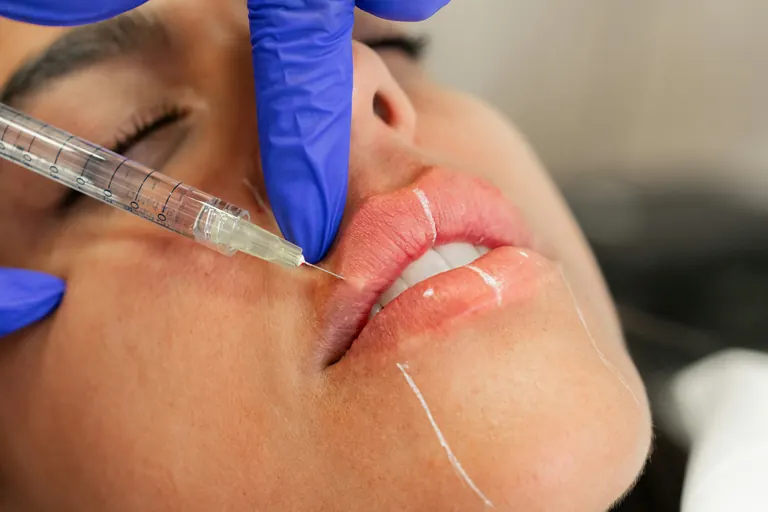
Radiesse is not hyaluronic acid, and that one fact should drive your decision. It is calcium hydroxylapatite, a mineral, suspended in a gel. Hyaluronidase, the enzyme that dissolves Juvederm and Restylane within days, does nothing to it. If you are overfilled with an HA filler there is a way back. With Radiesse there is not, and you wait it out.
In exchange it does something HA fillers do not, and in March 2026 the FDA approved a fourth use for it that most pages have not caught up with yet: a diluted form, for the chest, backed by an 84 week randomised trial. Everything on this page comes from the FDA approval documents rather than from a manufacturer's brochure.
1. What Radiesse actually is
Radiesse is made by Merz and has been FDA approved since 22 December 2006. The FDA's own device description is precise about what is in the syringe: an opaque, sterile, non-pyrogenic, semi-solid, cohesive implant whose principal component is synthetic calcium hydroxylapatite, suspended in a gel carrier of glycerin, sodium carboxymethylcellulose and sterile water. The calcium hydroxylapatite particles measure 25 to 45 microns.
Calcium hydroxylapatite is a mineral, and the same compound that makes up much of the mineral content of bone and teeth. Two things follow from that and they explain almost everything about how Radiesse behaves.
It is opaque, not clear like an HA gel, which is why it is not used in thin-skinned areas such as under the eye or in the lips, where an opaque product placed too superficially would show. And it works partly as a scaffold rather than purely as a space filler, which is the basis of the biostimulator description you will see used for it. Our dermal fillers hub covers how the categories differ.
2. The part that cannot be undone
This is the section to read if you read nothing else.
Hyaluronidase is an enzyme that breaks down hyaluronic acid. It is why an overfilled Juvederm or Restylane result can be corrected in days, why a blocked blood vessel from an HA filler is treatable as an emergency, and why HA became the default filler material. Our pillow face page covers the cosmetic side of that and our filler complications page covers the emergency side.
Hyaluronidase acts on hyaluronic acid. Radiesse is not hyaluronic acid. It is calcium hydroxylapatite. The enzyme has nothing to act on.
What that means in practice
If a Radiesse result is too full, in the wrong plane, lumpy or asymmetric, the options are limited and slow. There is no injection that removes it. Time is the main remedy, and the material is designed to last far longer than a season.
This is not an argument against Radiesse. It is an argument for a conservative first treatment with an experienced injector, and against treating it as interchangeable with an HA filler because both come in a syringe.
It is worth being precise about the risk that matters most. For an HA filler, accidental injection into a blood vessel is an emergency with a specific antidote, and speed matters enormously. For Radiesse the same event has no equivalent antidote. That does not make the event more likely, and Radiesse is used safely at scale, but it changes what happens next, and it is a fair thing to ask any injector to talk you through before they treat you.
3. The four approved uses
Straight from the FDA approval documents, these are the indications Radiesse actually holds:
| Indication | Detail | Status |
|---|---|---|
| Facial wrinkles and folds | Subdermal implantation for moderate to severe facial wrinkles and folds, such as nasolabial folds | Approved, the original 2006 indication |
| HIV facial lipoatrophy | Restoration and correction of the signs of facial fat loss in people with HIV | Approved |
| Hands | Hand augmentation to correct volume loss in the dorsum of the hands | Approved |
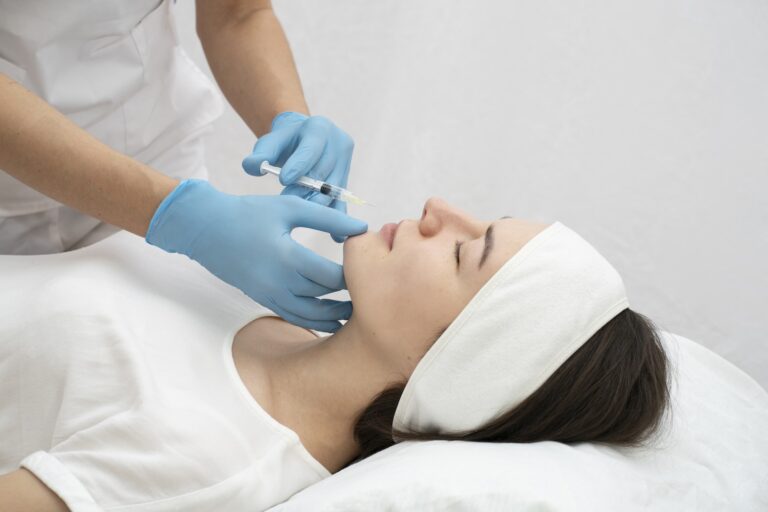
| Décolleté, diluted | Diluted 1:2 with 0.9% sterile saline, subdermal implantation for the correction of décolleté wrinkles, patients 22 and older | Approved 31 March 2026 |
Note what is not on that list, because a great deal of real-world Radiesse use sits outside it: cheeks, jawline, temples, and the general skin-quality treatments sold under the hyperdilute banner. Off-label use is legal and often appropriate, and section 7 covers what it means here.
4. New in March 2026: the chest approval
On 31 March 2026 the FDA approved supplement S162 to Radiesse's original approval. The wording of the new indication is worth quoting exactly, because the detail inside it is unusual:
FDA approval statement, P050052/S162
"Approval for expanding the indications of Radiesse Injectable Implant diluted 1:2 with 0.9% sterile saline solution for subdermal implantation for the correction of décolleté wrinkles in patients 22 years of age and older."
Two things make this significant.
The dilution is part of the approval. The FDA did not approve Radiesse for the chest. It approved Radiesse diluted 1:2 with saline for the chest. Diluting a filler has been common practice for years and has been, until now, entirely off-label. One specific dilution, for one specific area, is now on-label with trial data behind it.
It came through as a Panel Track supplement. That is the most demanding supplement category the FDA has, reserved for changes significant enough to need new clinical data. It is not a paperwork update. There is a randomised trial behind this, and section 5 covers it.
The chest is a genuinely difficult area. The skin is thin, it creases from side sleeping, and it takes decades of sun that the face is more often protected from. It has historically been treated with lasers, peels and skin boosters rather than filler.
5. The trial behind it, with the numbers
The FDA's Summary of Safety and Effectiveness Data sets out the pivotal study. It was an 84 week, prospective, multicentre, randomised, evaluator-blind, parallel-group study across 9 sites, with the database locked on data through 15 November 2023.
- 152 patients, randomised 3 to 1: 116 treated with diluted Radiesse, 36 to an untreated control group who were then offered delayed treatment.
- Treated patients received three treatments, at Day 1, Week 6 and Week 12, with an option to be retreated at Week 36.
- Assessment used the MAS Décolleté scale, scored at rest and dynamically, by blinded evaluators.
The primary endpoint was the responder rate at Week 24 on the at-rest scale:
| Group | Responder rate | 95% confidence interval |
|---|---|---|
| Diluted Radiesse (n=116) | 71.2% | 61.4% to 79.4% |
| Untreated control (n=36) | 6.3% | 1.5% to 22.9% |
| Difference | 65.0 percentage points | 45.6% to 74.4% |
That is a large effect against an untreated comparison, it cleared the study's own 50% target, and it was statistically significant. The FDA also records that the responder rate remained above 60% at 60 weeks after the first injection, which speaks to durability in a way most filler marketing does not attempt.
Two honest limits on that result. The control group was untreated rather than given a sham injection, so some of the 65 point gap reflects knowing you were treated. And every one of the 152 patients was female, aged 32 to 65. That is a reasonable reflection of who has this treatment and it is still a limit on what the trial can tell a man asking the same question.
One more detail from the enrolment criteria, which is quietly informative: patients were excluded if they had received collagen fillers, calcium hydroxylapatite or long-lasting HA fillers in the décolleté in the previous 24 months, or other HA fillers there in the previous 12. The trial deliberately studied previously untreated chests.
6. Safety, and the word "mild"
Of 137 patients in the safety analysis, 16 (11.7%) had at least one treatment-related adverse event. The events reported at above 2% incidence:
| Event | Patients | Rate |
|---|---|---|
| Any treatment-related event | 16 | 11.7% |
| Injection site bruising | 7 | 5.1% |
| Injection site discoloration | 4 | 2.9% |
| Injection site mass | 3 | 2.2% |
| Injection site pain | 3 | 2.2% |
The FDA's summary is reassuring and accurate: none were severe, none were late onset, and all resolved without lasting effects. By severity, 14 were mild and 2 were moderate. Zero were severe.
Now the part worth knowing, which sits in the duration table and which no marketing page will put in front of you. Of those 16 events:
- 4 lasted 14 days or less
- 2 lasted 15 to 28 days
- 10 lasted more than 28 days
So the most common outcome for a treatment-related event in this trial was that it lasted over a month. The FDA notes the majority resolved within 52 days. Every one of them resolved and none was severe, which is genuinely good. But "mild" describes intensity, not duration, and a mild discoloration on your chest for six weeks is a real thing to plan around. If you are booking this before an event, that is the number to have in mind rather than the 11.7%.
7. Hyperdilute, and what is still off-label
Diluting Radiesse with saline, and sometimes lidocaine, spreads the same amount of product over a wider area. Instead of adding volume in one spot it is used across a surface for skin quality and firmness. Common ratios are 1:1, 1:2 and higher.
Where this now stands, precisely:
- 1:2 dilution, décolleté, patients 22 and older: on-label since 31 March 2026, with the trial above behind it.
- Every other hyperdilute use remains off-label. Neck, jawline, cheeks, upper arms, knees, buttocks and general skin quality treatments are widespread and none of them carry an FDA indication.
Off-label does not mean improper. It means no regulator has reviewed a dilution, a volume, a technique or a duration for that area, so the protocol is the injector's own. Given that hyaluronidase cannot correct a poor outcome here, that places more weight than usual on who is treating you. Verifying a licence takes two minutes with our verification guide.
8. Radiesse or a hyaluronic acid filler?
| Radiesse | HA fillers (Juvederm, Restylane) | |
|---|---|---|
| Material | Calcium hydroxylapatite, a mineral, in a gel carrier | Hyaluronic acid, a sugar your body already makes |
| Can it be dissolved? | No. Hyaluronidase has no effect on it | Yes, with hyaluronidase, usually within days |
| Appearance in the syringe | Opaque and white | Clear gel |
| Thin-skinned areas | Not suitable. Lips and under-eye are not indicated | Routinely used, including lips |
| Approved for the chest | Yes, diluted 1:2, since March 2026 | Not for this indication |
The short version. If you want lips, or the under-eye, or you want the option of changing your mind, an HA filler is the appropriate product and Radiesse is not. If you want firmness across an area of thin, creased skin such as the chest, Radiesse diluted 1:2 is now the only one of the two with an FDA indication and a randomised trial for exactly that. Our Botox versus fillers guide covers the wider decision, and Sculptra is the other collagen-stimulating option people weigh against this.
9. Who should not have it
The FDA documents list three contraindications, and the third is the one people do not expect:
- Patients with severe allergies shown by a history of anaphylaxis, or a history or presence of multiple severe allergies.
- Patients with known hypersensitivity to any component of the product.
- Patients with bleeding disorders.
That last one is a formal contraindication rather than a caution, and it is worth raising if you have a clotting condition or are on anticoagulants, because bruising was already the most common adverse event in the trial at 5.1%. Do not stop a prescribed blood thinner to have a cosmetic treatment; tell the injector and let them decide whether to treat you at all.
10. What to ask before you agree
Six questions specific to Radiesse
- Do you understand that this cannot be dissolved? Ask the injector to confirm it out loud. If they suggest hyaluronidase would fix a problem, they have confused it with an HA filler and you should leave.
- Is what you are treating an approved use? Nasolabial folds, HIV lipoatrophy, hands and the 1:2 diluted décolleté are. Cheeks, jawline, neck and general skin quality are not.
- What dilution, and why that one? For the chest the approved answer is 1:2 with 0.9% saline. Anywhere else the ratio is the injector's judgement, so ask what informs it.
- How many treatments, and over what schedule? The trial used three, at Day 1, Week 6 and Week 12. A single session is not what was tested.
- What is your plan if I get a lump or a visible mass? Injection site mass occurred in 2.2% of trial patients. There is no dissolving agent, so the answer should be specific.
- What happens if it goes into a vessel? Uncomfortable to ask and worth asking, because the answer here differs from the HA answer and a good injector will have thought about it.
Radiesse is a well-established product with a twenty year approval history, a new indication backed by a randomised trial, and a safety profile in that trial with zero severe events. It is also the filler you cannot take back. Both things are true, and the second one should decide where on your face you are willing to have it.
Frequently asked questions
Can Radiesse be dissolved?
What is Radiesse approved for?
Does Radiesse work on the chest?
What are the side effects of Radiesse?
Is Radiesse better than Juvederm?
Who cannot have Radiesse?
Sources
Every figure on this page was read from the documents below rather than from a clinic or a manufacturer's marketing. They open in a new tab so you can check any claim here against its source.
- Summary of Safety and Effectiveness Data, P050052/S162, Radiesse décolleté, US Food and Drug Administration
- Premarket Approval (PMA) database, US Food and Drug Administration
- Dermal fillers (soft tissue fillers), US Food and Drug Administration
- Dermal fillers, American Society of Plastic Surgeons

Know the count before the quote. The unit count is half the bill, and a low per-unit rate recovered by a high unit count is the commonest way a deal is not one. How to tell.
Deciding which area, not how many units? Botox by facial area covers what each zone actually achieves, which four are FDA approved, and the things Botox cannot fix at all.