
The Botox Lip Flip: What It Does and What It Cannot Do
Reviewed for medical accuracy against our Medical Review Board · Last updated 21 August 2026
Part of Botox by Facial Area
A lip flip is 2 to 6 units of Botox along the upper lip, which relaxes the muscle that curls the lip inward so it rolls slightly outward and shows more pink. It adds no volume whatsoever, it is not filler, and it lasts roughly 6 to 12 weeks rather than the 3 to 4 months you get elsewhere. It is the cheapest treatment on the list and the one people most often expect the wrong thing from.
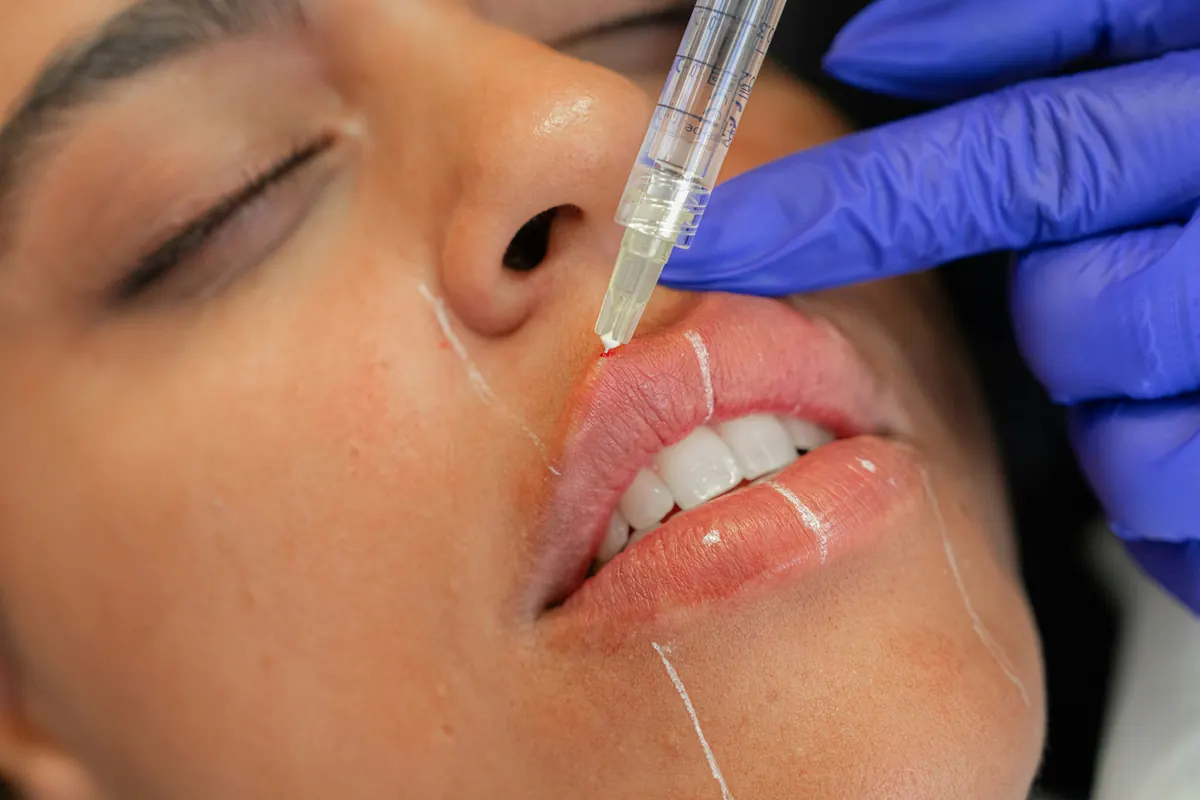
Almost every disappointed lip flip patient wanted a bigger lip and got a slightly different lip. The treatment does something real, but the thing it does is subtle, structural and temporary, and the gap between that and the before-and-after photographs is the widest in aesthetics.
1. What it actually does to your lip
The muscle around your mouth is the orbicularis oris, a ring rather than a strap. Part of its job is to purse and tighten, which rolls the free edge of the upper lip slightly inward and downward. In some people that inward roll is pronounced, so the pink part of the upper lip is partly tucked under and what you see is more skin and less lip.
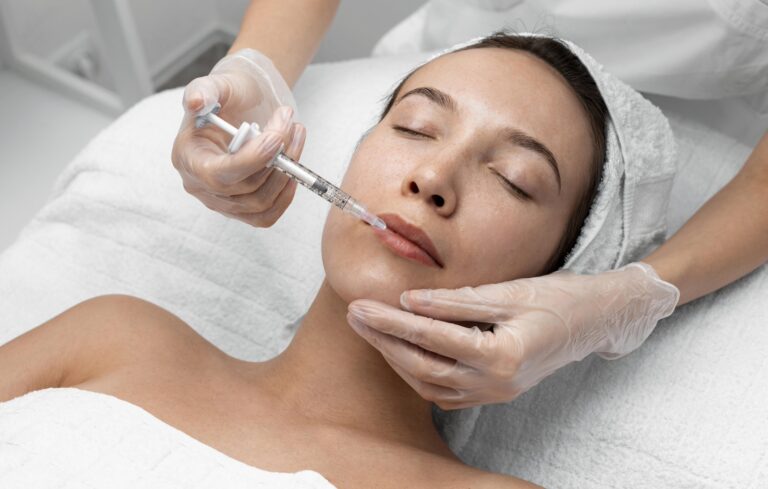
A lip flip puts a very small amount of toxin into the upper fibres of that ring, just above the border of the lip. Those fibres relax, the inward pull eases, and the lip edge rolls outward. The lip is the same size. It is simply presenting more of itself to the world.
Two consequences follow, and they are the whole treatment:
- The upper lip looks a little fuller, because more pink is visible.
- The distance between the base of your nose and the top of your lip appears slightly shorter, which is the part people notice without being able to name.
Realistically, the visible change is one to two millimetres of lip edge. Photographed straight on, under the same light, by someone who is not selling you anything, it is a small difference.
2. Why it is not, and cannot be, filler
This is the section worth reading twice, because it is where the money gets wasted.
| Lip flip (Botox) | Lip filler (hyaluronic acid) | |
|---|---|---|
| What it does | Relaxes a muscle so the lip rolls outward | Adds physical volume inside the lip |
| Volume added | None at all | Yes, that is the mechanism |
| Typical amount | 2 to 6 units | 0.5 to 1 mL of gel |
| Lasts | 6 to 12 weeks | 6 to 18 months |
| Reversible | No, but it wears off quickly | Yes, dissolvable with hyaluronidase |
| Changes lip shape | Only the roll of the edge | Yes, including shape and projection |
| Typical cost | The cheapest thing on the price list | Several hundred dollars and up |
If what you want is a bigger lip, a lip flip is the wrong treatment and no amount of it will get you there. Adding more units does not add volume; it makes the muscle weaker, which brings the problems in section 7 without improving the result. Our Botox against fillers guide covers the distinction across the whole face, and the Juvederm comparison covers the filler side specifically.
The two are sometimes combined deliberately, and that combination makes sense: filler for volume, a flip for the roll of the edge. What does not make sense is being sold a flip when you asked for volume.
3. The smallest dose in cosmetic Botox
A lip flip is 2 to 6 units in total, typically 4, split between two to four points just above the upper lip border. Set against the labeled doses for the areas Botox actually holds approval for, the scale is striking:
| Treatment | Units | Relative to a lip flip |
|---|---|---|
| Lip flip | 2 to 6 | 1x |
| Frown lines (glabella) | 20 | About 5x |
| Crow's feet | 24 | About 6x |
| Masseter, both sides | 40 to 60 | Roughly 12x |
Two things follow from being this small. First, it is cheap, which is why it gets offered as an add-on at the end of an appointment you came in for something else. Second, precision matters more than dose: a unit or two too far from the border, or unevenly split, is the difference between a subtle roll and a lip that does not work properly for a month. Our units guide and calculator has the full range for every area.
4. The short life nobody mentions
Everywhere else on the face, Botox lasts three to four months. The label puts glabellar lines at approximately three to four months, and that figure is what people carry into every other treatment.
A lip flip does not last that long. Expect roughly 6 to 12 weeks, and some people find it fading at six.
Two reasons, and they compound:
- The dose is tiny. Four units spread along a muscle is at the very bottom edge of an effective dose, and an effect that starts small has less to lose before it is gone.
- The muscle never stops. Your orbicularis oris works whenever you talk, eat, drink, kiss or smile. Muscles that are used constantly recover function faster than the frontalis, which you only use to raise your eyebrows.
The consequence is financial rather than medical. At six to twelve weeks you need four to eight treatments a year to hold it, against three to four for the upper face. A lip flip is the cheapest individual treatment on the list and one of the more expensive ones to maintain permanently.
5. Who it suits, and who it does nothing for
It works best if:
- Your upper lip visibly rolls inward when you smile or speak, tucking the pink under.
- You have a reasonable amount of lip to reveal, and the problem is presentation rather than size.
- You want something reversible by simply waiting, before committing to filler.
- The gap between your nose and your lip reads as long to you.
It will disappoint you if:
- You want a bigger lip. It cannot do this. See section 2.
- Your upper lip is genuinely very thin. There is little pink tucked under to reveal, so rolling the edge outward reveals very little.
- Your concern is the lower lip. The flip is an upper lip treatment; the lower lip is rarely treated this way and is more prone to functional problems.
- You play a wind instrument, sing seriously, or rely on precise speech at work. See section 7.
6. The gummy smile version, which is different
A related but distinct treatment is often described in the same breath and should not be. If your upper lip lifts high enough when you smile to show a band of gum above the teeth, the muscle responsible is usually the levator labii superioris alaeque nasi, which runs alongside the nose, not the orbicularis oris around the lip.
Treating that is a different injection point, a different muscle and a different goal: it stops the lip travelling so far up, rather than rolling its edge outward. Doses are similar, in the 2 to 4 unit range per side, and the risk profile differs because the muscles that lift your upper lip also contribute to your smile.
If a gummy smile is what bothers you, say that specifically rather than asking for a lip flip. The two get conflated in clinic marketing and they do not achieve the same thing.
7. Straws, whistling and the letter P
Here is the section clinic pages tend to leave out, and it is the one that should decide whether you book. The orbicularis oris is not a decorative muscle. It seals your lips, and the seal does real work.
For the two to six weeks the effect is strongest, a proportion of people notice:
- Straws become awkward. Drawing through a straw needs a tight seal. This is the single most commonly reported effect, and it is more of a nuisance than a problem.
- Whistling stops working. Reliably reported, and worth knowing if you whistle for a dog or a taxi.
- Plosive consonants soften. P and B are made by building pressure behind sealed lips and releasing it. Weaken the seal and those sounds lose crispness. Most people notice it in their own voice before anyone else does, but if you present, teach, act or sing, it matters.
- Wind instruments suffer. Anything requiring an embouchure, brass or woodwind, is genuinely affected. This is not a small inconvenience for a player.
- Occasional spillage. Drinking from a cup or bottle can be less tidy than usual.
These are dose-dependent and they resolve as the effect fades, which here means weeks rather than months. They are also why the answer to "can we do a bit more for a stronger result" should usually be no. The functional cost rises faster than the aesthetic benefit.
8. What it costs at real published rates
At 4 to 6 units, this is the cheapest thing on any Botox price list, which is exactly why it is offered as an add-on. Here it is against the per-unit rates clinics actually publish in the cities we verify:
| Published rate | Per unit | 4 to 6 units |
|---|---|---|
| Lowest we found | $9 | $36 to $54 |
| Middle of the range | $12 | $48 to $72 |
| Highest we found | $18 | $72 to $108 |
These are rates clinics actually publish, read off their own price pages rather than estimated: the floor is $9 a unit in Atlanta, GA and the ceiling $18 in Tampa, FL. Your own city may sit outside that range entirely. We check published pricing city by city, and the locations index lists every city covered so far, with the named clinics and their rates.
Two cautions on price. Many clinics apply a minimum spend, and a 4 unit treatment will not reach it, so a lip flip on its own can cost several times the figure above. And some price it as a flat fee rather than per unit, in which case ask how many units that fee covers. Our Botox price guide covers minimums and packages in more detail.
The number that actually matters is the annual one. At six to twelve weeks, budget for four to eight treatments a year, not three.
9. Off-label, and what that means here
Botox Cosmetic holds four approved cosmetic indications: frown lines, crow's feet, forehead lines, and platysma bands in the neck, which joined the label revised in October 2024. The lip flip is not among them, and neither is the gummy smile treatment.
Off-label prescribing is legal, common and often entirely appropriate. What it means practically is that there is no labeled dose, no injection map from a registration trial, and no approval-trial figure for how long it lasts or how often things go wrong. Every number in this article, including the 2 to 6 units and the 6 to 12 weeks, comes from clinical convention rather than from a document a regulator signed off.
That is not a reason to avoid it. It is a reason to weight your individual injector heavily, because on the lip their judgement is the protocol. A tiny dose close to a mobile, functional muscle is exactly the situation where experience shows.
10. What to ask before you agree
- Am I asking for volume? If yes, say so plainly and ask whether filler is the better answer.
- How many units, and at how many points? Get the number before, not after.
- Is there a minimum spend, and does a 4 unit treatment meet it?
- How long do your lip flip patients typically get before it fades?
- How many of these have you done? On an off-label area this small, that answer matters more than the price.
- Do I need to avoid anything for a few weeks: a presentation, a performance, playing an instrument?
- If I hate it, what happens? The honest answer is that you wait, and here waiting is weeks rather than months, which is one of the better things about this treatment.
Give it two weeks before you judge the result, the same as anywhere else. And if the effect on your speech or your ability to drink from a cup is more than a mild nuisance at any point, tell the clinic, because it should inform a smaller dose next time rather than being treated as normal.
Every area Botox treats, and what each one takes
Botox is not one treatment, it is eight or so, and the dose ranges by a factor of thirty between the smallest and the largest. 4 of these areas are on the FDA label; the rest are off-label, which is legal and common but means the dose comes from clinical practice rather than from a registration trial.
| Area | Typical dose | FDA status |
|---|---|---|
| Frown lines (glabella) | 20 units | FDA approved |
| Forehead lines | 20 units, with the glabella | FDA approved |
| Crow's feet | 24 units | FDA approved |
| Neck and platysmal bands | 26 to 36 units | FDA approved |
| Brow lift | 4 to 12 units | Off-label |
| Lip flip (you are here) | 2 to 6 units | Off-label |
| Masseter (jaw slimming) | 40 to 60 units | Off-label |
| Under the eyes | 1 to 4 units per side | Off-label |
| Bunny lines (nose) | 2 to 5 units per side | Off-label |
| Gummy smile | 2 to 3 units per side | Off-label |
| Marionette lines | 2 to 8 units per side | Off-label |
Units are not comparable between brands, so these are Botox units. Full ranges per area are in the units guide and calculator.
Lip flip or lip filler? They look similar in photographs and are different treatments: a flip adds no volume and lasts weeks, filler adds volume and lasts months. The filler guide sets out the comparison.
Considering filler instead? A lip flip adds no volume and lasts weeks. Lip filler adds volume, peaks at week 8 and still measured in 48.7% of trial participants at week 48. The FDA duration curve.
Frequently asked questions
What is a Botox lip flip?
Is a lip flip the same as lip filler?
How long does a Botox lip flip last?
How many units are in a lip flip?
Does a lip flip affect drinking through a straw or whistling?
Is a lip flip FDA approved?
How much does a lip flip cost?
Can a lip flip fix a gummy smile?
Can you combine a lip flip with filler?
What if I do not like my lip flip?

Sources
Every figure on this page was read from the documents below rather than from a clinic or a manufacturer's marketing. They open in a new tab so you can check any claim here against its source.
- BOTOX Cosmetic prescribing information, FDA via DailyMed
- Botulinum toxin, American Society of Plastic Surgeons
Keep reading
 Botox Treatment AreasThe Botox Brow Lift
 Botox Treatment AreasBotox for Crow's Feet
 Botox Treatment AreasBotox for Forehead Lines
 Botox Treatment AreasBotox for Frown Lines and the Glabella (the "11s")
 Botox Treatment AreasMasseter Botox for Jaw Slimming and Bruxism
 Dermal FillersRestylane Kysse
 FillersRussian Lips