PDO Threads and Thread Lifts: Cleared as Sutures, Sold as Lifts
Reviewed for medical accuracy against our Medical Review Board · Last updated 5 September 2026
Part of Botox Guides and Basics
A thread lift is done with sutures. Not a metaphor: the products used are cleared by the FDA as absorbable surgical suture material, and that single fact explains most of what follows.
1. What actually goes in
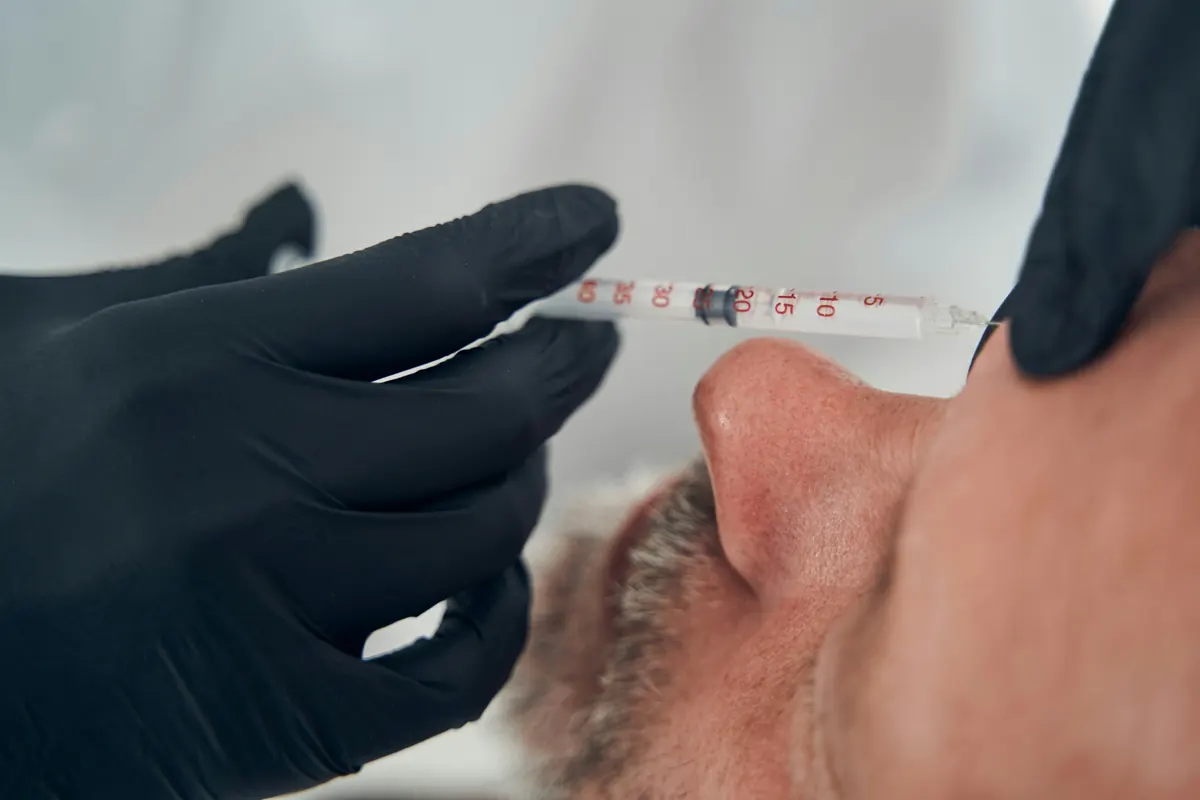
A cannula or needle places an absorbable thread in the tissue under the skin. The thread carries barbs, cones or twists along its length, which grip the tissue. The practitioner draws the tissue along the thread toward a fixed point and the grip holds it there. Over months the thread dissolves, and the claim is that the tissue reaction it provokes leaves behind some collagen.
There is no incision, no tissue removed and nothing repositioned in the way surgery repositions it. Everything the treatment achieves comes from tension on tissue that is already there.
2. What the FDA actually cleared
This is the part worth reading twice, because the marketing language and the regulatory language are not the same language.
Silhouette InstaLift, the best known of these products, holds three FDA clearances: K142061 in April 2015, K163676 in June 2017 and K200140 in March 2020. Its product code is GAM, and the FDA's own name for that category is "Suture, Absorbable, Synthetic, Polyglycolic Acid", under regulation 878.4493, class II.
PDO products sit in the same family. Polydioxanone has been cleared as surgical material since Ethicon's PDS mesh in 1985, with later clearances such as the Quill PDO knotless tissue-closure device in 2012 and Teleflex's Monodek polydioxanone monofilament suture in 2026.
So the honest description of the category: these are absorbable sutures, cleared as absorbable sutures, being used to suspend facial tissue. That is not an accusation. Clearance is real, the material is well characterised, and surgeons have used both polymers for decades. What it means practically is that the clearance covers the material rather than validating a particular facial result, and no clearance in this category establishes how much lift you get or for how long.
It also means the technique is the product. Two practitioners using identical threads are performing meaningfully different operations, because vector, depth, anchor point and thread count are all operator choices with no protocol behind them.
3. PDO, PLLA and PCL
| Material | Typical positioning |
|---|---|
| PDO, polydioxanone | The most common and the cheapest. Absorbs fastest, generally quoted at four to six months. |
| PLLA, poly-L-lactic acid | Used in Silhouette InstaLift, with cones rather than barbs. Absorbs more slowly. |
| PCL, polycaprolactone | The slowest to absorb, and the least common. |
Longer absorption is often sold as longer results. Treat that carefully: absorption time is a property of the polymer and is measurable, while duration of the visible effect is not the same thing and is not established by clearance.
4. What it does, and what it does not
What it can do is reposition mobile tissue a modest distance and hold it while the thread is intact. It suits mild laxity in the mid-face, jawline and neck in someone who has skin with some elasticity left.
What it cannot do is remove skin. That is the dividing line between this and a surgical face lift, and it is not a matter of degree. If there is more skin than the frame under it needs, tension will gather that skin somewhere rather than eliminate it, which is why the visible failure mode is bunching or dimpling near the entry point. Our comparison with surgery sets out what each addresses.
It also adds no volume. If the concern underneath is a hollow mid-face rather than descent, tension will not fix it and may accentuate it.
5. What goes wrong
The FDA's adverse event database holds 34 reports for Silhouette InstaLift, and every one of them is classified as an Injury rather than a device malfunction. That is a small number and it comes with the same caveats we apply to all of this data on our filler complications page: reporting is voluntary, incomplete, and a count is not a rate.
What is described in the literature and by practitioners, in rough order of frequency:
- Visible or palpable threads, particularly in thin skin.
- Dimpling or puckering at the entry or anchor points, often early and often settling.
- Asymmetry, which follows directly from technique being the protocol.
- Extrusion, where a thread end works its way toward the surface.
- Infection, as with anything placed under the skin.
- Prolonged discomfort on movement, since the threads are under tension.
Most are managed by waiting or by removing the thread. That last option is the genuine advantage over injectables: the material can be taken out.
6. What it costs, and why we do not publish a range
We publish per-unit price data for toxins because we collected it from published clinic rates. We have not done that for threads, so no range appears here. A number invented to fill the gap would be worse than the gap.
What we can tell you is how the pricing is built, which is what makes quotes comparable:
- Priced per thread, or per area. Per thread is the more transparent of the two, because the thread count is the main driver of both cost and result.
- Material changes the price. PDO is the cheapest of the three. A PLLA cone product costs more per thread.
- Thread count varies enormously between a light jawline treatment and a full mid-face, and a quote without a thread count cannot be compared with anything.
- It is not a one-off. Absorbable means the result fades on the polymer's own schedule, so the meaningful figure is annual cost rather than session cost.
The one comparison worth making before booking: what the same money buys in filler or in a surgical consultation. Threads sit in an awkward middle, more than injectables and less than surgery, and the honest question is whether the middle is where your particular concern belongs.
7. Threads against the alternatives
- Against filler. Filler adds volume; threads apply tension. If the problem is a flattened mid-face, filler addresses the mechanism. Our comparison covers the distinction, and jawline filler covers that area specifically.
- Against a toxin. Not comparable. A toxin acts on movement and does nothing for descent.
- Against surgery. Surgery removes skin and lasts years. Threads do neither and require no general anaesthetic or recovery period.
8. What to ask
- Which product, and which polymer? A brand name and PDO, PLLA or PCL. "Threads" is not an answer.
- How many threads, and where are they anchored? Both numbers should be in the quote.
- How many of these do you do a month? Technique is the protocol here more than in almost any other aesthetic treatment.
- What happens if one is visible or dimpling at two weeks? Establish whether removal is included before you need it.
- Am I a candidate, or would filler or surgery serve me better? A practitioner who offers only threads has one answer available.
Our guide to checking a provider covers the licence side, which matters here because this is a procedure rather than an injection.
Frequently asked questions
What are PDO threads?
Are thread lifts FDA approved?
How long does a thread lift last?
How much does a thread lift cost?
What can go wrong with a thread lift?
Is a thread lift better than a facelift?
Do thread lifts work on jowls?
Sources
Every figure on this page was read from the documents below rather than from a clinic or a manufacturer's marketing. They open in a new tab so you can check any claim here against its source.
- 510(k) Premarket Notification database, US Food and Drug Administration
- MAUDE, Manufacturer and User Facility Device Experience, US Food and Drug Administration
- 21 CFR 878.4493, absorbable synthetic polyglycolic acid surgical suture, US Food and Drug Administration

Know the count before the quote. The unit count is half the bill, and a low per-unit rate recovered by a high unit count is the commonest way a deal is not one. How to tell.
Deciding which area, not how many units? Botox by facial area covers what each zone actually achieves, which four are FDA approved, and the things Botox cannot fix at all.