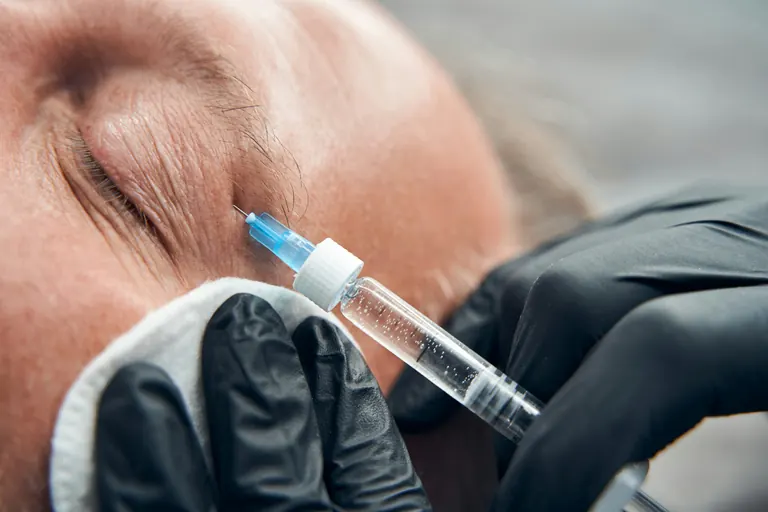
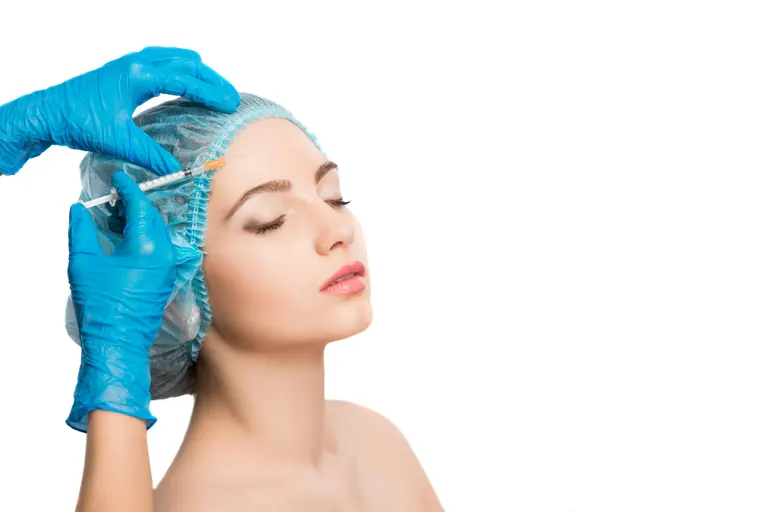
Botox for Forehead Lines: Units, Cost, Risks and Results
Reviewed for medical accuracy against our Medical Review Board · Last updated 18 August 2026
Part of Botox by Facial Area
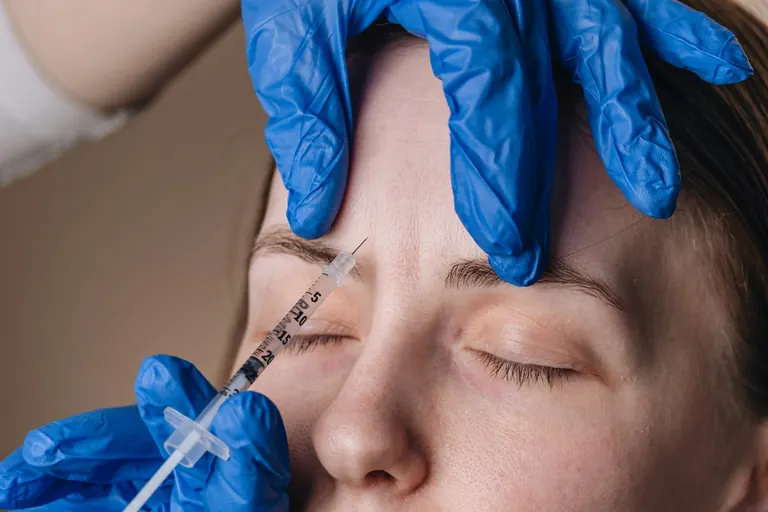
Forehead lines take roughly 10 to 20 units of Botox, and the frontalis is the only muscle that lifts your eyebrows. That single fact governs everything else: relax it too much, or without treating the frown muscles at the same time, and your brows come down.
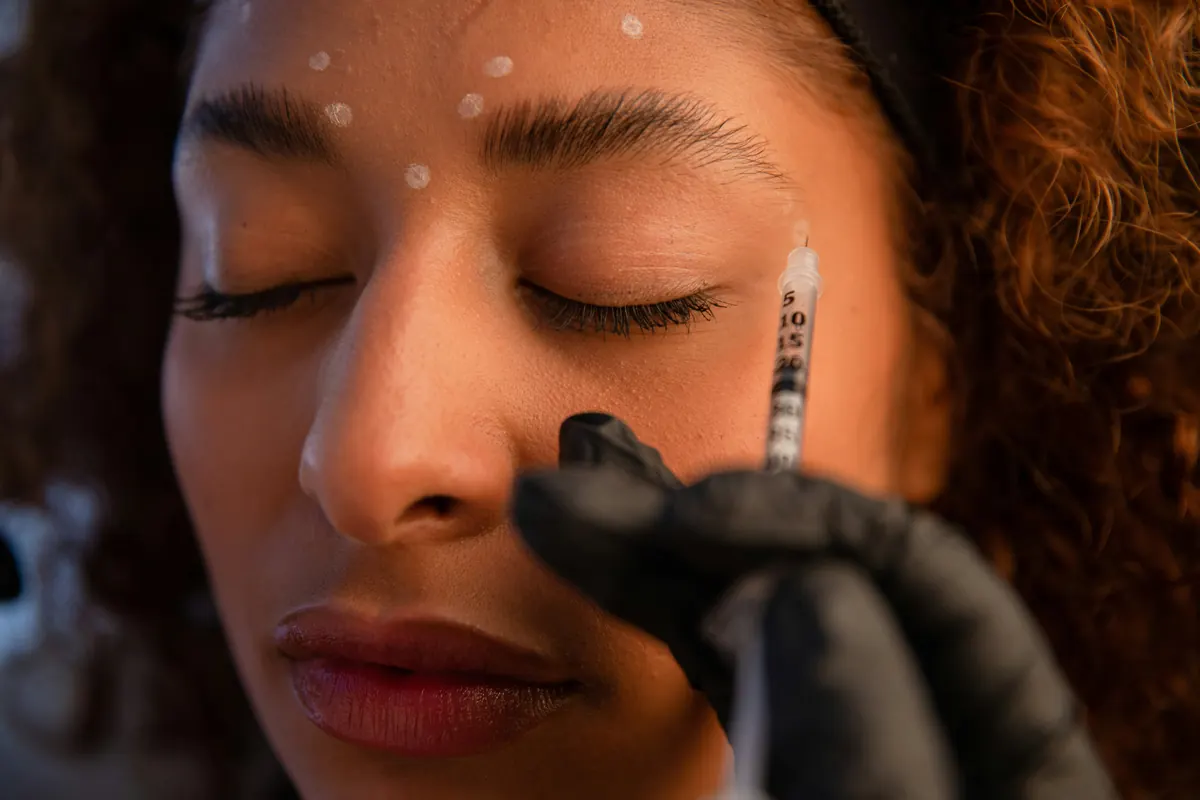
The horizontal lines across your forehead come from one muscle doing one job. Understanding that muscle explains the dose, the cost, the two things that go wrong, and why a good injector will want to treat an area you did not ask about.
1. What forehead Botox actually treats
Forehead lines run horizontally, and they appear when you raise your eyebrows. Look in a mirror and lift your brows: the lines that deepen are the ones Botox addresses. They are caused by the frontalis, a broad flat sheet of muscle covering the front of the skull, contracting and folding the skin above it.
This matters because it defines the limit of the treatment. Botox relaxes muscle. If a line only appears when you move, relaxing the muscle softens it. If the line sits there while your face is completely still, the crease is set in the skin itself and a muscle relaxant will not remove it. More on that in section 7.
2. The frontalis problem: your only brow lifter
Here is the anatomy that decides how this treatment should be done. The frontalis is the only muscle that raises your eyebrows. Everything else in that region pulls them down: the corrugators pull them together and down, the procerus pulls the inner brow down, and the upper part of the orbicularis oculi pulls the outer brow down.
So your brow position at rest is a tug of war between one lifter and several depressors. Relax the lifter on its own and the depressors win. The brow settles lower, the upper lid looks more crowded, and the sensation people describe is heaviness rather than smoothness.
The practical consequence. Treating the forehead in isolation is the single most common cause of the "my brows feel heavy" complaint. It is not usually a matter of bad injecting. It is the predictable result of relaxing the only muscle that holds your brows up while leaving the muscles that pull them down at full strength.
This is also why injectors are more conservative in the lower forehead, close to the brow, and why someone with naturally low or heavy brows may be advised to have very little frontalis treatment, or none at all.
3. Why the approved regimen treats two areas at once
Botox Cosmetic was first approved for glabellar lines, the frown lines between the brows, in April 2002. Forehead lines were not added until 2017, fifteen years later. And the approval that was granted is worth reading carefully, because it is not a standalone forehead indication.
The labeled regimen for forehead lines is 20 units into the frontalis together with 20 units into the glabellar complex, a total of 40 units. The forehead is approved for treatment in conjunction with the frown lines, not by itself.
That is the manufacturer and the regulator agreeing with the anatomy in section 2. If you take pressure off the brow lifter, you take pressure off the brow depressors too, or the balance tips.
Two things to be clear about. First, real-world practice frequently uses less than the labeled 40 units, and lower doses are often the better choice, particularly on a first treatment. Second, treating the glabella on its own is perfectly reasonable and very common. The asymmetry runs one way only: glabella alone is fine, forehead alone is the combination most likely to disappoint you. We cover the frown lines in detail in Botox for frown lines and the glabella.
4. How many units, and why less is right the first time
The usual working range for the frontalis is 10 to 20 units. Where you fall in that range depends on how strong the muscle is, how large your forehead is, how deep the lines already are, and how much movement you want to keep.
A few patterns hold reasonably well:
- Men typically need more. Greater muscle mass, so the same dose does less.
- A tall forehead needs wider coverage, which usually means more injection points rather than more units per point.
- Expressive brow users see it wear off sooner. If you talk with your eyebrows, the muscle recovers faster.
- First treatments should aim low. Adding more after two weeks is easy. Waiting out too much is three or four months of a face you did not choose.
That last point is the one to insist on. There is no reversal agent for a botulinum toxin. Once it is in, the only treatment for too much is time. An injector who starts conservatively and reviews you at two weeks is doing it right, not being stingy. Our units guide and calculator covers dosing for every area.
5. What it costs at real published rates
Most cost articles give you a national average and leave it there. Below is the forehead range against the actual per-unit prices published by clinics in the cities we verify, so you can see what 10 to 20 units costs where you live rather than in the abstract.
| Published rate | Per unit | 10 to 20 units |
|---|---|---|
| Lowest we found | $9 | $90 to $180 |
| Middle of the range | $12 | $120 to $240 |
| Highest we found | $18 | $180 to $360 |
These are rates clinics actually publish, read off their own price pages rather than estimated: the floor is $9 a unit in Atlanta, GA and the ceiling $18 in Tampa, FL. Your own city may sit outside that range entirely. We check published pricing city by city, and the locations index lists every city covered so far, with the named clinics and their rates.
Two caveats on any per-unit figure. Some clinics price per area or per treatment instead, which can work out cheaper or dearer depending on how many units you actually need, and a minimum-unit policy can make a small forehead treatment cost more than the arithmetic suggests. Ask which model applies before you book. Our Botox price guide breaks down state averages and the per-unit versus per-area question.
6. Heavy brows and droopy eyelids are not the same thing
These two get used interchangeably online and they are different problems.
Brow heaviness is the frontalis being more relaxed than the brow depressors, as in section 2. The brow sits lower, the lid looks hooded, and the forehead feels weighty. It comes from dose and placement in the muscle you intended to treat. It softens as the toxin wears off, and it can often be improved sooner by treating the brow depressors to rebalance the pull.
Eyelid ptosis is different. The upper eyelid itself droops because toxin has reached the levator palpebrae superioris, the muscle that opens the eye. That is a diffusion problem, not a dosing philosophy problem, and it is associated more with the glabellar injections than the forehead ones. The manufacturer's own instructions address it directly: avoid injecting near the levator, and place the lateral frown-line injections at least 1 cm above the bony ridge of the brow.
Both resolve on their own. Neither is permanent. But they are worth telling apart, because the fix is different and because knowing the difference tells you whether the next appointment needs a change of dose or a change of technique.
7. The lines Botox cannot fix
Relax your whole face and look again. Lines still visible when nothing is moving are static lines: the crease has become a feature of the skin, not just a fold that appears on demand.
Botox stops the folding. Over months, skin that is no longer being creased dozens of times a day does soften, and a static line can improve. But it will not disappear, and expecting it to is the most common reason people feel their treatment failed. Etched horizontal lines usually need something that works on the skin itself: resurfacing, microneedling, or in some cases a small amount of filler placed superficially. The realistic plan is often Botox to stop the movement plus a skin treatment for the crease already there.
8. How long it lasts, and why the forehead fades first
Expect roughly three to four months. Onset is a few days, with the full effect at around two weeks, which is why the two-week review exists.
Forehead results often seem to fade before other areas, for two reasons. The dose is comparatively low, since a large dose here is exactly what causes brow heaviness. And the frontalis is in near constant use if you are expressive. A lower dose in a busier muscle wears off sooner. That is normal, not a sign of a poor treatment or of resistance.
9. What over-treatment looks like
Worth knowing before it happens rather than after:
- No movement at all across the whole forehead, often with a shiny, flat appearance under light.
- Brows sitting lower than usual, with a crowded upper lid.
- A surprised or arched look, where the centre is frozen but the outer frontalis still works and over-recruits, sometimes called a spock brow. This one is usually fixable with a very small dose in the right spot.
- New squinting or eye strain, because raising the brows was part of how you opened your eyes.
- Headache from compensating, as other muscles take over the work.
None of these are permanent. All of them are arguments for starting low.
10. What to ask before you agree
- Are you treating my frown lines as well as my forehead, and if not, why not? The answer should show they have thought about brow balance.
- How many units, in how many points, and why that number for me?
- Where do my brows sit now, and what will this do to them? A good injector assesses brow position before dosing the frontalis.
- Is a two-week review included, and is a top-up charged separately?
- Which of my lines are static, and what would you use for those? Honest answers here separate a clinician from a salesperson.
- Are you pricing per unit or per area, and is there a minimum?
One more step that costs nothing: confirm your injector holds a current license. The records are public and it takes about two minutes. We list the lookup for every state in how to verify a Botox injector's license.
Why the forehead is not treated alone. A forehead treated on its own is the classic setup for a heavy brow, which is a different problem from a drooping eyelid and has a different fix. Both are covered in droopy eyelid after Botox.
Brow position, on purpose. The frontalis is the only muscle lifting your brow, which is why the label pairs this area with the glabella. Work the other side of that tug-of-war and you get a Botox brow lift.
Every area Botox treats, and what each one takes
Botox is not one treatment, it is eight or so, and the dose ranges by a factor of thirty between the smallest and the largest. 4 of these areas are on the FDA label; the rest are off-label, which is legal and common but means the dose comes from clinical practice rather than from a registration trial.
| Area | Typical dose | FDA status |
|---|---|---|
| Frown lines (glabella) | 20 units | FDA approved |
| Forehead lines (you are here) | 20 units, with the glabella | FDA approved |
| Crow's feet | 24 units | FDA approved |
| Neck and platysmal bands | 26 to 36 units | FDA approved |
| Brow lift | 4 to 12 units | Off-label |
| Lip flip | 2 to 6 units | Off-label |
| Masseter (jaw slimming) | 40 to 60 units | Off-label |
| Under the eyes | 1 to 4 units per side | Off-label |
| Bunny lines (nose) | 2 to 5 units per side | Off-label |
| Gummy smile | 2 to 3 units per side | Off-label |
| Marionette lines | 2 to 8 units per side | Off-label |
Units are not comparable between brands, so these are Botox units. Full ranges per area are in the units guide and calculator.
Brand note. Botox and Xeomin both hold an FDA approval for horizontal forehead lines; Dysport does not. In Xeomin’s trials the forehead was the best-responding area of the three, ahead of frown lines.
Frequently asked questions
How many units of Botox for forehead lines?
Why do my eyebrows feel heavy after forehead Botox?
Can I get Botox in my forehead only?
How much does forehead Botox cost?
How long does Botox last in the forehead?
Will Botox remove deep forehead lines?
What is the difference between heavy brows and a droopy eyelid?
Why do I look surprised after forehead Botox?

Sources
Every figure on this page was read from the documents below rather than from a clinic or a manufacturer's marketing. They open in a new tab so you can check any claim here against its source.
- BOTOX Cosmetic prescribing information, FDA via DailyMed
- Botulinum toxin treatment overview, American Academy of Dermatology