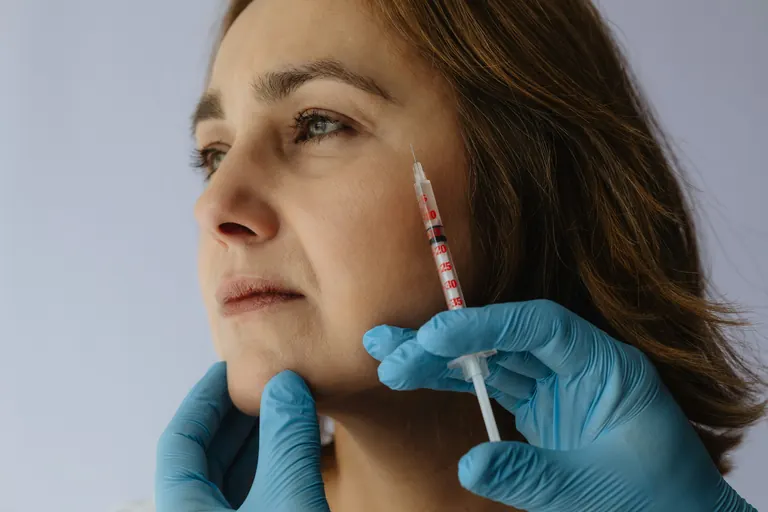
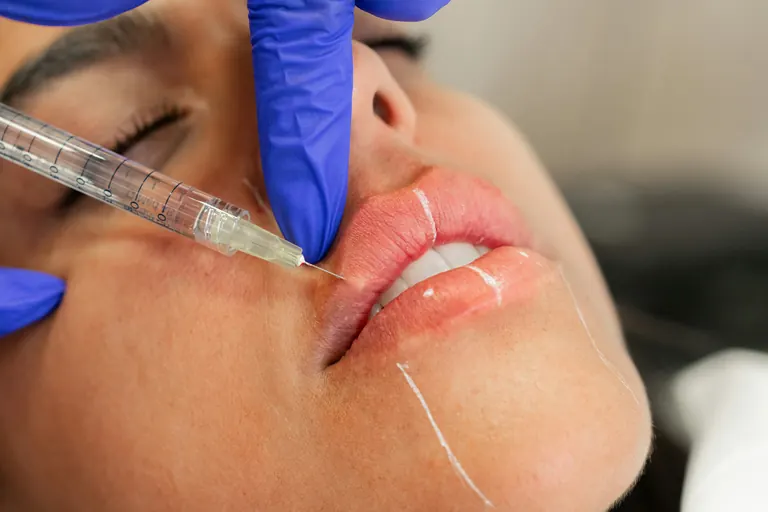
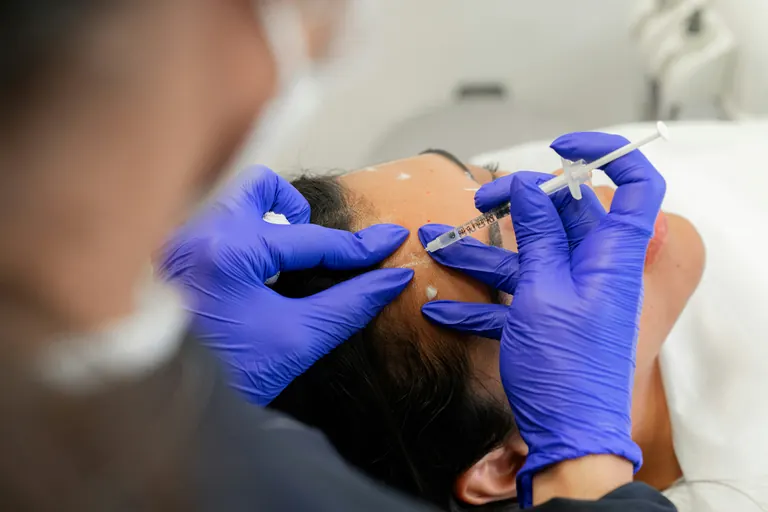
Dysport Aftercare: What the Label Says, and What It Does Not
Reviewed for medical accuracy against our Medical Review Board · Last updated 23 August 2026
Part of The Ultimate Dysport Guide
We counted. The words rub, massage, lie down, supine and alcohol appear zero times in the Dysport prescribing information, and zero times in Botox Cosmetic's. Every mention of hours in either label is about keeping a vial in a fridge. The entire patient counselling section of Dysport's label is three items: read the medication guide, report unusual symptoms, report eye dryness.
That does not mean the aftercare rules are worthless. It means nobody has told you where they come from, so you cannot tell which ones have a mechanism behind them and which are inherited habit. This page sorts them.
1. What the label actually instructs
Here is the whole of the Dysport label's patient counselling section, paraphrased only to shorten it:
- Read the FDA-approved patient labelling, meaning the Medication Guide.
- Tell your doctor or pharmacist if you develop any unusual symptoms, including difficulty swallowing, speaking or breathing, or if a known symptom persists or worsens.
- Dysport injection may cause eye dryness. Report eye pain, eye irritation, light sensitivity or changes in vision.
That is it. There is no instruction about posture, exercise, alcohol, heat, facials, sleeping position or touching your face. The same is true of Botox Cosmetic's label.
Two honest caveats, because the absence of a rule from a label is not proof the rule is wrong. First, a label documents what was studied for approval, and nobody runs a trial on whether lying down matters. Second, manufacturer patient materials and individual clinics do give aftercare advice, and that advice is built on decades of injector observation, which is real evidence even when it is not trial evidence. The point is not that your clinic is making things up. It is that when two clinics give you contradictory rules, no authority is going to settle it, so you may as well understand the reasoning.
2. Every rule, and how much evidence is behind it
| Rule | In either label? | Plausible mechanism? | Worth following? |
|---|---|---|---|
| Report trouble swallowing or breathing | Yes, explicitly | Yes, the boxed warning | Always |
| Report persistent eye dryness | Yes, explicitly | Yes, a named warning | Always |
| Do not rub or massage the area | No | Yes, plausible | Yes, it costs nothing |
| Stay upright for about 4 hours | No | Weak | Harmless, low value |
| No strenuous exercise for 24 hours | No | Weak | Your call |
| No alcohol for 24 hours | No | Yes, for bruising only | Yes, before rather than after |
| No saunas, hot yoga or sunbeds | No | Weak | Your call |
| No facials for 2 weeks | No | Only via pressure on the area | Reasonable for a few days |
| Do not fly for 24 hours | No | None we can find | No |
The pattern: the two rules the label does give you are about reporting symptoms, not about behaviour. Everything on the behaviour list is convention. Most of it is free to follow, which is the real reason to follow it.
3. Lying down and the four hour rule
The most repeated rule in aesthetics, and the reasoning offered is that lying flat lets the product migrate to somewhere it should not be, particularly the eyelid.
Here is what makes that reasoning weak. Botulinum toxin binds to nerve terminals within minutes to a few hours, and the binding is what matters, not where the liquid physically sits. The injected volume is tiny, a fraction of a millilitre spread across five points for a labelled glabellar treatment. And the four hour figure has no source: some clinics say two, some four, some six, and none of them cite anything.
Our reading is that staying upright is sensible for the first hour or two on general principle, and that the specific number is folklore. It also costs you nothing, which is why it survives: nobody has any reason to challenge a free rule.
Sleeping on your face the first night is a slightly better version of the same concern, because that is sustained pressure rather than posture, and it belongs with rubbing rather than with lying down.
4. Rubbing, massaging and facials
This is the aftercare rule we would actually keep, and it is the one with the most plausible mechanism. Firm pressure or friction over a fresh injection site can plausibly move product through tissue planes before it has bound, and unlike posture this is a real mechanical force applied directly to the spot.
So: no rubbing, no firm massage, no pressing a headache away with your fingers over the treated area, and no facial, microdermabrasion or skin treatment involving pressure for a few days. Washing your face gently is fine. Applying makeup with a light touch is fine.
The two week figure some clinics give for facials is more conservative than the mechanism justifies, since binding is complete long before that. A few days covers it.
5. Exercise
The standard advice is to avoid strenuous exercise for 24 hours. The two reasons given are increased blood flow moving the product, and raised blood pressure worsening bruising.
The first is weak for the same reason the posture rule is weak. The second is genuinely plausible but it is about bruising, which is a cosmetic inconvenience rather than a risk to your result.
There is also a practical reason that nobody mentions and that we think is the best argument here: a hard workout the same day makes you hot, flushed and likely to sweat and wipe your face, which brings you straight back to the rubbing rule. Skipping the gym for a day is easy. Do it if it is easy for you, and do not panic if you have already been.
6. Alcohol, and the bruising question
Alcohol appears nowhere in either label. It does thin the blood and dilate blood vessels, so it genuinely raises the chance of bruising.
The useful correction is about timing. Most advice says no alcohol after, but the drink that matters most is the one before, because bleeding happens at the moment of injection. If you want to reduce bruising, skip alcohol the night before rather than agonising over a glass of wine that evening.
The same logic applies to aspirin, ibuprofen, fish oil, vitamin E and ginkgo, all of which affect clotting. Never stop a prescribed medicine for a cosmetic appointment, but if you take fish oil by choice, pausing it for a few days beforehand is a reasonable and evidence-consistent way to bruise less.
7. Heat, saunas and flying
Saunas, steam rooms, hot yoga and sunbeds are usually banned for 24 to 48 hours on the same blood-flow reasoning as exercise, and it is equally weak. Heat does make flushing and swelling more obvious in the short term, which is a reason to skip it if you are going somewhere afterwards.
Flying is the one rule on the list we can find no mechanism for at all. Cabin pressure does not affect the binding of a protein to a nerve terminal, and there is nothing in either label about it. If a clinic tells you not to fly for 24 hours, it is worth asking why, and a straight answer of "habit, it does not really matter" is a good sign rather than a bad one.
8. Should you exercise the muscle on purpose?
Some injectors ask you to frown or raise your brows repeatedly for an hour or two afterwards, on the theory that muscle activity draws the toxin into the nerve terminals faster.
This is the one piece of aftercare advice with actual published support behind it, and it is still modest. It plausibly speeds onset slightly. It does not appear to change the final result or how long it lasts. Nothing in either label mentions it.
Worth doing if your injector asks. Not worth worrying about if they do not, and not a reason to think you have damaged a result by sitting still. Our page on how long Dysport lasts covers what actually determines onset, which is largely out of your hands.
9. What to expect, hour by hour
- First hour. Small raised bumps at each injection point, sometimes redness. These settle within an hour or so and are just the injected volume. Occasionally a pinpoint of blood.
- First day. Possible headache, which the trials put at 9% against 5% on placebo. Tenderness at the injection sites. Nothing has changed in the mirror yet, and it should not have.
- Days 2 to 4. Bruising, if you are going to bruise, is at its most visible. Movement may start to feel slightly different. The widely repeated idea that Dysport works in two to three days is clinical convention rather than anything in the label, which measured its results at day 30.
- Week 1. Most of the effect is usually apparent.
- Weeks 2 to 4. The result settles fully. This is when to judge it, and when to raise anything uneven, because two weeks is the earliest sensible point for a top-up assessment.
Do not judge symmetry in the first week. Muscles relax at slightly different rates, and a great many people who think they have an uneven result at day four have an even one at day fourteen.
10. If you bruise
Injection site bruising is on the label as a reported reaction, so it is expected rather than a sign anything went wrong. It usually resolves in a few days to a week.
What helps: a cold compress held gently, without pressure, in the first day. Arnica and vitamin K creams are popular and the evidence for them is thin, but they are harmless. Concealer works better than either.
What does not help: pressing or massaging it, which is the thing you were told not to do for other reasons anyway.
11. When to call someone
Almost nothing on this page is urgent. These are, and they come from the label rather than from convention:
- Difficulty swallowing, breathing or speaking, or a change in your voice
- Muscle weakness away from the injection site, or general loss of strength
- Double or blurred vision, or new drooping of an eyelid
- Persistent eye dryness, eye pain, irritation or light sensitivity
- Swelling of the face, lips, tongue or throat, hives, wheezing or feeling faint
The label notes these symptoms have been reported hours to weeks after injection, so a problem appearing a fortnight later is not automatically unrelated. Full detail is on our Dysport side effects page, and if it is a heavy eyelid specifically, the droopy eyelid page covers what happens next.
Everything else, a bruise, a first-week headache, a slight asymmetry at day four, is a message to your injector rather than an emergency. Send it anyway. It is how your next treatment gets better.
Fillers are a different proposition. Where the toxin labels give no aftercare instructions at all, one filler trial recorded every reaction daily for 30 days. See what actually happens after filler.
Frequently asked questions
What should I not do after Dysport?
Can I lie down after Dysport?
Can I exercise after Dysport?
Can I drink alcohol after Dysport?
How long after Dysport can I wash my face?
Can I get a facial after Dysport?
Do I need to avoid flying after Dysport?
Should I frown on purpose after Dysport?
When will I see results, and when should I judge them?
Is bruising after Dysport normal?
Can I take painkillers for a headache after Dysport?
What does the Dysport label actually say about aftercare?

Sources
Every figure on this page was read from the documents below rather than from a clinic or a manufacturer's marketing. They open in a new tab so you can check any claim here against its source.
- Dysport prescribing information, FDA via DailyMed
- OnabotulinumtoxinA injection, MedlinePlus, US National Library of Medicine
Know the count before the quote. The unit count is half the bill, and a low per-unit rate recovered by a high unit count is the commonest way a deal is not one. How to tell.
Deciding which area, not how many units? Botox by facial area covers what each zone actually achieves, which four are FDA approved, and the things Botox cannot fix at all.