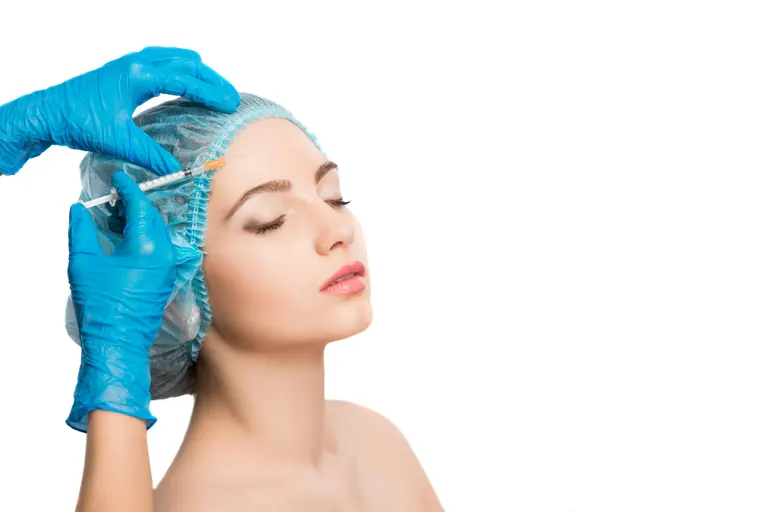
Dysport Treatment Areas: Where It Goes, and How Many Units
Reviewed for medical accuracy against our Medical Review Board · Last updated 23 August 2026
Part of The Ultimate Dysport Guide
Dysport has one approved cosmetic area: the frown lines between the eyebrows. Its label gives one cosmetic dose: 50 units, in five injections of 10. The words forehead, crow, lateral canthal, masseter and lip do not appear in that label even once. So every per-area Dysport number you have read online, including the ones below, is arithmetic performed on Botox practice rather than anything a regulator reviewed.
That is not a reason to avoid Dysport off-label, which is routine, legal and often the right choice. It is a reason to know which of the numbers in your quote came from a label and which came from your injector's judgement, because they are not the same kind of number and only one of them is worth arguing about.
1. The short answer
Dysport is used across the same facial areas as Botox: frown lines, forehead, crow's feet, a brow lift, a lip flip, the chin, the masseter. In practice an experienced injector treats all of them with it and gets results comparable to Botox.
The regulatory picture is narrower than that practice. Dysport holds three FDA approvals in total, and only one of them is cosmetic:
- Glabellar lines (frown lines), in adults under 65. Dose: 50 units.
- Cervical dystonia in adults. A neurological condition, not a wrinkle.
- Spasticity in patients aged 2 and over.
Everything cosmetic beyond the glabella is off-label use, which is legal and extremely common, and carries no labelled dose. When a chart tells you a Dysport forehead is 30 to 75 units, that range is Botox convention multiplied by roughly two and a half. Useful orientation. Not a protocol.
2. What Dysport is actually approved for
The indication reads, in full, that Dysport is approved for "the temporary improvement in the appearance of moderate to severe glabellar lines associated with procerus and corrugator muscle activity in adults less than 65 years of age."
Two details in that sentence get overlooked. The first is that it names the muscles, the procerus and the corrugators, rather than the visible line. Dysport is approved to relax two specific muscles, and any other area means a different muscle that nobody submitted evidence for.
The second is "less than 65 years of age". Botox Cosmetic's glabellar indication carries no such age ceiling. Dysport's does. It is not a safety alarm, and injectors treat patients over 65 routinely, but if you are 68 then the one cosmetic use Dysport is approved for is, technically, outside its own label for you. The label also notes that in the geriatric group there was no increase in eyelid drooping but there was an increase in ocular side effects generally.
3. Where the per-area numbers come from
We counted the words. In the entire Dysport prescribing information, revised September 2023:
| Term | Times it appears in the label |
|---|---|
| Glabellar | Named in the indication, with a dose |
| Forehead | 0 |
| Crow's feet / lateral canthal | 0 |
| Masseter | 0 |
| Lip | 0 |
| Platysma | 0 |
That is the whole story of where per-area Dysport dosing comes from. There is nothing to consult, so practice does the obvious thing: it takes the Botox dose an injector already trusts for that area and scales it. The scaling factor comes from the only place the two labels can be compared, which is the glabella, where Dysport is 50 units and Botox Cosmetic is 20 for the same two muscles. That is the origin of the widely used 2.5 to 1, and we work through why it is defensible for that area and shaky as a general rule in the guide to Dysport units against Botox units.
So a Dysport per-area figure is a Botox per-area figure with an extra step of estimation stacked on top. It inherits all the uncertainty of the Botox number, which is itself convention rather than label for most areas, and adds some.
4. Dysport units by area, with the status of each row
Here is the orientation table, with the one thing the competing versions leave out: what kind of number each row is.
| Area | Dysport units | Botox equivalent | Status |
|---|---|---|---|
| Frown lines (glabella) | 50 | 20 | Labelled and approved |
| Forehead lines | Roughly 30 to 75 | 12 to 30 | Off-label, derived |
| Crow's feet (both sides) | Roughly 30 to 60 | 12 to 24 | Off-label, derived |
| Brow lift | Roughly 10 to 30 | 4 to 12 | Off-label, derived |
| Bunny lines | Roughly 10 to 25 | 4 to 10 | Off-label, derived |
| Lip flip | Roughly 10 to 15 | 4 to 6 | Off-label, derived |
| Chin | Roughly 10 to 25 | 4 to 10 | Off-label, derived |
| Gummy smile | Roughly 5 to 15 | 2 to 6 | Off-label, derived |
| Masseter (both sides) | Roughly 100 to 150 | 40 to 60 | Off-label, derived |
Read the Botox column, not the Dysport column, if you want to know how large a treatment is. A 75 unit Dysport forehead sounds like three times a 25 unit Botox forehead and is in fact the same treatment. This is the single most common misreading of a Dysport quote, and it works in the clinic's favour when the price is per unit. Our Botox units guide covers where the Botox column itself comes from, and Botox by facial area covers what treating each area actually achieves, which is the same for either product.
5. Frown lines, the one labelled area
This is the area to use Dysport for if you want to be entirely on-label, and the label is specific about how.
Fifty units total, divided into five equal injections of 10 units: two into each corrugator and one into the procerus. The label describes identifying these muscles by palpating the tensed muscle mass while the patient frowns, and notes that "the location, size, and use of the muscles vary markedly among individuals," which is a regulator's way of saying the five point pattern is a starting map rather than a grid.
There is also a screening test worth knowing about, because it predicts whether you will be happy. The label lists, among the situations calling for caution, "the inability to substantially lessen glabellar lines by physically spreading them apart." If you pull the skin between your brows apart with your fingers and the line stays, that line is etched into the skin rather than held by muscle, and a toxin will soften it at most. That is a filler, resurfacing or patience question, not a dosing one. Our page on frown lines and the glabella goes into what each option does.
6. Forehead lines
The largest search volume in this whole cluster is people asking how many units of Dysport their forehead needs. The honest answer is that no such figure has ever been published by the manufacturer, and the working range in practice is roughly 30 to 75 units, equivalent to about 12 to 30 units of Botox.
The forehead is also where the biggest technique judgement lives, for either product. The frontalis is the only muscle that lifts your brows. Relax too much of it and the brow drops, which reads as heavy or hooded and is not the same thing as an eyelid problem. This is why forehead and frown lines are usually treated together: the glabellar muscles pull the brow down, the frontalis pulls it up, and treating only the lifter unbalances the pair.
Dysport's slightly wider spread is worth a sentence here. A broad, flat, evenly worked muscle is the best case for a product that diffuses a little further, and the forehead is exactly that, which is why some injectors reach for Dysport there by preference.
7. Crow's feet and under the eyes
Crow's feet run roughly 30 to 60 Dysport units for both sides, or about 12 to 24 in Botox terms, placed in the orbicularis oculi outside the bony orbital rim.
Under the eye is a different proposition and deserves more caution than the volume of searches for it suggests. It is a small dose into a thin muscle very close to the lid, and getting it wrong produces the results people actually complain about: a lower lid that sits oddly, a change in how the eye waters, or a hollow that looks worse than the lines did. If you are considering it, the relevant question is how many times your injector has done that specific placement, not what the units are.
8. Brow lift
A Dysport brow lift is roughly 10 to 30 units, and it is one of the highest-intent searches in this cluster, so it is worth being clear about the mechanism, because it explains the ceiling.
A toxin brow lift does not lift anything. It relaxes the muscles that pull the brow down, the corrugators, procerus and the outer fibres of the orbicularis, so the frontalis wins the tug of war it was already in. The lift you get is whatever slack those depressors were taking up, typically a millimetre or two. Real, visible in photographs, and not a substitute for surgery. Our brow lift page covers how much lift is realistic and who gets the most from it.
9. Lip flip, chin and gummy smile
These are the small-dose areas, and small doses are where the Dysport unit count is least intimidating and the precision matters most.
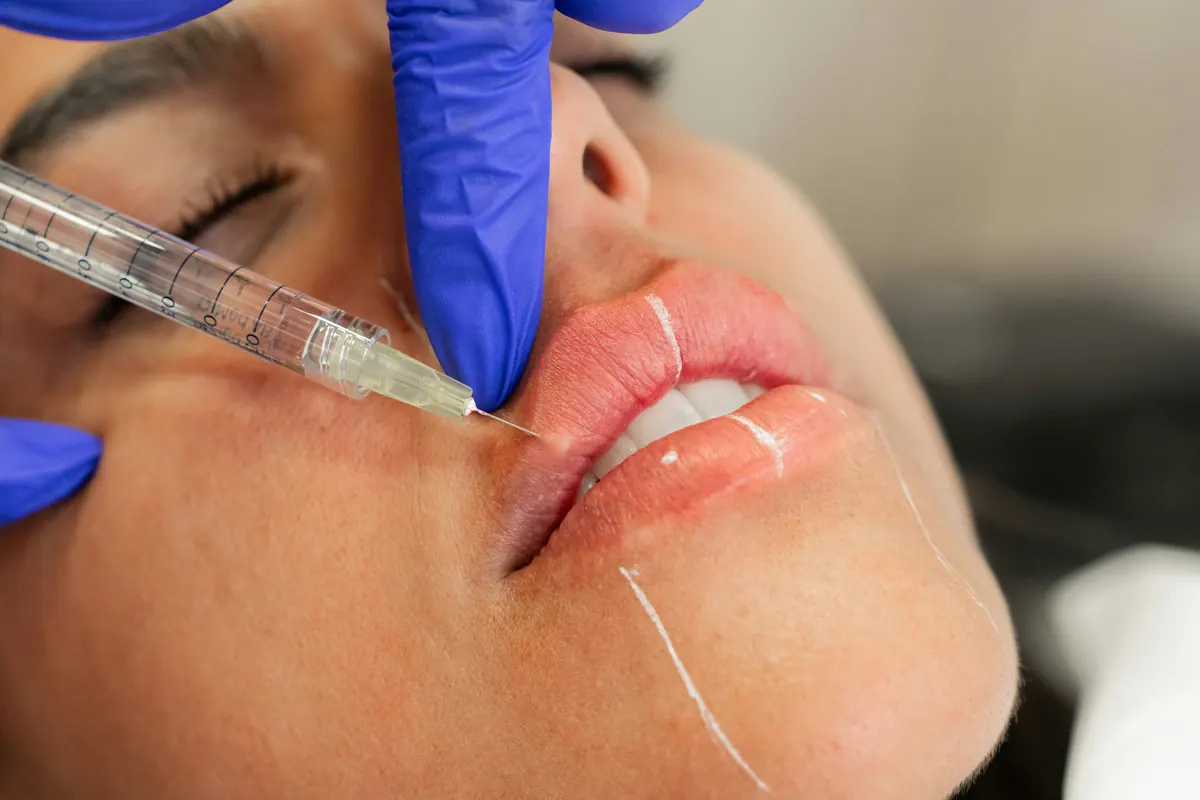
A lip flip is roughly 10 to 15 Dysport units into the orbicularis oris above the upper lip, rolling a little more lip outward without adding volume. It is a subtle effect, it lasts noticeably less time than a frown line treatment, and it can interfere with straws, whistling and certain consonants for a few weeks. This is also the area where Dysport's spread is a liability rather than an asset, because the muscles that control your mouth are small and adjacent, so some injectors deliberately prefer a less diffusing product here.
The chin runs roughly 10 to 25 units for dimpling or a pulled-down chin, and a gummy smile is the smallest treatment on the list, roughly 5 to 15 units into the levator labii superioris alaeque nasi to stop the upper lip rising quite so far.
10. Masseter and jawline
The masseter is the largest treatment anybody will quote you in Dysport units, roughly 100 to 150 for both sides, and it is the number most likely to alarm someone who has only had frown lines. In Botox terms that is 40 to 60, which is an ordinary masseter dose.
Two honest notes. First, it is slow: the masseter is a thick chewing muscle and the slimming comes from the muscle reducing in bulk over weeks to months, not from a line relaxing, so the timeline that applies to your forehead does not apply here. Second, the jaw-slimming and the teeth-grinding results are separate. Plenty of people get real relief from clenching and headaches with very little visible change to the jaw's shape, and both are legitimate reasons to do it. Our masseter page covers the timeline and what happens if you stop.
11. Diffusion, and which areas it helps or hurts
Dysport is widely described as spreading further from the injection point than Botox. This is clinical consensus and injector experience rather than anything either label states, and it is worth holding a little loosely for that reason. Taken as true, it is not a virtue or a flaw, it is a trait that suits some areas and not others.
- Helps on large, evenly worked muscles where you want a smooth result across a broad area: the forehead, and often crow's feet.
- Hurts where small muscles sit close to muscles you must not touch: around the mouth, under the eye, and anywhere the levator palpebrae superioris is nearby.
An injector who uses Dysport in some areas and a different brand in others is not being inconsistent. That is the trait being used properly.
12. The droopy eyelid risk, by the numbers
The label is more detailed on this than on almost anything else, and the numbers are reassuring without being zero.
In the glabellar trials, eyelid ptosis occurred in 2% of Dysport patients against under 1% on placebo, out of 398 treated. Eyelid swelling was likewise 2% against none. The label adds that most reports were mild to moderate and resolved over several weeks, and that the rate did not rise across long-term studies with repeated treatments at intervals of three months or more.
Three things in the label make this actionable rather than just informative:
- It is dose-dependent. The label states plainly that subjects who received a higher dose of Dysport had an increased incidence of eyelid ptosis. More units is not a safer bet against a disappointing result.
- There is a measurement. Medial corrugator injections should sit at least one centimetre above the bony ridge of the brow. That is a specific, checkable technique constraint, not general advice.
- There is a pre-treatment examination. The label describes assessing the upper lid for weakness of the levator palpebrae before injecting, and lists surgical alterations, marked facial asymmetry, existing ptosis, excess lid skin and thick sebaceous skin as reasons for caution.
If you already have a heavy or uneven lid, that is a conversation to have before the needle, not after. Our page on a droopy eyelid after treatment covers what happens next if it does occur, and the short version is that it resolves.
Separately, the label carries a dry eye warning specific to glabellar treatment, and instructs referral for anyone who develops persistent eye dryness or irritation. It is not on most competing pages, and it is worth knowing so you recognise it rather than dismissing it.
13. Areas Dysport is the wrong choice for
This is the part of the cluster where guessing does real harm, so it is explicit.
Excessive underarm sweating. Botox is FDA approved for this. Dysport is not, and its label goes considerably further than simply omitting it: it states that "the safety of DYSPORT for the treatment of hyperhidrosis has not been established" and that "DYSPORT is approved only for intramuscular injection." Sweating is treated by injecting into the skin, not the muscle, so this is not an ordinary off-label use where only the indication is missing. The route itself is outside the label, and the label addresses that route directly. If sweating is what you are treating, our hyperhidrosis page covers the product that is approved for it.
Chronic migraine. Botox is approved for this on a specific 155 to 195 unit protocol across 31 sites. Dysport is not approved for migraine, and there is no equivalent published protocol to convert. See therapeutic uses for what is actually approved and at what dose.
Anyone allergic to cow's milk protein. This one surprises people. Dysport contains lactose and is contraindicated in patients with a known allergy to cow's milk protein. Botox has no such contraindication. It is a genuine reason to choose a different brand, and it is the kind of thing that never comes up unless you raise it.
14. What to ask before you are injected
- "How many Dysport units, and what is that in Botox terms?" Any injector who uses both will answer instantly. It is the fastest way to know whether a total is large or just measured differently.
- "Is this area on Dysport's label?" Only the glabella is. A confident, accurate "no, this is off-label, which is normal" is a good sign.
- "Why Dysport here rather than another brand?" A reason involving the size and spread of the muscle is a better answer than what is open in the fridge.
- "Are you treating my frown lines and forehead together?" If the plan is forehead alone, ask what stops the brow dropping.
- Tell them your previous brand and unit count, not just the brand. Being given 20 Dysport units because you had 20 Botox units underdoses you by around 60%, and it is the commonest reason a switch disappoints.
Price per unit is the last question, not the first, and it means nothing across brands. Fifty Dysport units at a low per-unit rate can cost more than twenty Botox units at a high one, and the units comparison works the arithmetic through on published clinic rates.
The risks, quantified. The ptosis figures above are part of a longer list, and the label attaches a placebo rate to every one of them. See Dysport side effects for the full table, the boxed warning, and the contraindication almost nobody knows about.
What the results actually look like. The trials tracked frown lines from day 14 to day 180. Dysport before and after publishes that day-by-day table and explains how to read a clinic’s photos.
If you want the forehead treated on-label. Dysport is approved for the glabella only. Xeomin is approved for frown lines, the forehead and crow’s feet, each with a dose the FDA reviewed.
Frequently asked questions
How many units of Dysport do I need for my forehead?
Is Dysport FDA approved for the forehead?
What areas can Dysport treat?
Why does Dysport need so many more units?
Is Dysport better than Botox for the forehead?
How many units of Dysport for 11 lines?
How much Dysport for a lip flip?
How many units of Dysport for the masseter?
Can Dysport give you a droopy eyelid?
Does Dysport work for crow's feet?
Can Dysport be used under the eyes?
Is Dysport approved for people over 65?

Sources
Every figure on this page was read from the documents below rather than from a clinic or a manufacturer's marketing. They open in a new tab so you can check any claim here against its source.
- Dysport prescribing information, FDA via DailyMed
- BOTOX Cosmetic prescribing information, FDA via DailyMed
Know the count before the quote. The unit count is half the bill, and a low per-unit rate recovered by a high unit count is the commonest way a deal is not one. How to tell.
Deciding which area, not how many units? Botox by facial area covers what each zone actually achieves, which four are FDA approved, and the things Botox cannot fix at all.