
How Long Does Dysport Last, and How Fast Does It Work?
Reviewed for medical accuracy against our Medical Review Board · Last updated 22 August 2026
Part of The Ultimate Dysport Guide
Dysport's label says the clinical effect may last up to four months, and it may not be given more often than every three months. On how fast it works, the label is quieter than the internet: its trials measured results at day 30, not at day two. The reputation for faster onset is real in clinical practice, but it does not come from the prescribing information.
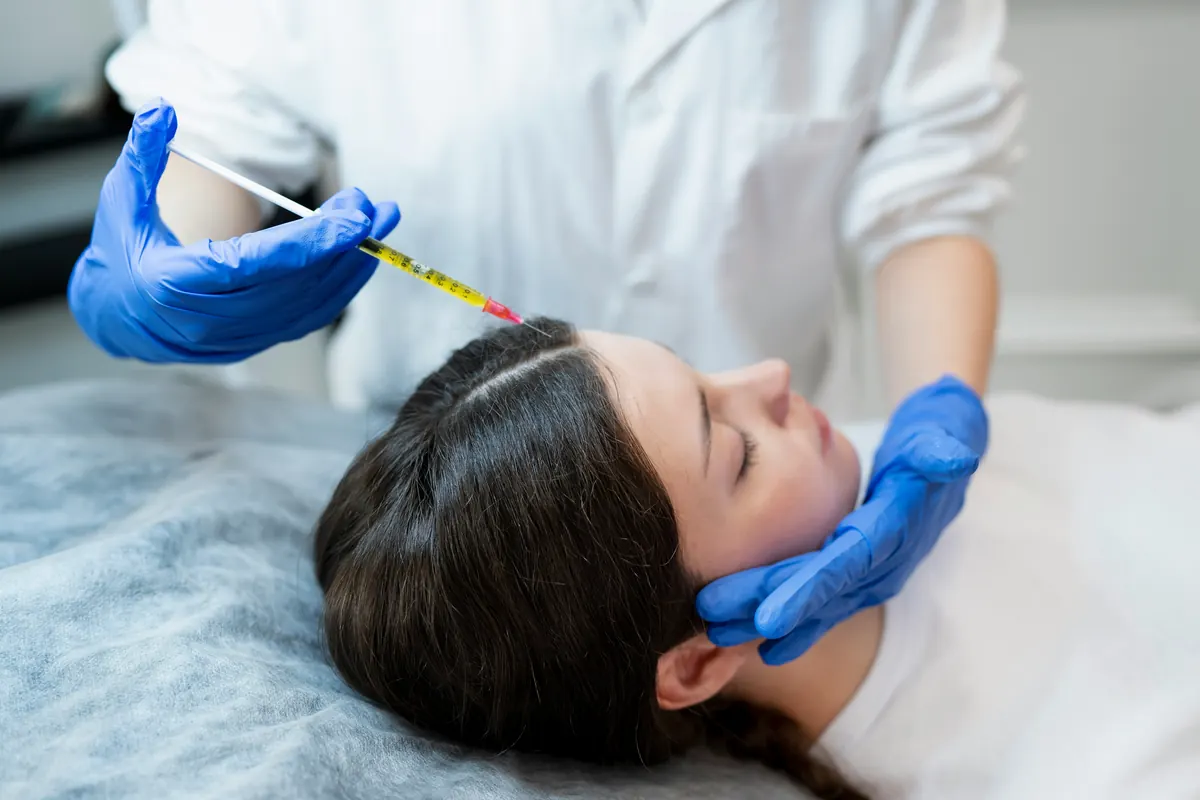
This page separates what the label actually establishes from what everyone repeats, because on this particular question the gap between the two is wide and nobody points it out.
1. The short answer
| Question | Answer | Where it comes from |
|---|---|---|
| How long does it last? | Up to four months | The label, in those words |
| How soon can I have it again? | No sooner than every three months | The label |
| When were results measured? | Day 30 | The label's trial endpoint |
| How fast does it start? | Commonly reported at two to three days | Clinical practice, not the label |
| When should I judge it? | Around two weeks | Clinical convention across this drug class |
The fourth row is the one worth sitting with, and section 2 explains why.
2. How long Dysport takes to work, and what the label does not say
Dysport has a reputation for kicking in faster than Botox. Search volume suggests this is the single most asked question about it, in about fifteen different phrasings.
The reputation is not baseless. It is widely reported by injectors and patients, and it appears in comparative literature. What it is not is a claim the prescribing information makes. Read the label for a figure on onset and you will not find one. It does not say two days, three days or any other number.
What it says instead is when it looked: day 30. Every efficacy figure in the glabellar section is a day 30 measurement.
So the honest position, and you will not read this on a clinic page:
- Most people report something starting within two to three days. That is real observation from a lot of treatments.
- It is not a labelled figure, so no regulator has reviewed evidence for it as a claim.
- The result you should judge is at about two weeks, as with any toxin. Something happening on day two is the beginning, not the outcome.
Galderma does publish a figure, and it is worth separating from the label. Across its three pivotal glabellar studies the company reports a median time to onset of response of three days in GL-1 (55 of 105 subjects, 52%) and GL-2 (36 of 71, 51%), and two days in GL-3 (110 of 200, 55%). At day one, 15% (16 of 105) had responded in GL-1 and 33% (65 of 200) in GL-3. Two things to hold on to about those numbers: they are based on subject self-assessment rather than an investigator grading, and Galderma publishes them as data on file rather than in the prescribing information. So the two to three days people report is not folklore, and it is not a labelled claim either. It is the manufacturer's own reading of its own trials, which is a real thing to weigh and a different thing from a regulated statement.
If a clinic tells you the label says Dysport works in two days, they have not read it. That does not make them wrong about the experience, but it tells you something about the confidence behind the rest of their numbers.
3. What the trials actually measured
Three randomised studies support the glabellar indication, and their results are worth seeing because they set a realistic expectation that marketing does not.
| Study | Success at day 30 | Followed for |
|---|---|---|
| GL-1 | 55% | 180 days |
| GL-2 | 52% | Repeat treatment cycles |
| GL-3 | 60% | 150 days |
Note what "success" meant: a two grade improvement in glabellar line severity at maximum frown, on a combined assessment by both the investigator and the patient. That is a demanding definition, which is why the numbers are in the fifties rather than the nineties.
Between 52% and 60% is a good result for a strict endpoint. It is also a useful corrective to before-and-after photography: roughly four in ten people in these trials did not hit that bar. Repeat dosing showed continued efficacy across up to four administrations, so a modest first result does not mean it will not work for you.
One finding the label reports that nobody else quotes: in the geriatric subgroup, which was tiny at four patients on Dysport and four on placebo, none of the Dysport patients met the success threshold at day 30. Eight people is far too few to conclude anything, and I am not going to pretend otherwise, but if you are over 65 it is a fair thing to raise rather than something to discover afterwards.
4. How long it lasts
The label's wording is exact: the clinical effect of Dysport may last up to four months.
"Up to" is carrying weight there. It describes the top of a range, and the honest way to read it is that four months is the good end rather than the middle. Most people land at three to four months, which is the same territory as the rest of this drug class.
What moves your number, in rough order of how much it matters:
- Dose. The labelled glabellar dose is 50 units. Less than that fades sooner, and underdosing is a common reason a treatment disappoints.
- The muscle treated. Muscles you use constantly recover faster. This is why a lip flip fades in weeks and a masseter treatment can last months.
- How strong the muscle is. Heavier musculature generally means shorter duration at the same dose.
- Your own metabolism, which you cannot change and cannot predict until you have been treated once.
- How many times you have been treated. Many people report a longer interval after several cycles, as the treated muscle becomes less active over time.
5. The three month rule
This one is a hard number and it is in the label: re-treatment should be administered no more frequently than every three months.
So if the effect fades at ten weeks and a clinic offers to top you up at eleven, that is outside the label. The reason for the interval is not commercial. Treating too often raises the risk of the body forming neutralising antibodies, which is the mechanism behind treatment becoming less effective over time.
Wanting an early top-up is almost always a sign the first dose was wrong for you rather than that you need treating more often. The right response is a different dose next time, at the proper interval.
6. Does Dysport last longer than Botox?
On the labels, they are close enough that the question does not have a winner:
| Product | Labelled duration | Labelled glabellar dose |
|---|---|---|
| Dysport | May last up to four months | 50 units, five aliquots of 10 |
| Botox Cosmetic | Approximately three to four months | 20 units, five sites of 4 |
Anyone claiming a decisive duration difference is going beyond both labels. What differs far more is the unit count, and that is where the real confusion lives: 50 against 20 for the same muscles. Those numbers are not comparable, and our guide to Dysport units against Botox units explains why, along with what it means when a clinic quotes you a rate a third of its Botox price. Our Dysport against Botox comparison covers the rest of the differences.
7. Why it feels faster even if it is not
There is a plausible mechanism behind the faster-onset reputation, and it is worth understanding because it also explains a downside.
Dysport is formulated with smaller protein complexes and is generally reconstituted to a larger volume for a given effect. A larger, more diffusible volume spreads further from each injection point. Spreading further means covering a broad muscle like the frontalis more evenly, which can read as a faster and smoother result.
The same property is the downside. More spread means more chance of reaching a muscle nobody intended to treat, which is the mechanism behind a drooping eyelid. The label notes that patients who received a higher dose of Dysport had an increased incidence of eyelid ptosis.
So "spreads more" is not a marketing point or a criticism. It is a trade, and which side of it you land on depends on the injector's placement more than on the brand.
8. Lying down, exercise and the first 24 hours
Two of the most searched Dysport questions are about the hours immediately after, so here they are plainly.
Lying down. The standard advice is to stay upright for about four hours. The theory is that gravity and pressure could encourage the product to move before it binds. Evidence for it is thin, and it is cheap to follow, so follow it.
Exercise. Usually 24 hours. The reasoning is increased blood flow and the temptation to touch or wipe your face. Again, low cost, so wait.
What matters more than either. The result is mostly decided by where the needle went and how much went in. If something goes wrong it is far more likely to be placement or dose than whether you went to the gym. Our aftercare guide covers what the rules are actually for.
One Dysport-specific practical note from the label: once reconstituted it must be refrigerated and used within 24 hours. Asking whether your vial was mixed for you is a reasonable question, and a Dysport vial holds 300 or 500 units, so a single 50 unit treatment uses a fraction of it.
9. If yours wore off early
Work through these in order before concluding the drug does not work for you:
- What dose did you actually get? Ask for the number. Below 50 units for the glabella, fading early is expected rather than surprising, and a low per-unit price recovered by a low unit count is a real pattern. Our guide to which deals are real covers it.
- When did you judge it? If you assessed at day three and felt it had gone by week six, you may have measured from the wrong starting point.
- Was the vial fresh? Reconstituted Dysport is good for 24 hours refrigerated.
- Is this treatment two or treatment ten? A shortening interval across many cycles can indicate reduced response, and treating more often than every three months makes that more likely, not less.
- Was it the right area? A line that was already etched at rest will not be removed by any toxin. See the frown lines guide.
10. What to ask
- How many units, and is that the labelled 50 for the glabella?
- When should I judge the result, and when should I come back if it is uneven?
- Was this vial reconstituted for me, and when?
- Given the three month minimum interval, when is my next appointment?
- I am sensitive to dairy. Dysport is contraindicated in cow's milk protein allergy, so does that affect me?
- What would you change next time if this fades sooner than I want?
That fifth question is not a trick. Dysport contains lactose and its label lists hypersensitivity to cow's milk protein as a contraindication, which is a genuine difference from Botox that almost nobody raises. Our guide to the brands covers the other differences, and the full Dysport guide is the parent page for all of this.
Where it goes. Duration is one half of the question; the other is which area is being treated and how much goes into it. Our guide to Dysport treatment areas covers every area with its dose, its Botox equivalent, and whether that number came from the label or from practice.
Worried it will stop working? It is the commonest fear about repeat treatment and the label answers it directly: across 1,554 patients treated up to nine times, none developed a neutralising antibody. The detail is in Dysport side effects.
The brand that does put a number on onset. Dysport’s label gives none, but Xeomin’s states a median onset of two to seven days and a duration of up to 12 to 16 weeks. See how long Xeomin lasts.
Frequently asked questions
How long does Dysport last?
How long does Dysport take to work?
Does Dysport work faster than Botox?
Does Dysport last longer than Botox?
How soon can I get Dysport again?
How long after Dysport can I lie down?
How long after Dysport can I work out?
Why did my Dysport wear off so fast?
What percentage of people does Dysport work for?
Is Dysport safe if I am allergic to dairy?
When does Dysport kick in?
Does Galderma say how fast Dysport works?

Sources
Every figure on this page was read from the documents below rather than from a clinic or a manufacturer's marketing. They open in a new tab so you can check any claim here against its source.
- Dysport prescribing information, FDA via DailyMed
- BOTOX Cosmetic prescribing information, FDA via DailyMed
Know the count before the quote. The unit count is half the bill, and a low per-unit rate recovered by a high unit count is the commonest way a deal is not one. How to tell.
Deciding which area, not how many units? Botox by facial area covers what each zone actually achieves, which four are FDA approved, and the things Botox cannot fix at all.
Keep reading
 Other NeurotoxinsDysport Aftercare
 Other NeurotoxinsDysport Before and After, Day by Day
 Other NeurotoxinsHow Much Does Dysport Cost?
 Other NeurotoxinsDysport Side Effects
 Other NeurotoxinsDysport Treatment Areas
 Other NeurotoxinsHow Long Does Jeuveau Last
Other NeurotoxinsWhich Neurotoxin Lasts Longest?
Other NeurotoxinsHow Long Does Jeuveau Last
Other NeurotoxinsWhich Neurotoxin Lasts Longest?