Where to Get Dysport, and How to Vet the Injector
Reviewed for medical accuracy against our Medical Review Board · Last updated 23 August 2026
Part of The Ultimate Dysport Guide
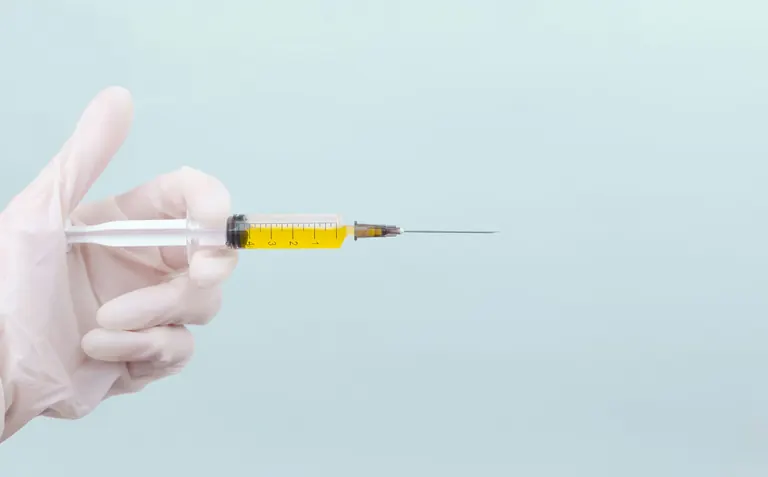
Dysport is widely available: across the eighteen cities where we have read every clinic's own published brand list, 54 of 80 providers carry it. The harder question is whether the person injecting it is allowed to, and whether the product is real. The label gives you a test for the second one that almost nobody repeats: Dysport cartons carry a hologram, and the label says if you do not see it, do not use the product.
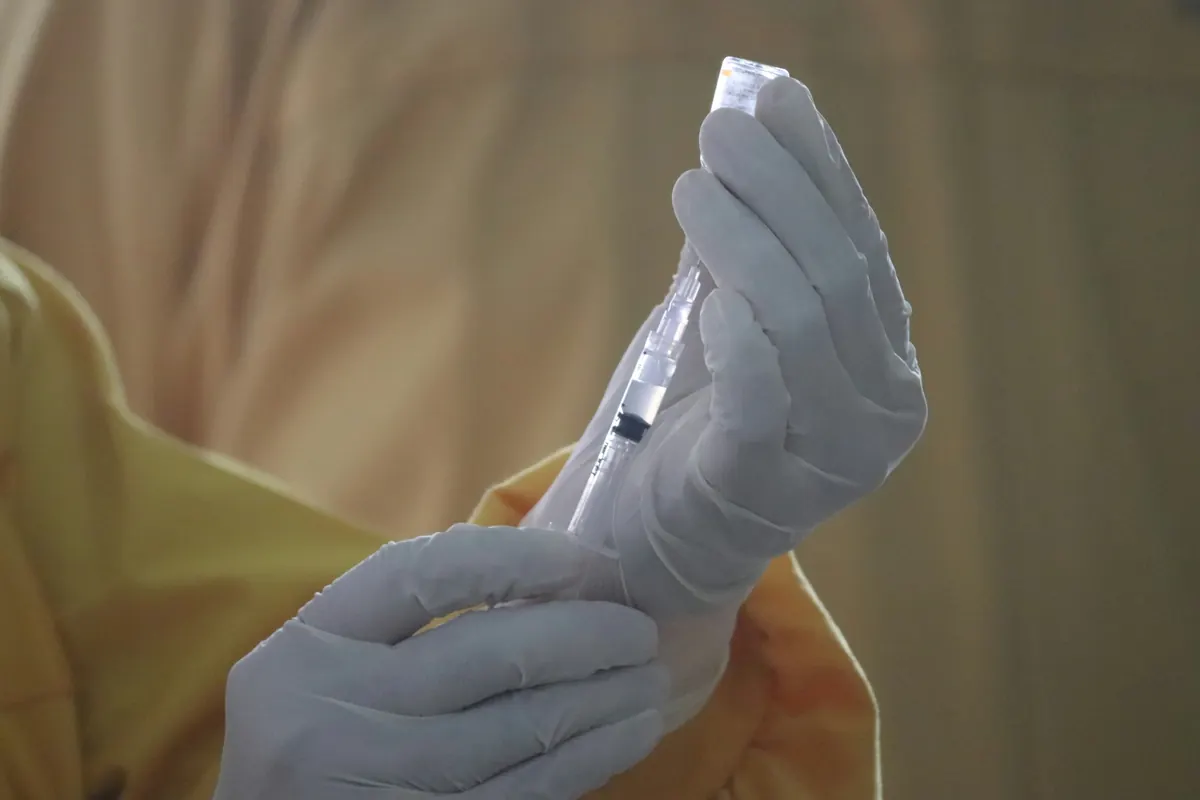
This page is about how to find and check a provider anywhere in the US. If you want named clinics and their published prices in a specific city, that is what our city guides are for.
1. Who carries Dysport
Dysport is the second most widely stocked botulinum toxin in the US after Botox, and finding it is rarely the problem. In the eighteen cities where we have read each clinic's own published brand list, 54 of 80 providers, about two thirds, publish that they carry Dysport. Per city that ranged from two of five providers to all five.
Two practical consequences. First, if a clinic's price list does not mention Dysport, it may simply not stock it, and asking is quicker than assuming. Second, a clinic that carries several brands is usually the better choice for a first treatment, because the brand can then be matched to the area and to you rather than to what is in the fridge. Our page on the brands compared covers what each one is actually good for.
Availability is not a quality signal, and neither is exclusivity. A clinic that carries only Dysport is not a specialist, and a clinic that carries six brands is not indecisive.
2. Who is legally allowed to inject you
This is the part most people never check, and it varies by state more than almost anything else in aesthetics. Injecting a prescription medicine for cosmetic reasons is the practice of medicine, so somewhere in the chain there has to be a prescriber who has actually assessed you.
We only characterise states whose rules we have read directly. Three examples of how differently this works:
- Texas treats cosmetic injection as a delegable medical act under the Texas Medical Board's rules at 22 Texas Administrative Code sections 169.25 to 169.29. A physician, or a PA or advanced practice registered nurse acting under delegation, must establish the relationship with you, keep your record, and tell you who will perform the injection and what their credentials are before it happens.
- North Carolina allows a registered nurse or licensed practical nurse to give the injection, but never on their own initiative: it must be ordered by someone with prescriptive authority who assessed you first. So the question there is not only who holds the needle, but who wrote the order.
- Arizona has its own board framework, set out on our state page with the board's own document linked rather than paraphrased.
The pattern across states is consistent even where the detail differs: someone with prescriptive authority must have assessed you personally, and a clinic should be able to say who that was without hesitating. "The doctor signs off remotely" is a legitimate model in some states and a problem in others, which is exactly why it is worth asking rather than assuming.
3. How to tell the product is genuine
Counterfeit and unapproved botulinum toxin does reach US clinics, and this is the one section of this page you can act on without any medical knowledge at all. Both checks come straight off the label.
The hologram. The Dysport label states plainly: Dysport contains a unique hologram on the carton, and if you do not see the hologram, do not use the product. The label gives a number to call instead, 855-463-5127. You are entitled to see the carton. A clinic with nothing to hide will show you without being asked twice.
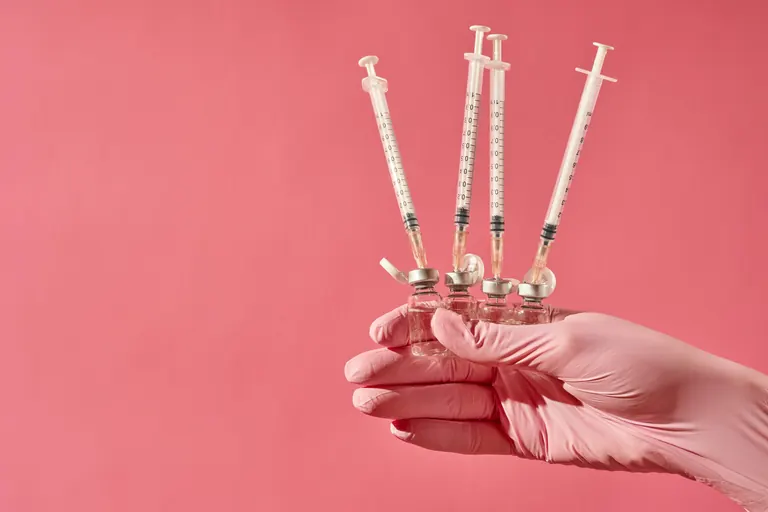
The vial size. Dysport is supplied in exactly two sizes: 300 unit and 500 unit single-dose vials. That is the whole product line. Botox comes in 50 and 100 unit vials. So a vial labelled as Dysport at 50 or 100 units is not Dysport, and a "100 units of Dysport" offer is describing something that does not exist. It is a useful test precisely because whoever writes the marketing rarely checks the label.
Two more things worth knowing. Dysport is manufactured by Ipsen Biopharm Ltd under US License number 1787, and distributed in the US by Ipsen Biopharmaceuticals and Galderma. And once reconstituted, the label requires it be refrigerated and used within 24 hours, for one patient and one session, so product drawn up days earlier is not acceptable.
4. Checking credentials yourself
Every state has a free, public license lookup, and it takes about two minutes. You can confirm that the person named on the clinic's website holds a current license, in the right profession, without disciplinary action. Our guide on how to verify an injector's license walks through the lookup for each state.
What to look for beyond a valid license:
- A named person, not "our team of experts". If nobody is named on the site, there is nothing to check.
- The profession stated plainly: MD, DO, PA, NP, RN. All of these can be entirely appropriate depending on state law and supervision. Vagueness is the warning sign, not the credential itself.
- Board certification, if a physician. Verifiable through the relevant board rather than taken from the clinic's own copy.
Titles like "master injector" and "certified Dysport provider" are not credentials. There is no such licence and no regulator issues either. Some are manufacturer training programmes, which are real but are not a qualification to practise.
5. Med spa, dermatology or plastic surgery
Across the published price lists we have read, the pattern is consistent: med spas sit at the bottom of the price range and plastic surgery practices at the top, with dermatology in between. Roughly $9 to $12 a unit against $13 to $16 for Botox in the cities we have checked.
Price is not the useful way to choose between them. The honest summary is that the individual injector's experience matters more than the type of premises, and that the premises matter most when something goes wrong. A dermatology or plastic surgery practice has a physician on site who can manage a complication; some med spas have a supervising physician who is not in the building.
For a first treatment, or for anything near the eye, that difference is worth weighing. For a routine repeat treatment of frown lines with an injector you already trust, it matters much less. Our Dysport cost page covers how much of the price gap is provider type, including one clinic that charges $15 a unit if the doctor injects and $12 if a nurse does.
6. Red flags
- A price per unit with no unit count. Especially for Dysport, where 50 units at $13 is $650 against $260 for the equivalent Botox treatment. Our units guide explains why an identical per-unit rate is not an identical price.
- "100 units of Dysport." No such vial exists.
- No named injector anywhere on the website.
- Refusal to show you the carton or vial.
- Pressure to decide today, or to add areas while you are in the chair. Vial economics create real same-day incentives, and a good clinic manages that without leaning on you.
- Prices far below the local range. In the cities we have read, published Botox rates run $9 to $18 a unit. Well below that means something else is going on.
- Injections at a party, a salon or someone's home. No supervising prescriber, no emergency equipment.
- Guarantees. Nobody can guarantee a result, and the label itself reports treatment success at 52% to 60% at day 30 on a demanding endpoint.
7. What a good consultation looks like
A proper consultation happens before anything is drawn up, and it covers things a sales conversation does not:
- They watch your face move. Frowning, raising your brows, smiling. Dosing is based on how your muscles work, not on a chart.
- They ask about medical history, including neuromuscular conditions, and about medications. Aminoglycoside antibiotics, muscle relaxants and anticholinergics all interact.
- They ask about allergies, and for Dysport specifically about cow's milk protein allergy, which is an absolute contraindication because the product may contain trace milk protein. Botox has no equivalent. If nobody asks and you have that allergy, say so.
- They tell you what will not work. Lines visible when your face is completely still are creases in the skin, and no dose of anything removes them.
- They give you a total, not a rate.
Anyone treating you should also be able to describe what they would do if your eyelid drooped. The answer is that it wears off over several weeks, and someone who cannot say so calmly has not dealt with it. Detail is on our side effects page.
8. The questions to ask
- "Who will actually inject me, and what is their license?"
- "Who is the prescribing clinician, and will they assess me in person?"
- "How many units, and what is the total cost?"
- "Can I see the carton and the vial?"
- "Why Dysport for this area rather than another brand?"
- "What happens, and what does it cost, if I am not happy at two weeks?"
None of these is confrontational and all of them are routine for a good clinic. The reaction to being asked is itself informative.
9. Before you book
Two things to line up. Skip alcohol the night before, since bleeding happens at the moment of injection and that is when bruising is decided, as our aftercare page explains. And know roughly which areas you want treated and what each one can achieve, which is what Dysport treatment areas is for.
If you want to see what clinics in your own city actually publish, including named providers, their own per-unit prices and which brands they stock, our city guides cover every city we have researched so far, read from each clinic's own website rather than from aggregators. We add cities continuously.
One last note on offers. Dysport turns up in new-patient promotions more than its market share would predict, partly because of the 24 hour vial rule and partly because of manufacturer rebates. Those offers are often genuine. Our page on which deals are real covers the minimums, memberships and per-area pricing that quietly undo a headline rate.
Frequently asked questions
Where can I get Dysport near me?
Who is qualified to inject Dysport?
How do I know the Dysport is real?
Is there such a thing as a certified Dysport provider?
Is a med spa safe for Dysport?
How much should Dysport cost, so I know if a price is wrong?
Should I get Dysport at a Botox party?
What should I tell the clinic before treatment?
Can I ask to see the vial?
Do I need a consultation first?
Is it cheaper to travel to another city for Dysport?
What if I am not happy with the result?

Sources
Every figure on this page was read from the documents below rather than from a clinic or a manufacturer's marketing. They open in a new tab so you can check any claim here against its source.
- Dysport prescribing information, FDA via DailyMed
- Botulinum toxin, American Society of Plastic Surgeons
Know the count before the quote. The unit count is half the bill, and a low per-unit rate recovered by a high unit count is the commonest way a deal is not one. How to tell.
Deciding which area, not how many units? Botox by facial area covers what each zone actually achieves, which four are FDA approved, and the things Botox cannot fix at all.