
Marionette Lines and Botox: Why the Muscle Is Only Half the Problem
Reviewed for medical accuracy against our Medical Review Board · Last updated 27 August 2026
Part of Botox by Facial Area
Marionette lines are two problems wearing one name. Part of the line is a muscle pulling the corner of your mouth down, and Botox can relax that. The rest is lost volume in the cheek and jawline above it, and Botox does nothing for that at all. Which half dominates decides whether you should be buying a neurotoxin, a filler, or both, and it is the single most useful thing to establish before anyone quotes you a price.
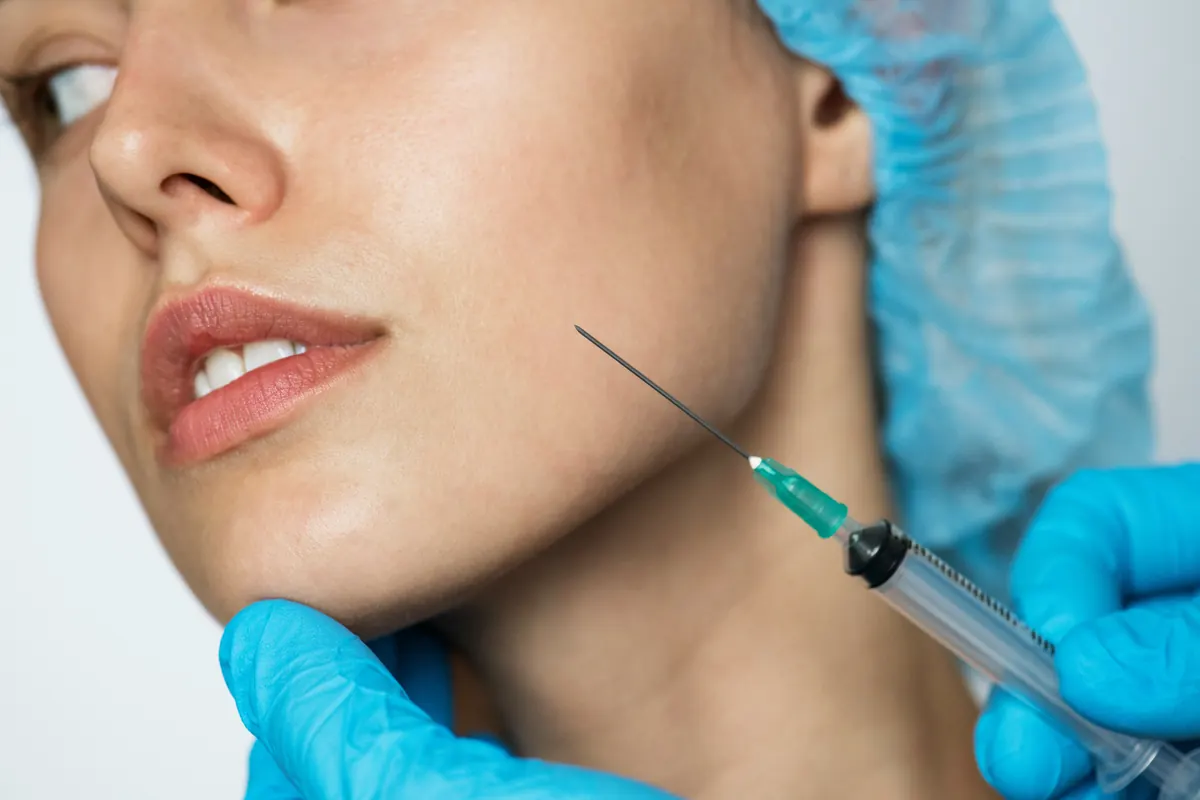
The word "marionette" appears zero times in the BOTOX label. So does "nasolabial", so does "depressor anguli oris", the muscle this treatment actually targets. There is no approved dose here. What there is, new in 2026, is a randomized trial that put real numbers on the tradeoff, and those numbers are more interesting than the marketing.
1. Two problems, one name
Marionette lines, sometimes called melomental folds, run from the corners of the mouth downward toward the jaw. They are named after the hinged mouth of a puppet, which is unkind but anatomically apt: the corner of the mouth is being pulled down.
Two separate things produce that appearance, and they respond to completely different treatments:
| What is happening | What you notice | Does Botox help? |
|---|---|---|
| The depressor anguli oris is pulling the mouth corner down | The corners sit low even at rest, and pull down visibly when you frown or talk. Often a faintly cross or sad expression you do not feel | Yes. This is the part a neurotoxin can address |
| Volume loss in the cheek, jawline and around the mouth | A groove or shadow running down from the mouth corner, present when your face is completely still and unchanged by expression | No. Relaxing a muscle does not replace lost tissue |
Most people over about forty have some of both. The practical test is simple and you can do it in a mirror: look at the line with your face completely relaxed, then look again while you deliberately pull your mouth corners down. If the line is dramatically worse in the second position, there is a muscular component worth treating. If it looks much the same either way, you are looking at a volume problem and Botox is the wrong purchase.
Ask the injector to show you the difference on your own face before agreeing to anything. A good one will do this unprompted. If the answer to a static groove is a neurotoxin, ask why.
2. The muscle Botox can actually reach
The relevant muscle is the depressor anguli oris, usually shortened to DAO. It runs from the jawline up to the corner of the mouth, and its job is to pull that corner down. It is one of several depressors in the lower face, working against the elevators that lift your mouth when you smile.
The logic of the treatment is a tug of war. Relax the depressor and the elevators win by default, so the mouth corner sits slightly higher without anything being added or lifted. This is why the effect is sometimes described as a lift when nothing has been lifted. The muscle that was pulling down has simply stopped pulling as hard.
That mechanism has a built-in limit worth understanding. There is only so much a depressor can be holding down. If your mouth corners are low because the tissue above them has descended, no amount of relaxing the DAO recovers it, and pushing the dose higher to chase the result is how the lower face gets into trouble. See section 8.
3. What the label says, and the one word it uses
We searched the full BOTOX Cosmetic prescribing information, the version effective 18 October 2024, which runs to nearly 136,000 characters. The counts:
| Term | Mentions | What that means |
|---|---|---|
| Glabellar lines | 64 | Approved, with a labelled dose and injection map |
| Platysma bands | 50 | Approved, added October 2024 |
| Forehead lines | 43 | Approved |
| Lateral canthal lines | 35 | Approved, the crow's feet indication |
| Marionette | 0 | Not an indication |
| Nasolabial | 0 | Not an indication |
| Depressor anguli oris | 0 | The target muscle is never named |
| Perioral | 0 | Not an indication |
There is exactly one place where the label touches this anatomy, and it is worth knowing because it is easy to misread. The phrase "oral commissure", meaning the corner of the mouth, appears once. It is not a treatment target. It is a landmark for the neck: the label instructs that when treating platysma bands, the anterior jawline injection should be placed "in line with the oral commissure". The corner of your mouth is used as a ruler for a different treatment.
Off-label prescribing is legal, extremely common, and frequently the right clinical choice. What it means practically is that no regulator has reviewed a dose, an injection map, or a duration for this area. Any number you are quoted comes from clinical practice and published studies, not from a registration trial. Our units by area guide labels every row with its status for exactly this reason.
4. The 2026 trial: more coverage, more lift, more side effects
This is the part almost no clinic page will tell you, and it is genuinely useful. In 2026 Aesthetic Surgery Journal published a randomized, double-blind dose-escalation trial on lower-face neuromodulator treatment. Eighty patients were allocated to four groups that differed in the number and distribution of injections into the platysma and the depressor anguli oris. Results were measured objectively with 3D stereophotogrammetry, plus the Global Aesthetic Improvement Scale and the FACE-Q satisfaction and adverse-effects modules, at 15, 30 and 90 days.
What it found:
- All four treatments produced measurable lifting. The effect is real and it can be photographed in three dimensions, not just reported by satisfied patients.
- Wider coverage lifted more. Greater treatment extent was associated with more tissue displacement at 15 days (p=0.004) and the displacement persisted longer.
- Satisfaction peaked at 30 days, not immediately, and stayed higher in the intermediate-to-high coverage groups.
- The most extensive group had more adverse effects at 90 days (p=0.006). Adverse effects fell over time overall, but the biggest treatment was still causing more of them at three months.
- More injection points meant more movement in the multivariable analysis (beta=1.875, p=0.040).
Read those last two together, because that is the actual decision. Spreading the treatment wider buys you more lift that lasts longer, and it costs you a higher chance of still noticing a side effect at ninety days. That is a real tradeoff with a published price tag on both sides, and it is a conversation to have before treatment rather than a surprise afterward.
Why this matters for what you should ask
If wider coverage gives more lift but more lingering side effects, then "how many points and how spread out" is a legitimate question, not fussiness. A first treatment in the lower face is a reasonable place to accept slightly less lift in exchange for fewer surprises, and to go wider next time if you tolerated it well.
5. The BMI finding nobody mentions
The same trial found a negative association between body mass index and response (beta=-4.361, p=0.022). Higher BMI, less measured tissue displacement from the same treatment.
The authors describe BMI as a possible response modifier. It is one trial of eighty people and it does not tell you that the treatment will not work for you, so do not read it as a rule. What it does tell you is that lower-face lifting is not equally effective on every face, and that a clinic promising a uniform result across every patient is promising something the evidence does not support. If you are told to expect a dramatic lift, it is fair to ask what that expectation is based on.
6. Where the unit numbers come from
Since there is no labelled dose, every figure is derived from practice. The DAO is a small muscle and the doses are correspondingly small: published practice commonly uses a few units per side, and our units guide gives up to 8 per side where the muscle is strong. The honest range to expect is roughly 2 to 8 units per side, decided by how much your DAO is actually contributing, which is what the mirror test in section 1 is for.
Two things about that number matter more than its exact value:
Small doses are correct here, and a large number is a warning rather than value. The lower face has muscles you use to speak, eat and smile sitting immediately next to each other. This is the opposite of the masseter, where the doses are the largest in facial aesthetics. If you are quoted a lower-face figure that sounds generous, ask what is being injected and where.
It is almost never sold alone. Marionette line treatment is usually part of a lower-face plan alongside the chin, the platysma or filler. That is often appropriate, given section 1, but it means the quote you get is rarely for the DAO by itself. Ask for the itemised breakdown.
7. When filler is the honest answer
If the mirror test in section 1 says your line is mostly static, a neurotoxin is the wrong product and no dose of it will fix the problem. The line is a groove caused by tissue that is no longer there, and the treatments that address that are volumising: a hyaluronic acid filler placed in the fold or in the cheek above it, or a collagen stimulator. Our Botox versus fillers guide covers the distinction properly, and the dermal fillers hub covers the products.
The combination is extremely common and, for once, the marketing and the anatomy agree: relax the depressor that is pulling the corner down, and restore the volume above it that stopped supporting it. What you should resist is being sold the combination without anyone establishing that you need both halves.
8. What can go wrong in the lower face
The lower face is less forgiving than the forehead, and it is worth knowing why before you agree. The muscles around the mouth are small, close together, and directly responsible for functions you notice immediately: speaking clearly, keeping liquid in your mouth, and smiling symmetrically. Diffusion of a few millimetres matters here in a way it does not between the eyebrows.
The failure modes to be aware of are an asymmetric smile if one side is affected more than the other, weakness of the lower lip, difficulty with precise sounds, and trouble with a straw or a cup. In the trial above, adverse effects were more common in the group that received the widest treatment and were still more common in that group at ninety days. They resolve as the drug wears off, which for most people means weeks to months rather than days. Our page on how long Botox actually lasts covers the timeline.
None of this is an argument against the treatment. It is an argument for a conservative first dose and an injector who does this area regularly. Confirming who is treating you and what licence they hold matters more in the lower face than almost anywhere else, and our guide on how to verify an injector's licence takes about two minutes to follow.
9. What it costs at real published rates
Marionette line treatment is one of the smallest neurotoxin purchases available, so the cost is modest in isolation and almost always bundled in practice. The figures below use per-unit rates published by clinics in the cities we cover, and cover the DAO alone.
| City | Published rate per unit | 4 to 16 units |
|---|---|---|
| Atlanta, GA | $9 to $15 | $36 to $240 |
| Austin, TX | $11 to $13.5 | $44 to $216 |
| Charleston, SC | $9.99 to $13 | $40 to $208 |
| Charlotte, NC | $9 to $15 | $36 to $240 |
| Chicago, IL | $9 to $15 | $36 to $240 |
| Clearwater, FL | $10 to $12.99 | $40 to $208 |
| Denver, CO | $10 to $16 | $40 to $256 |
| Houston, TX | $12 to $14.5 | $48 to $232 |
| Las Vegas, NV | $10 to $16 | $40 to $256 |
| Nashville, TN | $10 to $14 | $40 to $224 |
| Philadelphia, PA | $10 to $15 | $40 to $240 |
| Phoenix, AZ | $9.99 to $13 | $40 to $208 |
| Raleigh, NC | $13 to $14 | $52 to $224 |
| Salt Lake City, UT | $9.8 to $14 | $39 to $224 |
| San Antonio, TX | $10.5 to $12.5 | $42 to $200 |
| San Diego, CA | $10 to $16 | $40 to $256 |
| Scottsdale, AZ | $10.5 to $13.5 | $42 to $216 |
| Tampa, FL | $10 to $18 | $40 to $288 |
Because the dose is small, the per-visit cost is not the number that matters. Ask about the annual cost, ask whether a minimum spend applies, and ask what the itemised price is for this area alone rather than for a lower-face package. A clinic minimum can easily exceed the cost of the treatment itself.
10. What to ask before you agree
Six questions for a marionette line consultation
- Show me which part of this line is muscle and which part is volume. This is the whole consultation. If nobody separates the two, you are being sold a product rather than assessed.
- How many injection points, and how spread out? The 2026 trial found wider coverage gives more lift and more lingering side effects. It is a real choice and you are entitled to make it.
- What dose, per side, and why that number for my face? There is no labelled dose here, so the answer should reference your anatomy, not a price list.
- What happens to my smile and my speech if this diffuses? A straight answer means they have thought about it. Reassurance that nothing can go wrong means they have not.
- Is this quote for the DAO alone, or a lower-face package? Get it itemised, and ask whether a minimum spend applies.
- What is your plan if I get an asymmetric result? There is no reversal agent for a neurotoxin. The answer is time, and possibly a small balancing dose on the other side.
One last thing worth saying plainly. Marionette lines are the area where the gap between what a neurotoxin can do and what it is sold as doing is widest, because the name describes an appearance rather than a mechanism. The treatment is real, the 2026 evidence is genuinely encouraging about how much lift is achievable, and it still will not fill a groove. Establish which problem you have first, and the rest of the decision gets much easier.
Every area Botox treats, and what each one takes
Botox is not one treatment, it is eight or so, and the dose ranges by a factor of thirty between the smallest and the largest. 4 of these areas are on the FDA label; the rest are off-label, which is legal and common but means the dose comes from clinical practice rather than from a registration trial.
| Area | Typical dose | FDA status |
|---|---|---|
| Frown lines (glabella) | 20 units | FDA approved |
| Forehead lines | 20 units, with the glabella | FDA approved |
| Crow's feet | 24 units | FDA approved |
| Neck and platysmal bands | 26 to 36 units | FDA approved |
| Brow lift | 4 to 12 units | Off-label |
| Lip flip | 2 to 6 units | Off-label |
| Masseter (jaw slimming) | 40 to 60 units | Off-label |
| Under the eyes | 1 to 4 units per side | Off-label |
| Bunny lines (nose) | 2 to 5 units per side | Off-label |
| Gummy smile | 2 to 3 units per side | Off-label |
| Marionette lines (you are here) | 2 to 8 units per side | Off-label |
Units are not comparable between brands, so these are Botox units. Full ranges per area are in the units guide and calculator.
Frequently asked questions
Does Botox work on marionette lines?
How many units of Botox for marionette lines?
Is Botox or filler better for marionette lines?
Are marionette lines an approved use of Botox?
Can Botox for marionette lines affect my smile?
Why did my marionette line treatment do less than expected?
Sources
Every figure on this page was read from the documents below rather than from a clinic or a manufacturer's marketing. They open in a new tab so you can check any claim here against its source.
- Injection Mapping and Dose Escalation For Botulinum Toxin Treatment on the Lower Face, Aesthetic Surgery Journal, 2026
- BOTOX Cosmetic prescribing information, FDA via DailyMed
- Botulinum toxin, American Society of Plastic Surgeons

Know the count before the quote. The unit count is half the bill, and a low per-unit rate recovered by a high unit count is the commonest way a deal is not one. How to tell.
Deciding which area, not how many units? Botox by facial area covers what each zone actually achieves, which four are FDA approved, and the things Botox cannot fix at all.
Keep reading
 Botox Treatment AreasBotox for Forehead Lines
 Botox Treatment AreasBotox for Frown Lines and the Glabella (the "11s")
 Botox Treatment AreasBunny Lines and Botox
 Botox Treatment AreasThe Botox Brow Lift
 Botox Treatment AreasBotox for Crow's Feet
 Dermal FillersRestylane Refyne and Defyne
 Areas and SafetyCheek Botox and Nasolabial Folds